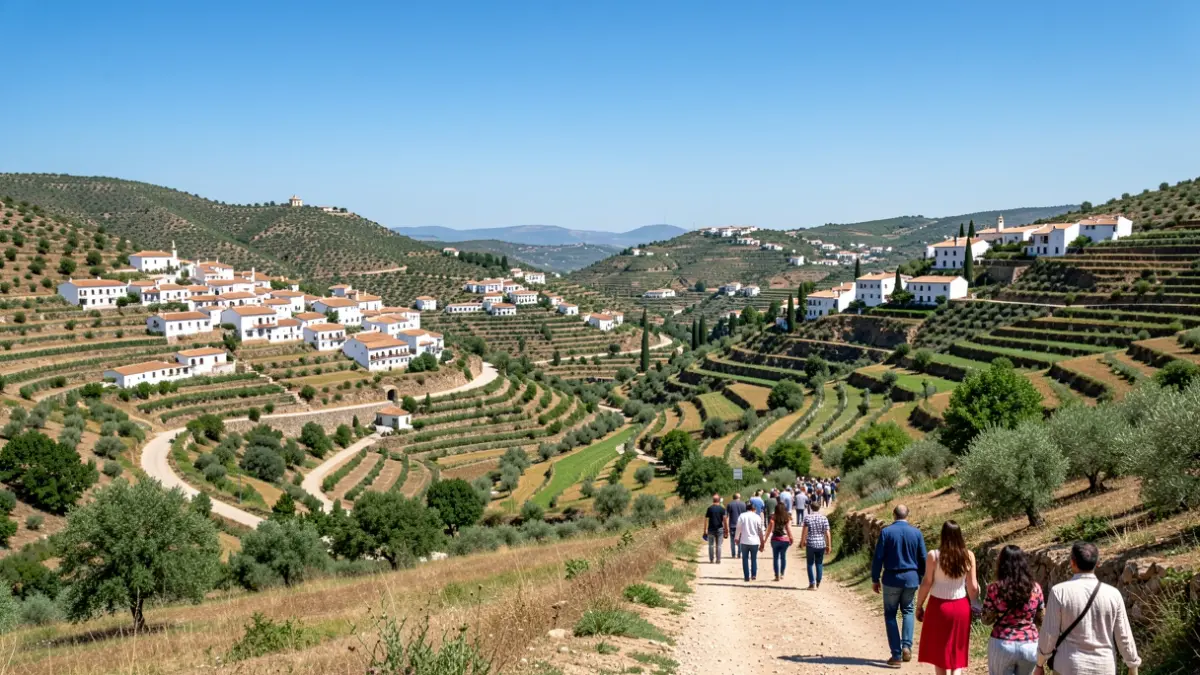
The annual pilgrimage to the village of El Rocío, in Almonte (Huelva), is approaching, and the security and emergency plan, known as Plan Romero, is now largely defined. Heavy rainfall during the winter has necessitated the conditioning and modification of various sections of the paths, with the aim of ensuring the smooth and safe passage of pilgrims, cavalry, and carriages.
This operation, which will be active between Monday, May 18, and Thursday, May 28, faces its 42nd edition under the motto "Plan Romero 2026: a safer path, always with you." The plan's coordination was reviewed at a meeting chaired by Antonio Sanz, Minister of Health, Presidency, and Emergencies of the Junta de Andalucía. The deployment will involve more than 7,000 personnel from all implicated administrations.
The Andalusian Emergency Agency leads this operation, which falls under the Andalusian Civil Protection Territorial Emergency Plan. During the coordination meeting, Minister Sanz highlighted the full operational readiness of the new Integrated Operational Coordination Center (Cecopi) for the plan's activation. In the health sector, over 200 professionals will be deployed, including doctors, nurses, 061 technicians, and specialists in various fields, who will provide assistance throughout the pilgrimage.
The health deployment will include a helicopter and 31 vehicles, among them nine Mobile ICU units and various ambulances. Additionally, a permanent health center will be established in the village of El Rocío, equipped with seven consultation rooms, a mobile radiology unit, and an observation and resuscitation room with capacity for ten people. The Andalusian 061 Emergency Health Center will coordinate thirteen peripheral assistance points, distributed along the paths of the brotherhoods from Huelva, Sevilla, and Cádiz.
Plan Romero 2026 will also pay special attention to the risk of forest fires, as it will take place during a period of medium fire danger. Infoca will maintain a deployment similar to last year's, concentrating its resources in the province of Huelva, especially in the Doñana area. More than 30 ground units and up to seven daily aerial assets, including helicopters and planes, will be used to ensure full coverage of itineraries and sensitive areas.
Technology will be a fundamental pillar of the operation, with the deployment of drones equipped with thermal cameras, loudspeakers, and lighting, as well as surveillance cameras and GPS localization systems. For the third consecutive year, smart Wi-Fi will be used to control capacities and people flows, allowing for adjustments in emergency response. Personnel will have access to a cartographic viewer with evacuation routes, access points, and flight take-off points. Command posts will be reinforced with Digital Emergency Network (REJA) dispatch units in all Advanced Command Posts and in the Cecopi in the village. Furthermore, the Es-Alert system will be maintained for mass mobile messaging, ensuring rapid and effective communication with pilgrims and operational teams.