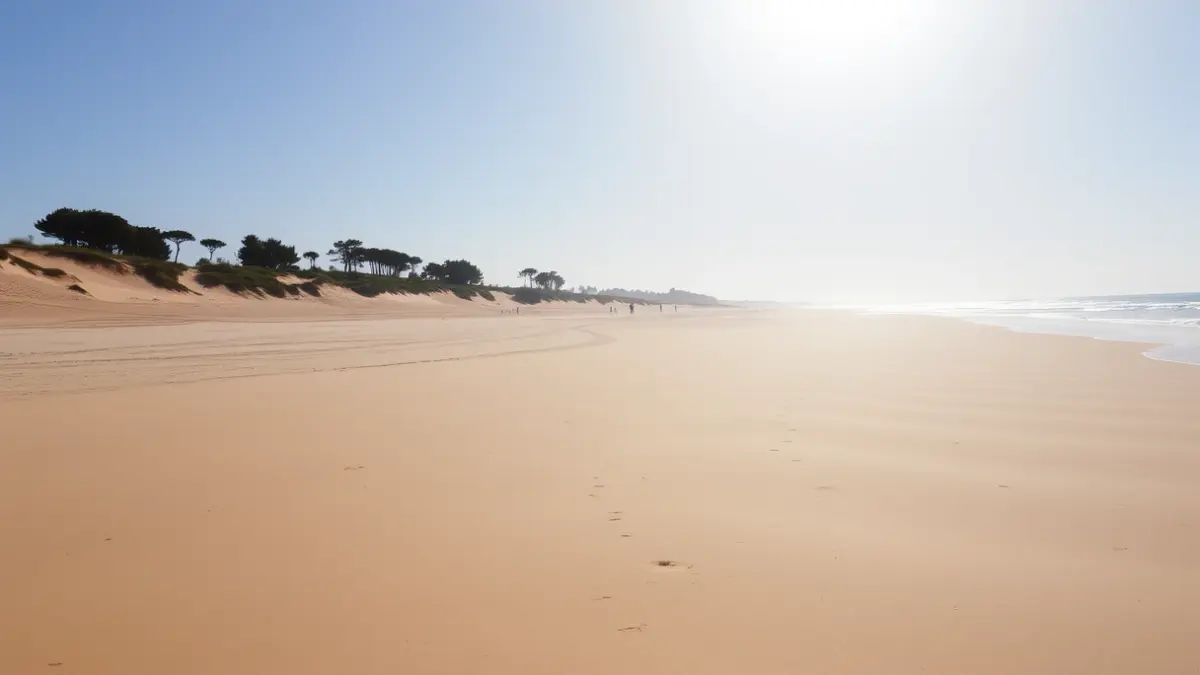
Stretching almost four kilometers, La Bota beach has become one of the most popular destinations on the Huelva coast. Its wide areas of fine, golden sand, surrounded by dunes and pine forests, offer a privileged natural environment that attracts thousands of visitors every summer, seeking tranquility and space even on the busiest days.
Although it is now known as La Bota, for many generations of Huelva residents, its original name was “El Cruce” (The Crossroads). This name comes from an old road that divided the path between Punta Umbría and the mouth of the Piedras River, marking an intermediate point that gave identity to this meeting place.
It was in this area, more than 70 years ago, that the body of William Martin appeared, an involuntary protagonist of one of the most surprising espionage operations of the 20th century.
However, the history of La Bota goes beyond its natural beauty. This corner of the coast was the scene of a historical event that changed the course of World War II. More than 70 years ago, the body of a man, identified as William Martin, appeared on its shores. This event was part of a British military strategy, known as “the man who never was,” designed to deceive the Nazi army, turning the Huelva coast into a key point of the conflict.
Currently, La Bota beach is synonymous with relaxation and tourism. Despite not being an urban beach, it offers services such as parking, showers, surveillance, and daily cleaning, as well as several beach bars serving local cuisine by the sea. Authorities emphasize the importance of following safety instructions due to currents that can form near the mouth of the Piedras River.