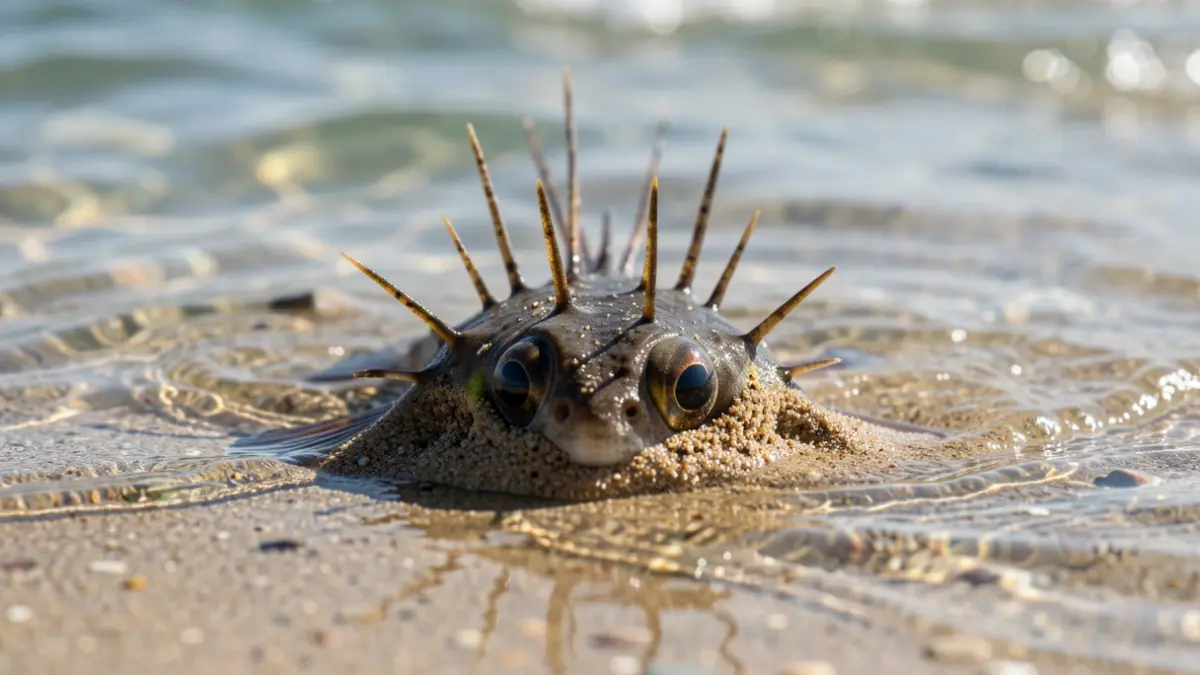
Rising temperatures have led to an increase in bathers on Huelva's beaches, such as El Portil, Matalascañas, and Mazagón. However, the summer activity brings a warning about the presence of the spiderfish, an animal that inhabits shallow waters and whose sting can be particularly painful and dangerous.
This specimen, common on the Huelva coastline during summer, camouflages itself under the sand, leaving only its eyes and a dorsal fin with three venomous spines visible. Accidental stepping on it injects toxins that cause swelling and intense pain in the affected limb, which can spread.
Sting symptoms can include dizziness, nausea, vomiting, fever, respiratory difficulties, and even convulsions in more severe cases. Individuals with a history of allergies are at risk of severe anaphylactic reactions, the intensity of which will depend on the amount of toxin and individual sensitivity.
The symptoms of these stings begin with swelling of the affected area accompanied by intense pain at the puncture site that can spread throughout the limb.
In case of a sting, health services recommend applying heat to the affected area by immersing the limb in hot water (between 45 and 50 degrees Celsius) for 60 to 90 minutes to degrade the toxins. It is crucial to seek immediate medical attention if symptoms are severe or persistent, to receive treatment with analgesics, antihistamines, or corticosteroids.