UPA-Andalucía, along with its representation in Granada, has formalized its adherence to the Granada Declaration, a document seeking the recognition and safeguarding of historical and traditional irrigation systems. This event, held at the Hospital Real, headquarters of the University of Granada Rectorate, underscores the organization's commitment to preserving these sustainable systems.
The signing is part of sector activities and represents UPA Andalucía's incorporation into this pioneering manifesto. The document was approved on December 13, 2025, during the I Meeting of Historical and Traditional Irrigation Communities of Spain, an event organized by the Biocultural Archaeology Laboratory (MEMOLab) of the University of Granada, in collaboration with irrigation community associations from Andalusia, Extremadura, and Alto Tormes.
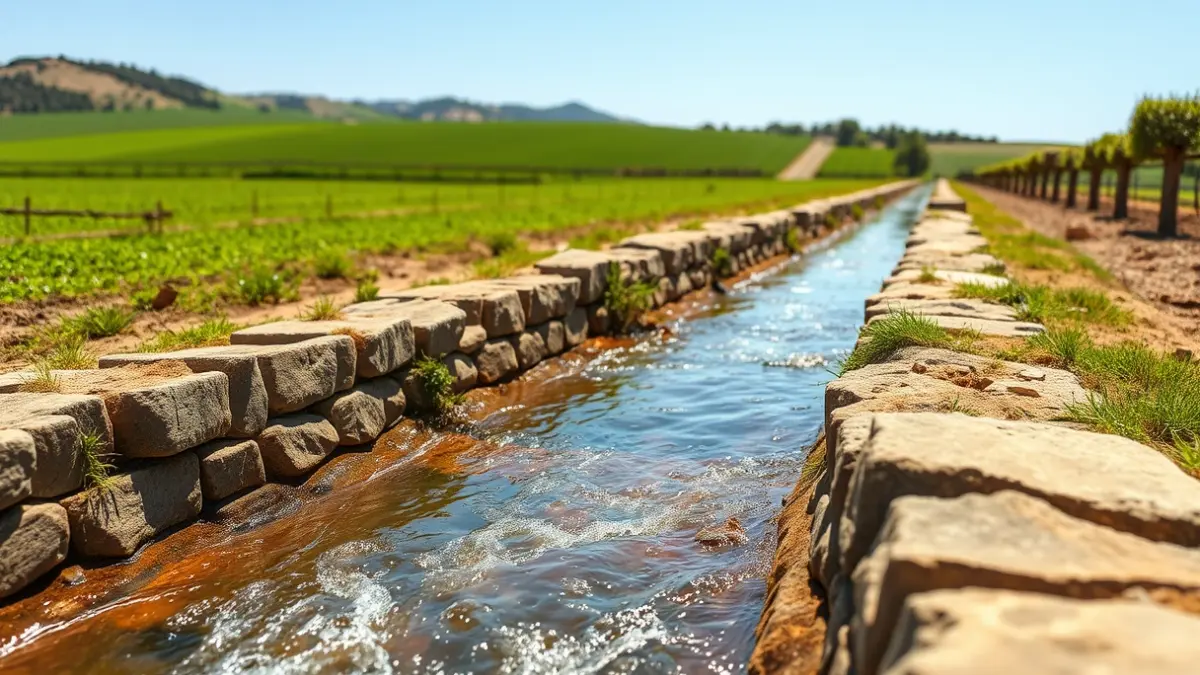
The meeting brought together over 120 representatives from various Spanish regions and culminated in the approval of the manifesto and the creation of a national association dedicated to defending the social, cultural, environmental, and economic values of these hydraulic infrastructures. The text emphasizes the multifunctional values of traditional irrigation and the need for its legal protection against agricultural intensification, industrialization, and technification.
“"These processes are causing the loss of a large part of their social, environmental, cultural, and economic values, creating numerous negative impacts on the territory, such as aquifer overexploitation, biodiversity loss, and the risk to the viability of small farms, favoring the concentration of land and water in a few hands."
The manifesto establishes ten fundamental principles highlighting the importance of these irrigation systems. Among them, their social values, which promote justice and conflict resolution, and their economic values, which function as local circular economy systems, ensuring food sovereignty and retaining rural populations, are emphasized. Their environmental role in conserving agricultural and biological diversity, regenerating soils, and providing ecosystem services is also highlighted.
Furthermore, the document stresses the capacity of traditional irrigation to prevent disasters, mitigate and adapt to Climate Change, and regulate hydrological cycles through water harvesting techniques. It advocates for a reformulation of the concept of water efficiency and modernization, which should go beyond technification and consider agricultural multifunctionality and ecosystem services.
Finally, the manifesto demands legal and administrative recognition of the uniqueness of these systems, translating into active policies at all levels, from municipal to European. This event coincides with the recent establishment of the Association of Historical and Traditional Irrigation Systems of Spain (ARTHE) and is part of the actions of the FORTALECE project, which seeks to strengthen the forest bioeconomy in the southeastern Iberian Peninsula.