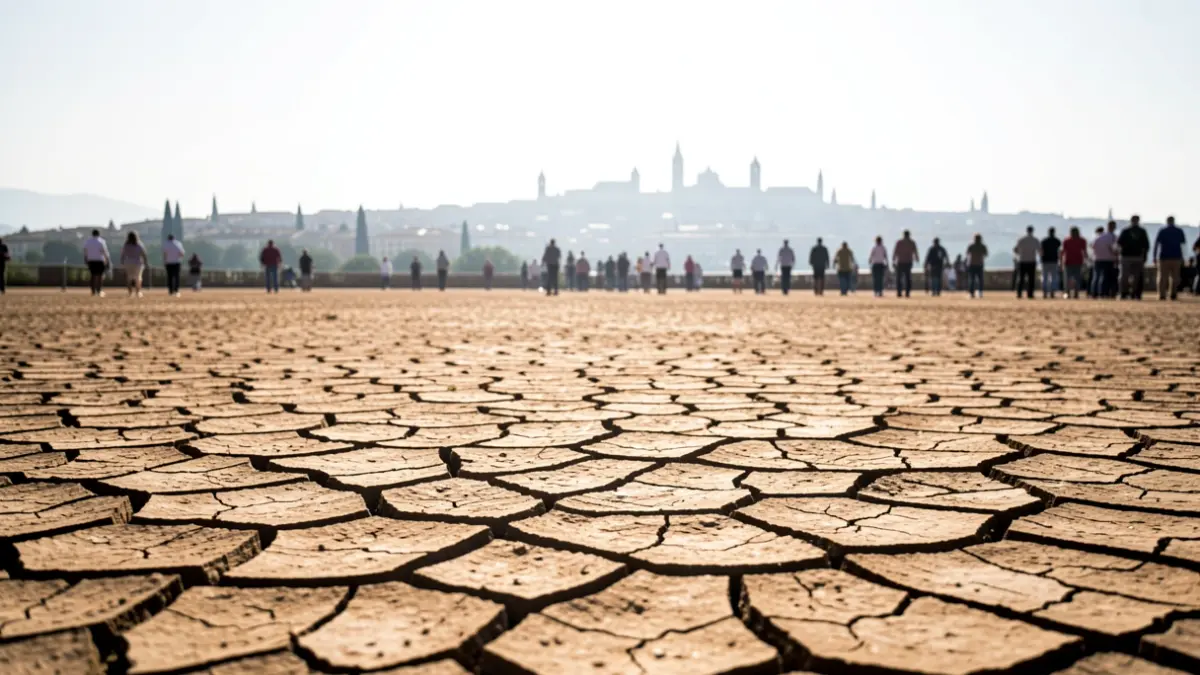
Granada is emerging as one of the European cities that will face the greatest risk of water scarcity by 2050, according to a report by the DKV Observatory on Health and Environment. The study outlines a future marked by more prolonged and intense extreme heat episodes, which will have a significant impact across various sectors, from health to the adaptation of tourism flows.
The document emphasizes Spain's vulnerability to global warming, exacerbated by its geographical location, an aging demographic, and key economic sectors like construction, tourism, and agriculture, all highly exposed to heat. A generalized reduction in water resources and an increase in the frequency and intensity of extreme droughts are anticipated.
The report analyzes scenarios of high and moderate emissions, both pointing towards a succession of warm nights. An increase of 30 to 40 additional high-temperature nights is estimated by 2050, with heatwaves becoming longer, more intense, and more frequent, potentially reaching up to eight episodes lasting two weeks each.
These changes will have direct health consequences. Tropical nights limit the body's physiological recovery, leading to increased risks of morbidity and mortality. Although Granada has not recorded heat-attributable deaths so far this summer, a one-degree Celsius temperature increase is linked to a 35% rise in mortality. The risk of anxiety, depression, and even insect-borne diseases like West Nile virus also increases.
Vulnerable groups such as the elderly or those with chronic illnesses, as well as women, face higher risks. The lack of air conditioning in vulnerable homes and the 'urban heat island' effect in densely populated cities, where lower-income neighborhoods experience up to four degrees higher nighttime temperatures, exacerbate these adverse effects.
The authors conclude that heatwaves are a growing risk factor for the healthcare system, leading to more clinical consultations and severe emergencies amidst staff shortages, which 96% of healthcare personnel describe as "exhausting." Beyond health impacts, heat will affect the economy, energy sector, and education, and worsen the "water crisis" with substantial reductions in river flows in southern Europe.
The report recommends adapting the healthcare system through training, improved warning systems, and monitoring of vulnerable individuals, alongside individual measures such as medication review and changes in habits and diet.