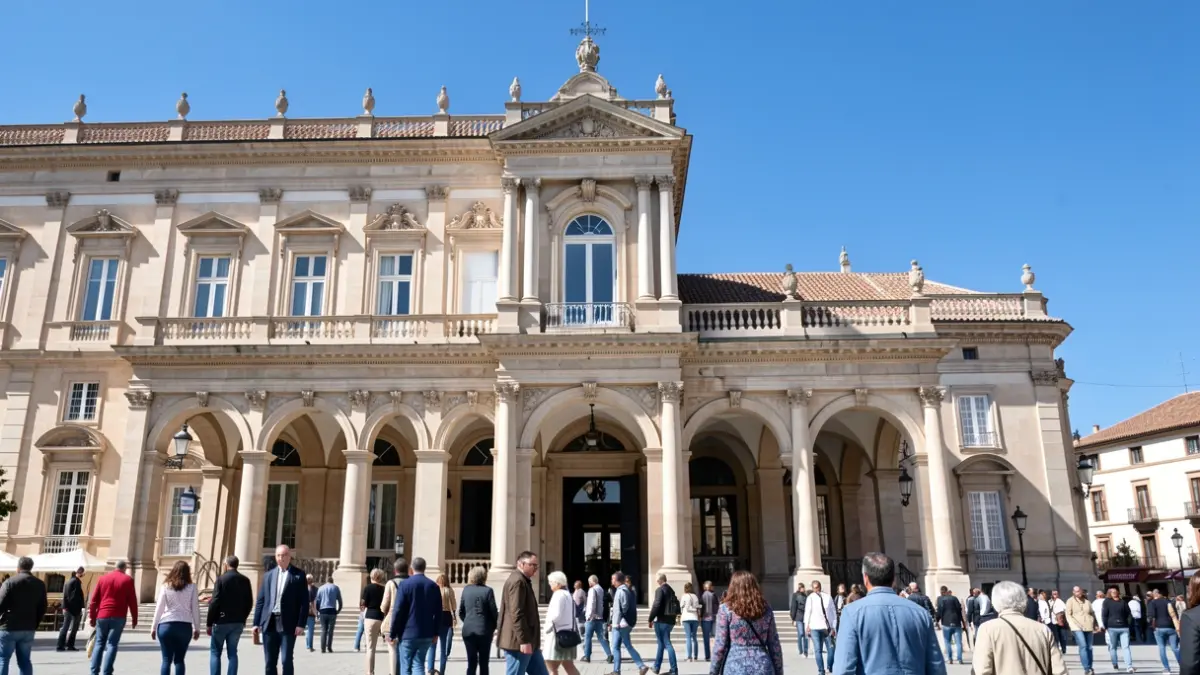
The esplanade of the Granada Congress Palace served as the venue for the Fourth Autism Concentration, an event that gathered professionals, students, associations, and educational communities from ASD and specialized classrooms, both from the capital and the province. The primary goal was to raise awareness and visibility of Autism Spectrum Disorder.
This event, held in commemoration of World Autism Awareness Day, was attended by María José Martín, territorial delegate for Educational Development and Vocational Training. The delegate accompanied more than 100 students from 21 centers across the province who participated, alongside their teachers and families.
The initiative aims to sensitize the educational community and the general public about the importance of ensuring equitable education tailored to the needs of students with ASD. World Autism Awareness Day, established by the United Nations General Assembly on December 18, 2007, and celebrated every April 2, seeks to increase understanding of this neurodevelopmental disorder.
During the concentration, students and teachers engaged in various activities to promote inclusion and understanding of autism. Students read a manifesto, and workshops, informative talks, and symbolic representations were organized, highlighting the significance of educational and social support for this group.
The main objective has been to make visible the reality of Autism Spectrum Disorder (ASD) and to promote the inclusion of people with autism in all areas of society.
In the province of Granada, the number of students with ASD has seen significant growth in recent years. According to data from the ETPOEP of Granada, the province currently has 233 special education classrooms, of which 63 are specifically for students with ASD, serving 299 students. In total, including various programs, there are 813 units dedicated to special education in the province. Additionally, 641 students are attended in specific special education centers, and nearly 12,000 students receive support in integration classrooms within mainstream centers.
Regarding human resources, there are 431 monitors, 618 therapeutic pedagogy teachers, and 172 hearing and language teachers. Collaboration with associations, such as the Federation of Autism and Asperger, has enabled 64 students to benefit from the work of volunteers in the centers. These ASD classrooms utilize the 'Teacch' methodology, which structures space and time with signs and pictograms to facilitate learning.