A study conducted in the Granada province has revealed the circulation of new strains of phlebotomine sandfly-transmitted viruses, including the Toscana virus (TOSV), a significant cause of viral meningitis. The research, published in the journal Diario Veterinario, aimed to identify phleboviruses in an endemic area, estimate their prevalence, and analyze coinfections.
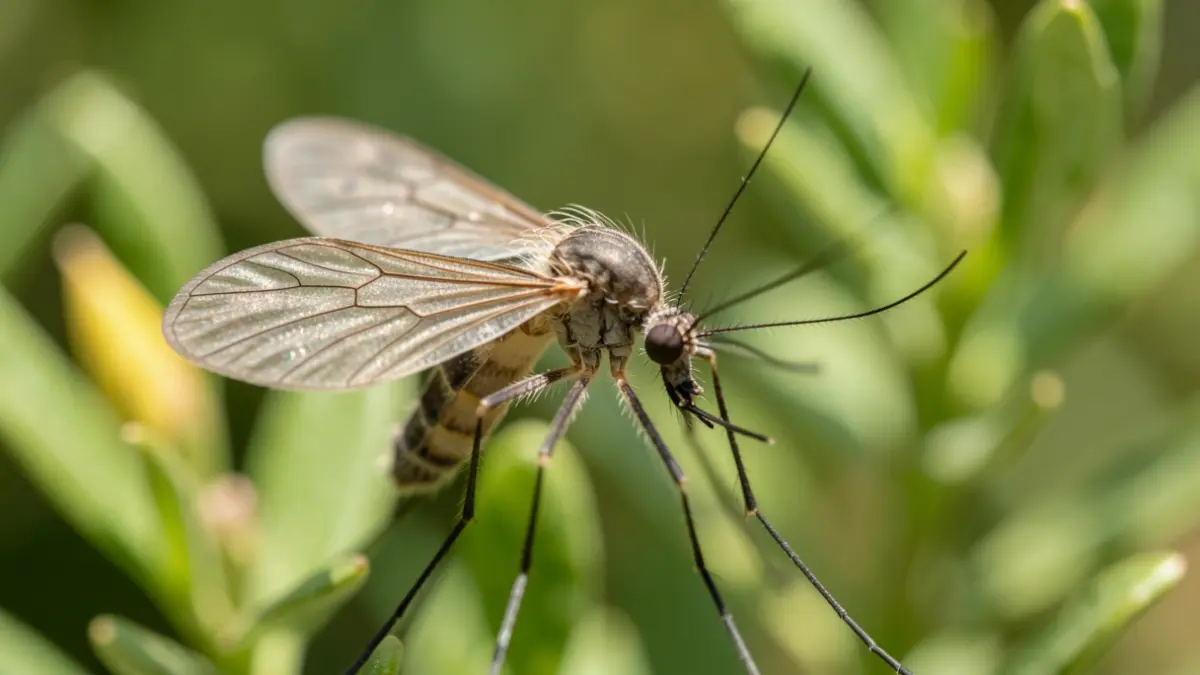
Phlebotomine sandflies, insects measuring approximately 2.5 millimeters with fuzzy bodies, are the vectors for these pathogens. For the study, specimens were collected using light traps in five locations in southern Spain, analyzing 443 individual specimens and 64 groups. The presence of phleboviruses, Leishmania infantum (a parasite causing leishmaniasis), and the bacterium Wolbachia was evaluated.
Results indicated that 0.45% of individual sandflies and 12.5% of groups were infected with phleboviruses, with an estimated prevalence of 1.9%. The circulation of lineage B of the Toscana virus, along with Massilia-like virus and Alcube virus (ACBV), was confirmed in several sandfly species, including P. perniciosus.
The study also analyzed potential interactions between Leishmania, TOSV, and Wolbachia in 217 individual female specimens of P. perniciosus. Infection prevalence was 27.6% for L. infantum, 0.9% for TOSV, and 64.1% for Wolbachia. Cases of coinfection with TOSV and Wolbachia were found, as well as a high proportion of specimens coinfected with Wolbachia and L. infantum.
The authors emphasize that the study provides "new evidence" of the continuous circulation of the Toscana virus and other phleboviruses in southern Spain, with an estimated prevalence higher than that recorded over a decade ago. They note that infections caused by phleboviruses and Leishmania are emerging or re-emerging in Europe, driven by factors such as climate change and urbanization.
In Spain, Leishmania infantum is responsible for canine and human leishmaniasis. The Toscana virus is a leading cause of viral meningitis in the Mediterranean region, with 1381 confirmed cases reported in the last 38 years, mostly in Italy and Spain. Although mortality is low, many cases present neurological manifestations.
The geographic expansion of sandflies in Europe increases the risk of TOSV exposure. The circulation of other phleboviruses has been detected in Spain, including Massilia virus (MASV) and a Massilia-like virus provisionally named Granada virus (GRV) in the province of Granada. Interactions between these pathogens and Wolbachia warrant further investigation.