This initiative aims to motivate and involve students in scientific research projects, technological innovation, and outreach on the universe and space sciences. The competition is supported by the Calar Alto Observatory and the National Institute of Aerospace Technology.
The contest seeks to foster scientific culture, critical thinking, and environmental awareness. Furthermore, it aims to highlight the role of the Air and Space Army in the governance, security, and defense of space-based services.
The rector of the UAL, José J. Céspedes, noted that this is the second edition, building on the success of the previous project ‘Discovering Antarctica’. He recalled that last year's winning project was ‘Ice Sentinels’, from the IES La Puebla in Vícar.
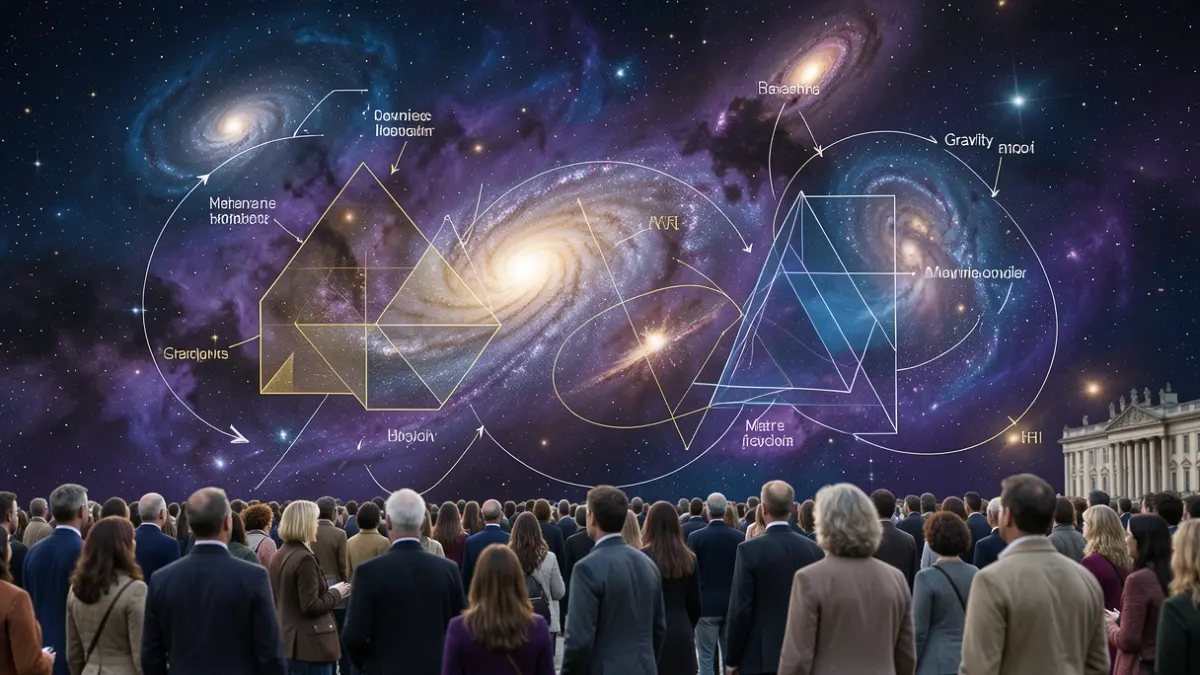
Céspedes stated that the call invites research into astronomy and space exploration, addressing concepts like gravity and the composition of matter, and allows for practical work on curricular content in physics, chemistry, biology, mathematics, or technology.
The head of the Educational Planning service at the Territorial Delegation of Education, Emilia Fernández, explained that the study of space connects disciplines and demonstrates science's presence in current challenges, emphasizing the value of inter-institutional collaboration.
The Sub-delegate of Defense, José Manuel Lupiani, highlighted the opportunity for students to learn about the importance of space for the future, contrasting it with the peace prevailing in Antarctica and emphasizing the mission of the Air and Space Army to ensure security and effective, safe scientific and commercial development.
The call is open to multidisciplinary projects on space access, astrobiology, Earth observation, cosmology, solar eclipses, space literature, AI, the space race, or the space economy. Each team will consist of at least four students and a supervising teacher, with advice from a UAL researcher.
The deadline for submitting proposals is October 29, 2026. A tripartite evaluation committee will select the proposals, with results announced on November 6, 2026. Projects will run from November 2026 to March 2027, including a meeting with a European space researcher. The work will culminate in April 2027 with the public exhibition and defense of projects at the UAL Innovation and Science Fair. The winning team will receive a visit to the Calar Alto Astronomical Observatory.