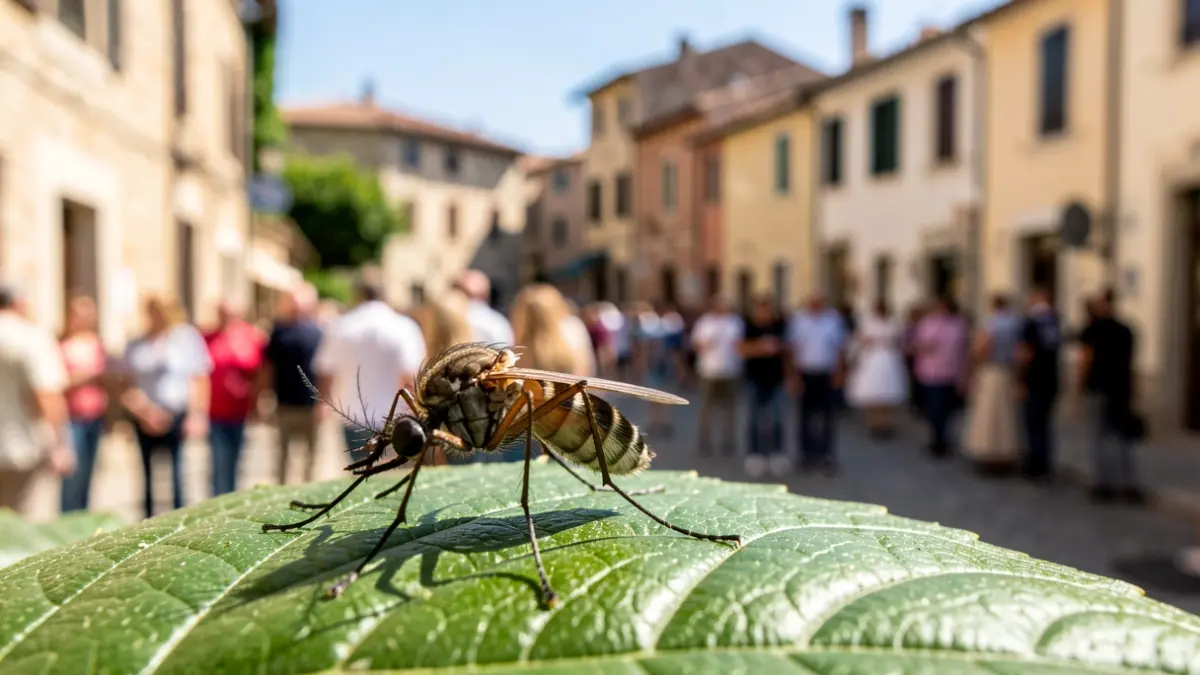
The General Directorate of Public Health and Pharmaceutical Planning of the Junta de Andalucía has issued a health alert for Salobreña. This measure was taken after the detection of the mosquito that transmits the West Nile virus in surveillance traps placed in the municipality. The alert will be active for at least four weeks, until August 20.
Both the Health Department and the Salobreña City Council will launch an information campaign to warn residents and visitors about the need to take extreme precautions. Health centers in the area have been notified to be vigilant for potential cases with symptoms compatible with the virus.
The Territorial Delegation of Health and Consumption of Granada has coordinated the situation with the City Council and the Provincial Council of Granada to carry out fumigation tasks. The local council must intensify mosquito control measures within a 1.5-kilometer radius of population centers and identified breeding grounds.
In previous years, the presence of this mosquito had already been recorded in other Granada towns such as Pinos Puente, Atarfe, and the Valle de Zalabí, where protocols were activated and fumigations were carried out.
A report from the Regional Ministry of Health and Emergencies last February classified 117 Andalusian municipalities as high alert level, 302 as medium, and 366 as low. Salobreña was in this latter group, along with much of the Costa Tropical.
The Junta de Andalucía's surveillance program uses 120 of its own traps and centralizes data from other administrations to monitor the circulation of the virus in culex mosquitoes. This information helps determine risk levels and declare municipal alerts.
Among the general recommendations, the Junta de Andalucía advises the use of registered repellents, wearing light-colored clothing that covers most of the body, and avoiding intense odors such as perfumes or scented soaps, as they attract mosquitoes.
Indoors, it is suggested to install mosquito nets, use domestic or environmental insecticides, and turn off unnecessary lights. It is also crucial to avoid the accumulation of stagnant water in gardens, flowerpots, swimming pools, or washbasins, and to frequently renew water in animal troughs.