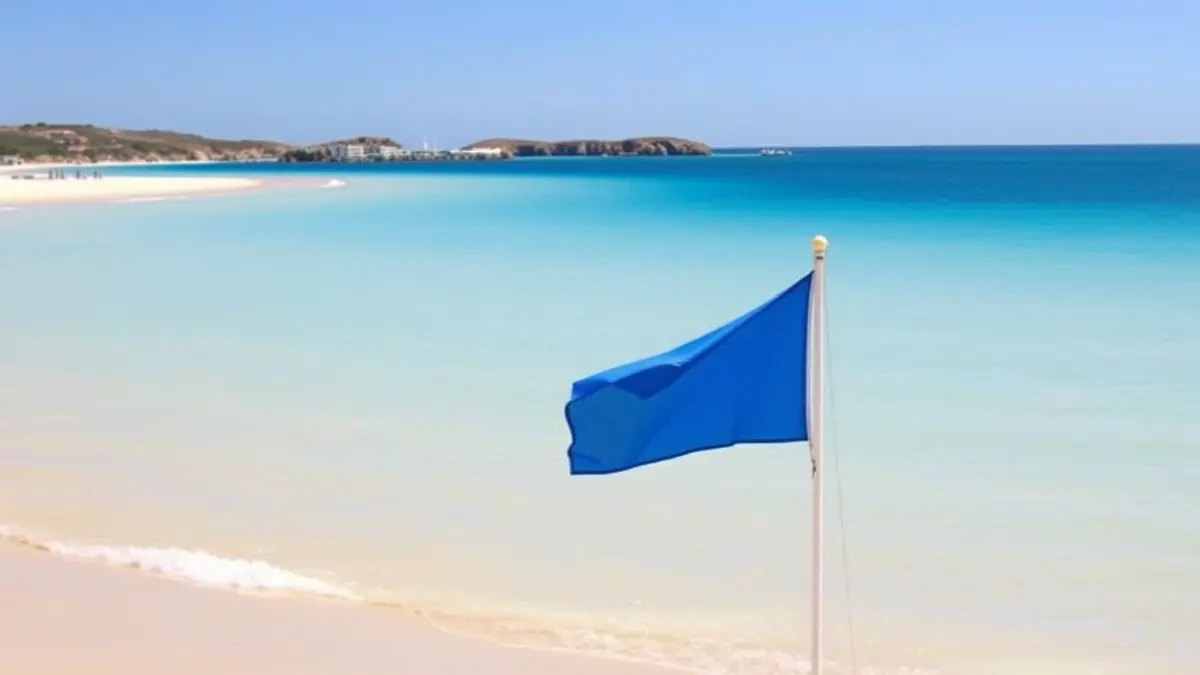
The Association for Environmental and Consumer Education (ADEAC) has published the list of awarded beaches, revealing some significant changes from the previous year. The beach of Torrebermeja-Santa Ana, in Benalmádena, regains its distinction, while Las Gaviotas, in Manilva, obtains it for the first time. Conversely, Puerto Banús-Levante, in Marbella, loses this recognition in 2026.
Despite the loss of one beach, Marbella ranks among the Spanish municipalities with the most Blue Flags, securing the eighth position nationally. The locality boasts a total of ten flags, distributed across eight beaches and two marinas: Puerto Banús and the Puerto Deportivo de Marbella. Additionally, the province has four other distinguished marinas: La Duquesa (Manilva), Estepona, Benalmádena, and Caleta de Vélez (Vélez-Málaga). The tourist boat Mundo Marino ECO in the capital has also received the Blue Flag.
ADEAC has also granted 'Special Mentions' to several municipalities for their commitment to sustainability and well-being. Fuengirola has been recognized in both the 'Accessibility and attention to people with disabilities' and the new 'Soludable' categories, the latter focusing on preventing risks related to temperature and sun. Torremolinos has also been acknowledged for its 'Accessibility and attention to people with disabilities', and Mijas is among the municipalities highlighted in the 'Soludable' mention.
At the regional level, Andalucía continues its ascent, consolidating its position as the second autonomous community with the most Blue Flags, reaching a total of 143, five more than the previous year and distributed across 48 municipalities. Only the Valencian Community surpasses it with 151. Spain, for its part, once again leads the world ranking in 2026 with 677 awarded beaches, the best result since the inception of this environmental initiative in 1987.