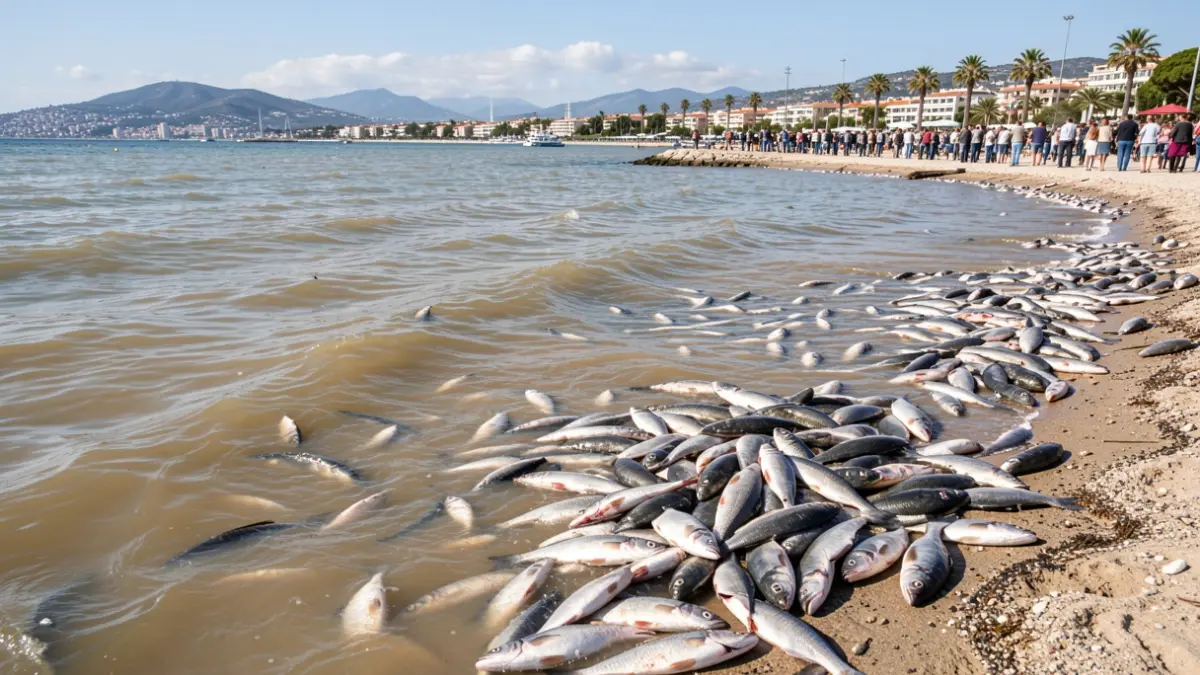
Hundreds of fish have been found dead this week at the mouth of the Guadaiza river in Marbella, an area designated as a Special Conservation Zone (ZEC) and part of the Natura 2000 Network. Initial hypotheses point to 'asphyxiation' as the main cause.
The City Council of Marbella and the Junta de Andalucía suggest that the death of the specimens could be due to a school of fish entering during high tide, becoming trapped when the tide receded and dying from lack of oxygen in the freshwater. The Andalusian Administration is responsible for maintaining the natural conditions of the riverbed.
The Marbella council has stated that the causes are being investigated and does not rule out a possible spill, for which water analyses are being conducted. Local technicians removed the fish for transport to an authorized incineration plant. As a preventive measure, the mouth of the river has been widened with heavy machinery to improve water circulation.
For its part, the organization Ecologistas Malaka attributes the fish kill to the intervention of the City Council's Beaches department, which allegedly closed the river mouth with sand for 'aesthetic' reasons, preventing the escape of thousands of specimens, mainly mullet, barbel, and eels. Environmentalists point out that the daily closure of the outlet to the sea hinders water circulation.
Ecologistas Malaka also highlighted the lack of 'ecological flow' in the river, indicating that a golf course diverts the watercourse and that there are frequent sewage spills in the Cortijo Blanco area. They argue that closing the river mouth prevents the natural cleansing by sea waves, leading to a high concentration of fish that consume oxygen and die from asphyxiation.