Loyola University and Diocese of Córdoba Sign Agreement to Boost Collaboration
The agreement aims to promote joint initiatives in pastoral care, training, and counseling for the development of the Cordoban society.
By Manuel Cano Heredia
••2 min read
AI
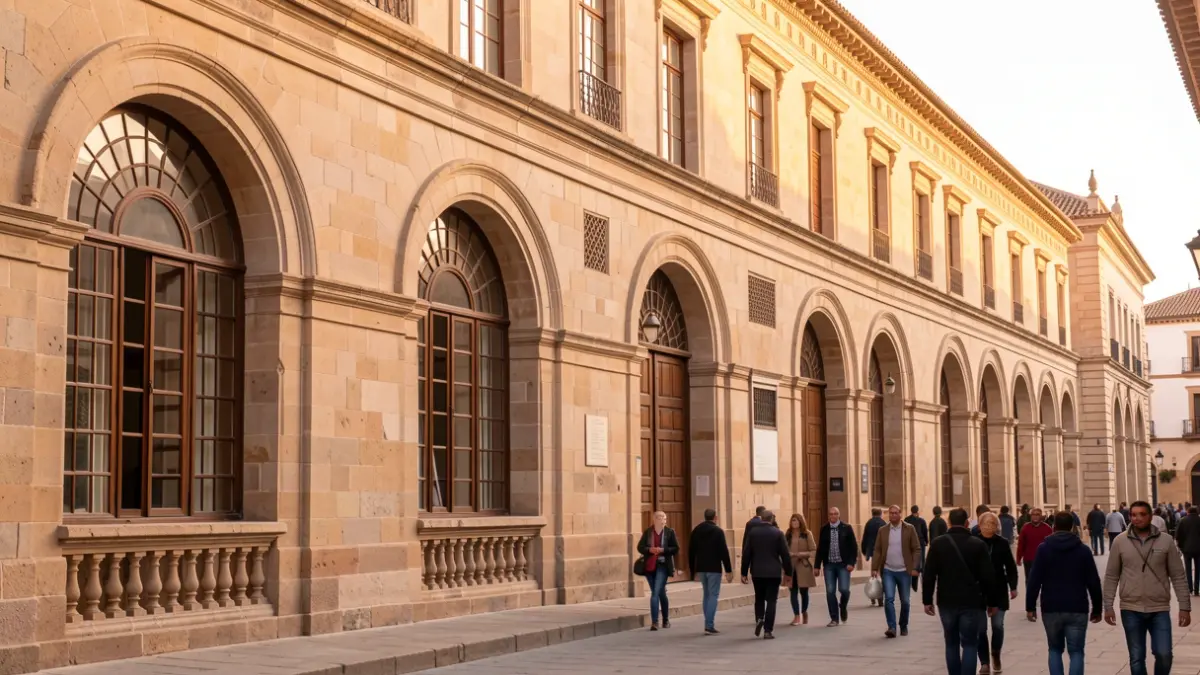
Facade of a historic building with Andalusian architectural elements.
Loyola University Andalusia and the Diocese of Córdoba have formalized a framework agreement to foster collaboration in key areas such as pastoral care, training, and counseling.
The agreement, signed by the rector of Loyola University, Fabio Gómez-Estern, and the bishop of Córdoba, Jesús Fernández, at the Bishopric's headquarters, establishes a stable framework for developing projects and activities aligned with the goals of both institutions and their "shared commitment to education, culture, social action, and service to the Cordoban society".
This agreement includes collaboration on initiatives related to pastoral care, training, counseling, and other activities to be agreed upon in the future, with the possibility of developing specific agreements to detail programs and projects.
“
"This agreement reinforces Loyola University's commitment to continue contributing to the educational, social, cultural, and spiritual development of Córdoba from our identity as a university of the Society of Jesus. Collaboration with the Diocese of Córdoba allows us to continue generating spaces for encounter, training, and service, putting university knowledge at the service of people and society."
“
"It is important for both parties, because although collaboration is already underway in some aspects, especially in promoting culture and training in Latin America and also among ourselves, it paves the way or initiates a time when we will try to join forces on common projects, projects of interest to both parties concerning training and religious life, even pastoral life."
Bishop Jesús Fernández expressed gratitude for Loyola University's willingness, which arose after a meeting on September 25th, and highlighted the mutual support for the "common good, the development of culture, the development of faith, the growth of people and peoples".
With this alliance, both institutions strengthen their institutional ties and their "commitment to the development of initiatives that contribute to the integral formation of individuals, the dialogue between faith and culture, the promotion of humanistic and Christian values, and the support for the university and diocesan community".