The Córdoba City Council has finalized close to 90% of the accessibility improvement interventions in the vicinity of Avenida Carlos III. This project, driven by the Mobility and Inclusion and Accessibility departments, has involved an investment of 257,000 euros and encompasses 29 actions aimed at facilitating pedestrian transit and increasing safety.
The delegate for Mobility, Diego Jordano, indicated that the work is nearing completion, with less than 10% remaining. The primary objective has been to incorporate elements that enhance mobility for both people with disabilities and other pedestrians.
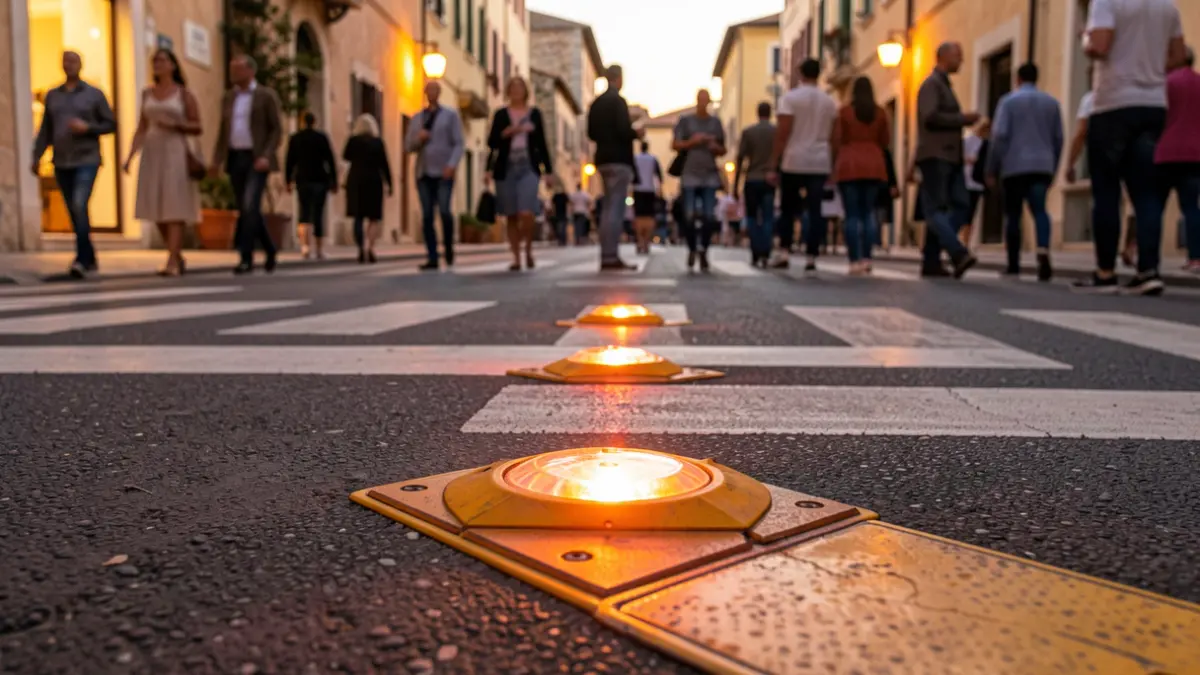
Improvements include the installation of tactile paving, lowered sidewalks, flexible bollards to prevent improper parking near pedestrian crossings, and the implementation of luminous warning systems at intersections. These devices, activated by infrared sensors, illuminate when a pedestrian is about to cross.
Jordano, who also heads the Inclusion and Accessibility department, recalled the earlier installation of pavement-integrated luminous traffic lights in this same area, specifically designed for people with low vision, highlighting their value as a reference.
The choice of this area in Córdoba was due to its permanent risk situation, characterized by high traffic intensity, double-parked vehicles, a bike lane, containers, and motorcycles that reduced visibility at crossings. "We have acted to resolve the problem of crossing from one point to another on Carlos III," stated Jordano, noting the "quite notable effect" of similar solutions elsewhere in the capital.
The next planned intervention will focus on Carrillo Lasso street, in the Levante area, where the project has already been drafted to adapt pedestrian crossings, correct sidewalks, and improve the accessibility of bus stops.
According to Jordano, this action ranks among the 50th and 51st executed by the municipal government over the past seven years within the accessibility improvement program, which has addressed over a thousand pedestrian crossings in Córdoba.
The delegate assured that this line of action will continue, prioritizing areas based on their danger level and pedestrian volume. He emphasized that the benefits extend beyond wheelchair users to include those using walkers, baby strollers, or experiencing mobility difficulties, as even a small height difference can pose a significant barrier.
The Córdoba City Council is undertaking similar actions in other areas such as Escriba Lubna, Camino de Cañero, and the El Tablero area, with interventions in all districts. The selection of projects prioritizes locations with higher pedestrian traffic.