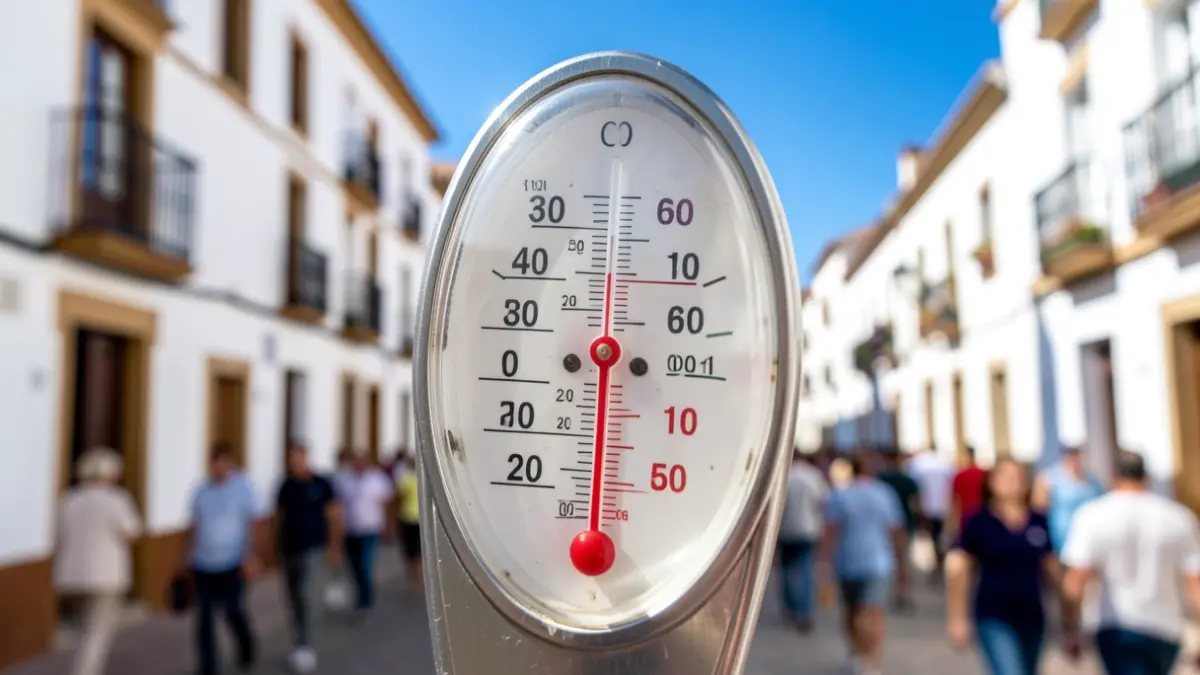
The province of Córdoba has accumulated 26 fatalities linked to heat during the current summer, according to data from the Daily Mortality Monitoring (MoMo) system of the Carlos III Health Institute. This figure, updated as of August 12, significantly surpasses the 10 deaths recorded throughout the summer of 2025 and the four in 2024.
This increase contrasts with the low levels of mortality associated with high temperatures in the previous two summers. However, the current figure remains below the most severe episodes of the last decade, such as 2017 (75 deaths) and 2022 (66 deaths).
The year-on-year evolution shows significant variability. After 66 deaths in 2022, the province registered 32 in 2023 and only four in 2024. Last year, it rose to 10, and this summer it has already reached 26, with more than a month of the summer period remaining.
This rise coincides with a particularly hot summer. Last June was the second hottest in Spain since 1961, with an average temperature 3.2 degrees Celsius above the 1991-2020 average, according to the State Meteorological Agency (Aemet).
The situation in Córdoba is part of a broader increase across Andalusia, which has recorded 427 deaths attributable to heat so far this summer of 2026. By mid-August 2025, 169 fatalities were counted, and in 2024, around 130. In just two years, the estimated mortality from heat has more than tripled in the region.
The provinces with the highest figures in 2026 are Seville (149 deaths) and Málaga (117), followed by Almería (59). Córdoba stands at 26. The uneven distribution of the heat's impact within the region is notable.
At the national level, Spain has accumulated 3,893 deaths attributable to excess temperature, surpassing the approximately 3,832 registered throughout the entire summer of 2025. The 2026 figure is approaching the record of 2022 (4,789 deaths) with a significant part of August and all of September still to come.
The impact is also striking in other provinces, such as León (41 deaths between June and July), Salamanca (27 in July), and Valladolid (23 in July).
Extreme temperatures also have consequences in winter. In the last complete winter period (December 2025-March 2026), approximately 69 deaths in Córdoba were attributed to low temperatures, compared to the 26 related to heat this summer. Although winter has concluded and summer is ongoing, both extremes have measurable effects on provincial mortality.
Deaths attributable to heat are not solely due to heatstroke. High temperatures can destabilize cardiovascular, respiratory, or renal diseases, especially in the elderly or more vulnerable individuals. The 26 deaths in Córdoba reflect this less visible dimension, representing an increase after two summers with particularly low figures.