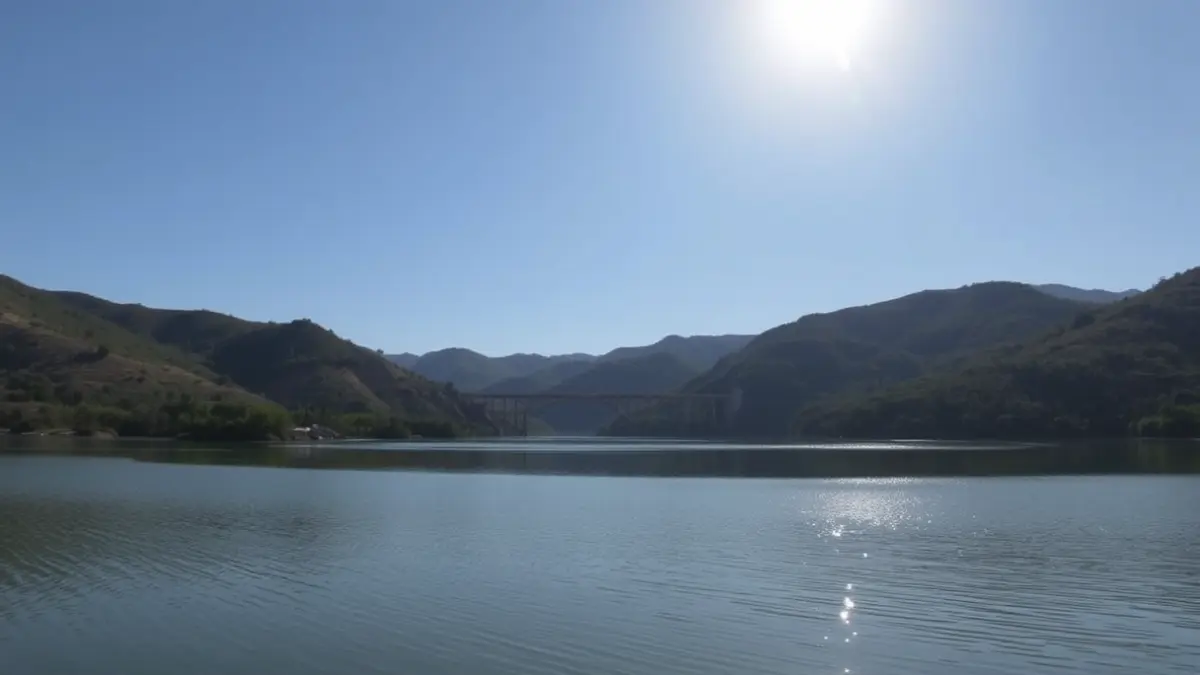
This figure represents a significant milestone for the region, as the last time Córdoba's reservoirs showed such a high level was over a decade ago. At that time, intense winter rains not only filled the reservoirs but also led to controlled discharges and rising river and stream levels.
During the intervening years, winter and spring seasons had not been as generous in rainfall as the last three years, which has allowed water reserves to recover significantly. Currently, Córdoba's reservoirs are close to 3,000 cubic hectometers, out of a total capacity of 3,320 cubic hectometers. The province stands out as having the largest storage capacity within the Guadalquivir river basin, which collectively exceeds 8,000 cubic hectometers.
Among the most important reservoirs in the province are La Breña II and Iznájar, the two largest in the Guadalquivir basin. Although their filling has been constant, even in weeks without rain, thanks to their vast basin and runoff, they still have room to store more water. Iznájar is slightly above 84% of its capacity, while La Breña II is close to 82%. Other reservoirs such as Vadomojón are at 100%, and the Guadalmellato-Navallana system exceeds 95%. Sierra Boyera, which dried up three years ago, is now at 99%, and Puente Nuevo exceeds 94%, with the rest of the Sierra Morena reservoirs between 95% and 100%.
This favorable situation guarantees a normal irrigation campaign for the upcoming summer and ensures the supply to urban areas for at least three years, even if a new period of rainfall scarcity were to occur.