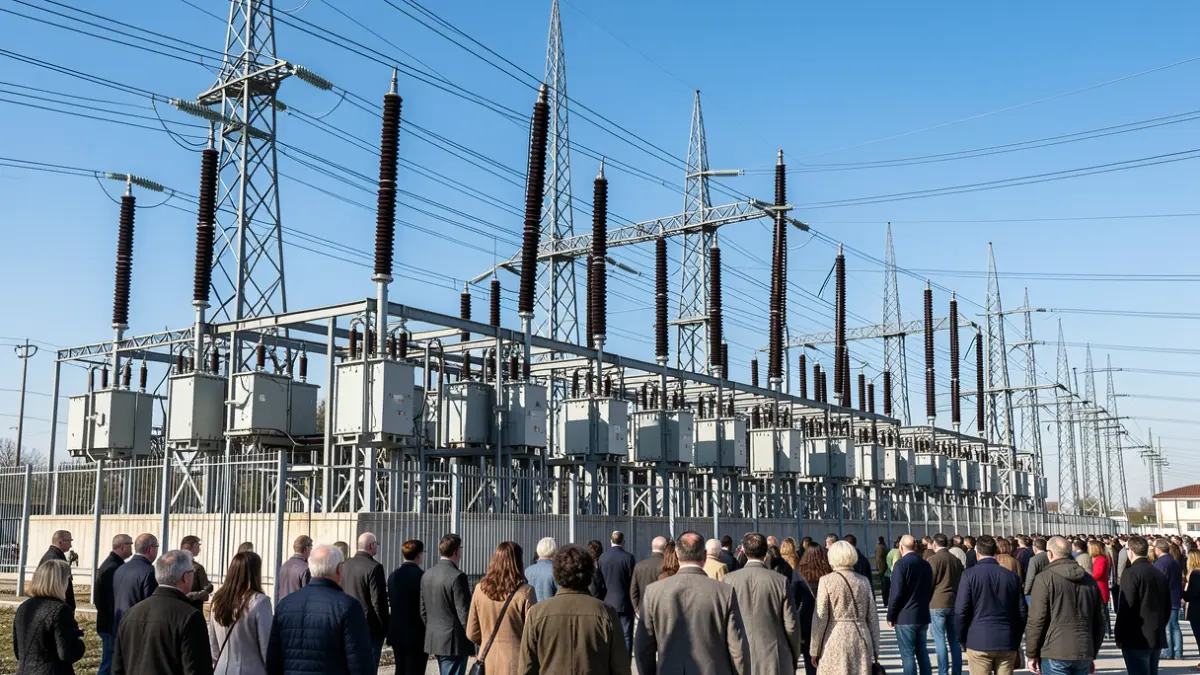
The lack of capacity and saturation of the electrical grid have become an insurmountable obstacle for the real estate sector in Córdoba. A report by BBVA Research reveals that the possibilities for new developments in the province are practically nil with current infrastructure, a situation that also affects a large part of Andalusia.
The BBVA Research study paints a complex scenario, warning that the growth in energy demand by 2030, driven by electrification and data center consumption, will intensify competition for grid access. Córdoba ranks among the most affected provinces in Andalusia, along with Almería, Granada, and Jaén, as it lacks the necessary energy to alleviate its housing deficit. The report estimates that the number of new homes that could be built with the available grid capacity approaches zero.
The problem lies not in a lack of electricity production, but in its transport and distribution. 88% of distribution nodes in Spain have less than 1 MW available, a technical limit that hinders the connection of new residential and business projects. In Córdoba, this translates into the impossibility of executing over 80,000 planned housing units nationally that depend on new electrical infrastructure.
To overcome this barrier, the BBVA Research report proposes expediting the release of unused access capacity, reducing blockages, simplifying procedures, and increasing transparency about the real available margin. In the medium term, it calls for increased investment in transport and distribution networks, better coordination between municipalities and distributors, and the streamlining of environmental procedures to achieve a more flexible and modern grid.