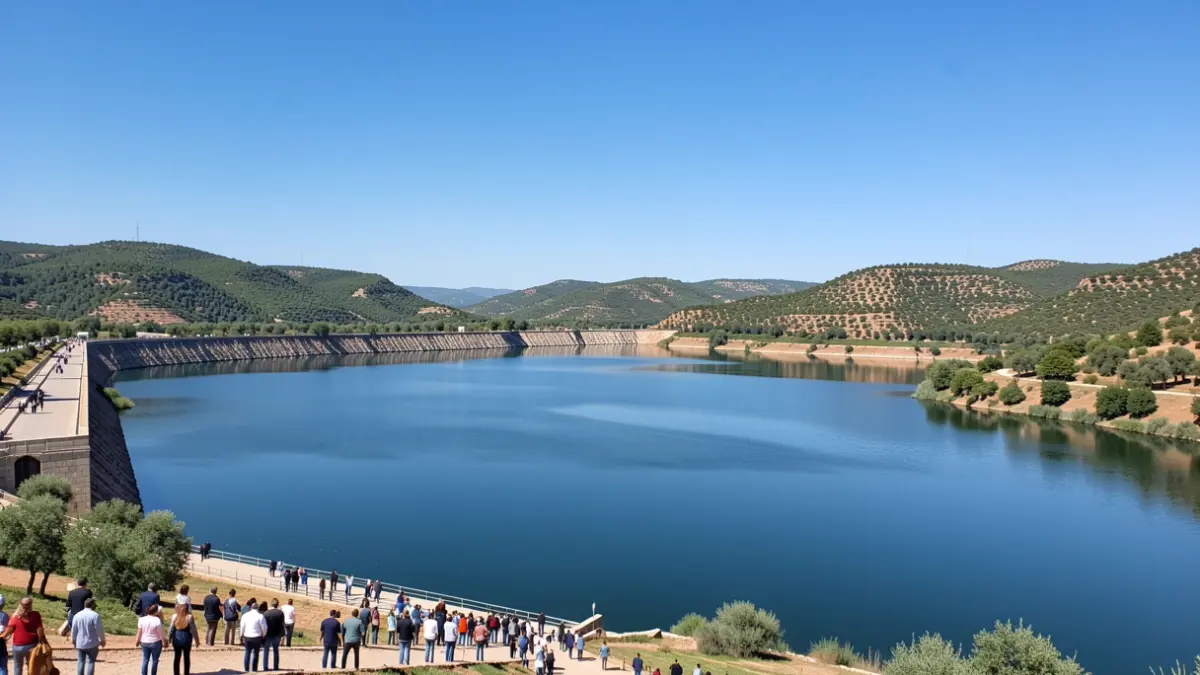
The province of Córdoba is ending the summer with its reservoir water reserves close to 80% of total capacity. This water level has not been recorded in over a decade, marking a significant contrast with drought years.
Abundant spring rains, along with precipitation from previous years, have helped maintain soil moisture. This has reduced the need for irrigation for summer crops and allowed runoff to continue filling aquifers and wells, decreasing reliance on water releases.
While the general situation is positive, there are nuances among the different reservoirs. For instance, the San Rafael de Navallana dam, whose primary function is to ensure irrigation, is at 52% capacity. However, the large reservoirs in the province, such as Iznájar and La Breña II, are above 80%.
This improvement in water reserves allows for a more tranquil end to the irrigation season and the approach of autumn, reversing the trend of the harshest drought years.