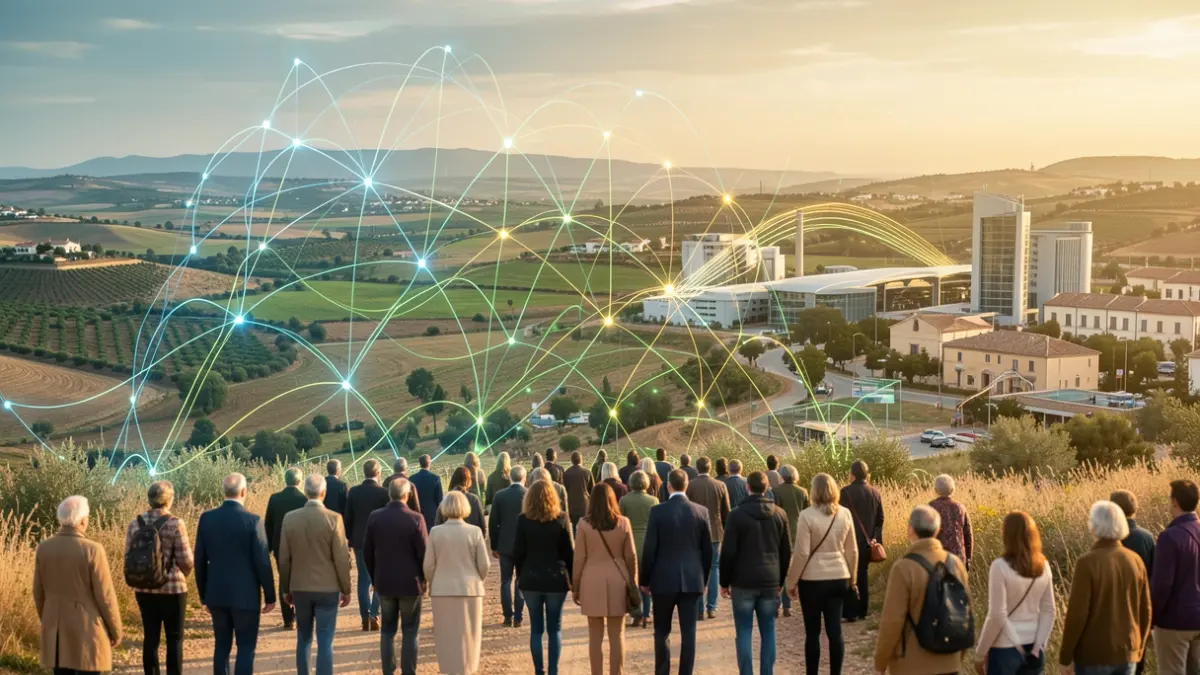
This event, held last Saturday, brought together leading specialists in botany, ecology, and urban sustainability. The primary goal was to foster the exchange of scientific knowledge and propose practical solutions for urban realities, with a particular focus on the necessity of green infrastructure.
The conference was supported by the Córdoba City Council's Department of Sustainability and Environment. Councilman Daniel García Ibarrola Díaz inaugurated the event alongside EnArbolando President Dori Serrano Carovaca, emphasizing the importance of such initiatives for sustainable urban development.
The inaugural session featured Carmen Galán Soldevilla, Professor of Botany, who explored the concept of biophilia and its connection to urban space design. She highlighted the need to reconnect citizens with nature, stressing that the presence of vegetation in cities not only improves environmental quality but also enhances people's physical and psychological well-being.
“"She advocated for the integration of ecological criteria in urban planning as a key tool for building more livable and resilient environments."
Meanwhile, Sara María Parras León, from the Department of Botany, Ecology, and Plant Physiology, underscored the importance of urban wild flora, often undervalued in city management. Her presentation focused on the conservation of these species, which perform essential functions in urban ecosystems, such as maintaining biodiversity and improving soil quality. She also noted their remarkable adaptability to adverse conditions, making them strategic allies against the effects of climate change.
In a similar vein, forest engineer Sonia Vega Rosete presented an analysis of the thermal limits of urban trees. She explained how rising temperatures, especially in urban contexts where the heat island effect is intensified, impact tree physiology and survival. Vega Rosete stressed the need to carefully select tree species based on scientific criteria to ensure the long-term sustainability of urban tree populations.
Another central theme was the intervention by Juan Fernández Haeger, Professor of Ecology, who advocated for an urgent increase in green infrastructure in Córdoba. He pointed out that these spaces not only mitigate climate change effects but also promote social cohesion and public health. Fernández Haeger urged administrations to integrate green corridors and nature-based solutions as structural elements of the urban fabric, with water playing a prominent role in reducing the heat island effect in the city of Córdoba.
The program concluded with the participation of Isaac Mallol de la Cierva, a biologist and permaculture specialist, who presented this approach as a viable alternative for creating sustainable urban systems. Mallol explained that permaculture is based on observing natural ecosystems, promoting self-sufficiency and environmental regeneration, and shared practical experiences demonstrating its potential to transform urban spaces.
The conference concluded with a consensus among experts on the need to rethink the urban model from an ecological perspective, integrating scientific knowledge into decision-making and fostering citizen participation. In a context of climate change and increasing urbanization, nature must be central to the design and management of urban spaces.