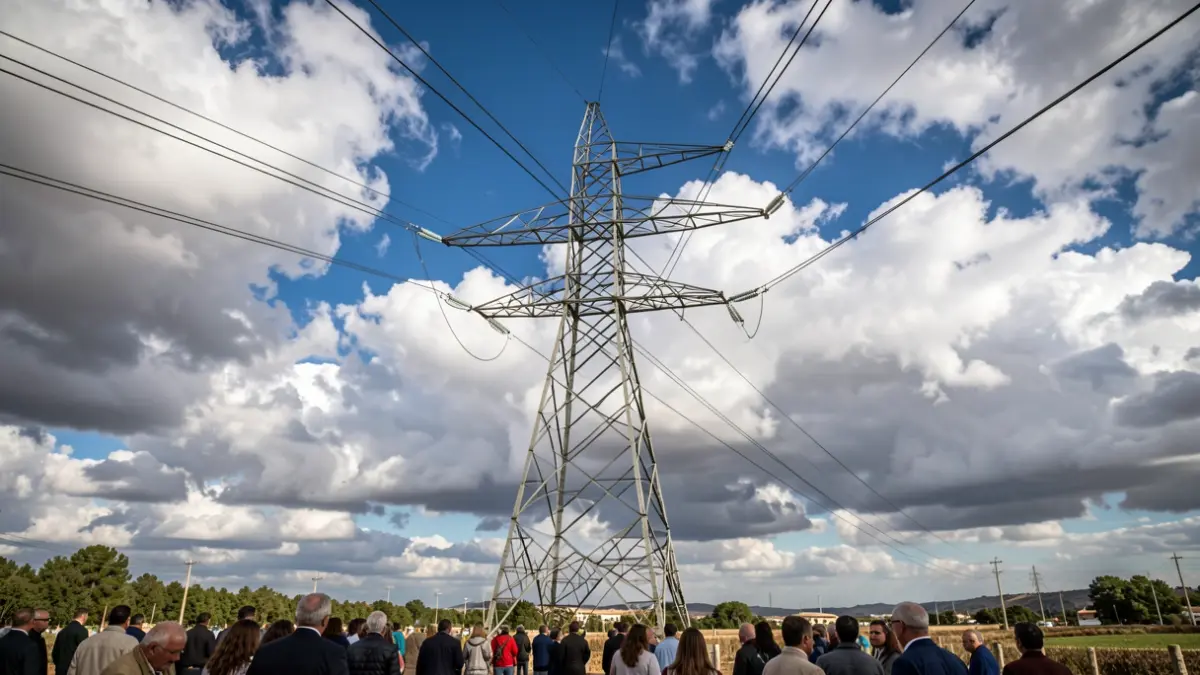
The Civil Guard's report, as part of the investigation into the Adamuz accident, emphasizes that the system for detecting track breaks in the affected section did not comply with established requirements. This conclusion stands despite previous warnings about potential issues in the area.
One of the key aspects of the investigation is to determine why the signaling systems failed to detect a possible track break before the Iryo train passed. The primary reason, according to the report, is that the electrical system of that specific section exhibited "low detection reliability" due to its characteristics.
“"It was possible to detect a clear rail break on track 1 (V1) between PK 317 and PK 319, but the reliability of this detection by signaling systems on this specific line was very low due to the electrical configuration of the infrastructure."
The Civil Guard's report highlights that the SAM system passively registered an electrical alteration consistent with a break hours before the incident. However, the signaling system was not configured to automatically alert due to the method's lack of reliability in that railway infrastructure, and Adif did not require it, despite its specifications including fracture detection.
For its part, Adif has defended its actions, stating that on January 17, approximately 22 hours before the accident, a voltage drop was detected in the track circuit where the derailment occurred, but not a break. They explain that the voltage dropped from 2.2 to 1.5 V, a 0.7 V variation that can coincide with various incidents, not necessarily a track break. Furthermore, they point out that track circuits are not designed to detect rail breaks, but rather to determine a train's position.
The Civil Guard's Criminalistics team concludes that the main line of investigation focuses on a possible rail break or welding failure that the signaling systems could not detect in advance. This rules out other hypotheses such as sabotage, terrorism, or negligence by the train drivers, whose toxicology tests were all negative.