The agreement, valid for two years, will grant the Virgen Macarena Hospital priority access to the latest updates and solutions that Fujifilm develops for its equipment, software, and healthcare services. First Vice-President and Minister of Presidency, Health, and Emergencies, Antonio Sanz, highlighted that this partnership reaffirms Andalusian public healthcare as "cutting-edge and a benchmark in Spain and worldwide," with the Seville hospital chosen for its "extensive track record in health innovation and research and its state-of-the-art technological endowment."
The collaboration, also involving the Public Andalusian Foundation for Health Research Management of Seville (Fisevi), will facilitate the integration of key diagnostic innovations. Among these is the fusion prostate biopsy, a technique that enhances the accuracy of prostate cancer diagnosis by overlaying multiparametric MRI images with real-time ultrasound, guiding the needle with high precision. It is estimated that over a hundred patients will benefit annually from this technique, which is already being applied to patients with suspected cancer and negative prior biopsies.
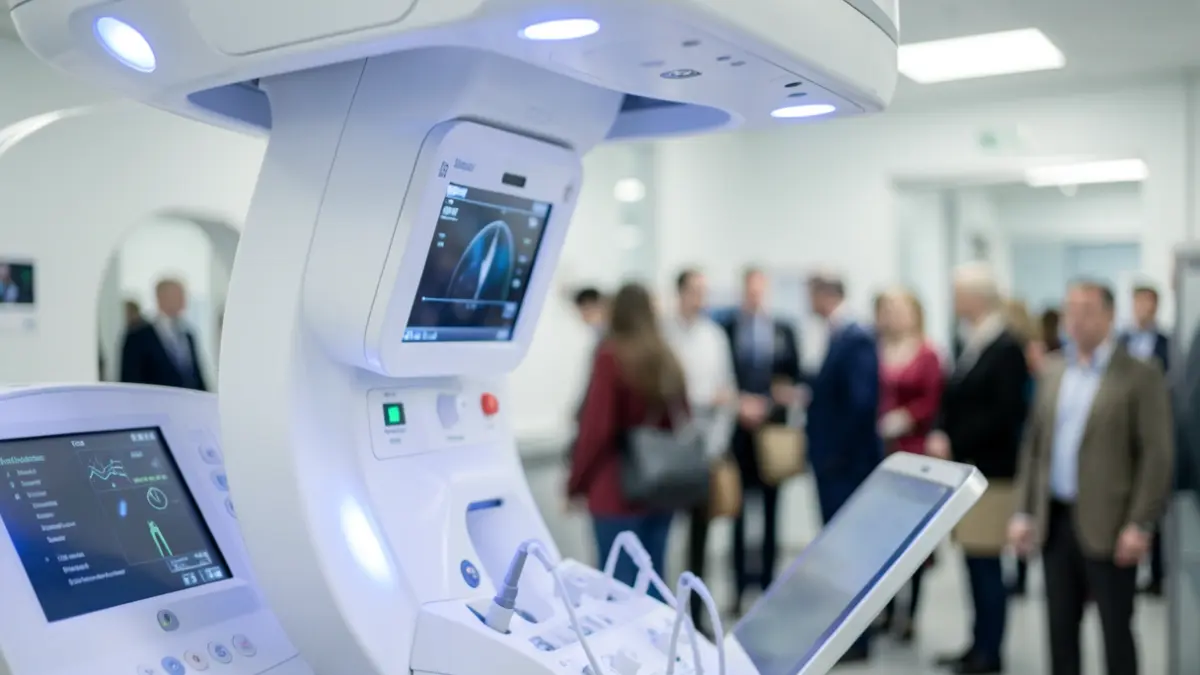
Furthermore, professionals from the General Surgery and Digestive System Service will gain access to a new model of a mobile surgical C-arm integrating fluoroscopy and digital radiography. The agreement also includes scientific-technical, training, and process improvement projects, such as training in diagnostic imaging, endoscopy, artificial intelligence, and advanced maintenance.
The Virgen Macarena Hospital is already equipped with cutting-edge technology, including the first open MRI in Andalusian public healthcare, located at the San Lázaro Hospital. This AI-powered equipment offers greater comfort and precision, reducing test times. A new high-resolution digital mammography unit has also been installed, improving early detection of breast lesions with lower radiation doses and enhanced patient comfort.
The hospital's Endoscopy Unit has also been modernized with advanced endoscopic imaging systems, new endoscopes, and high-definition processors. These improvements optimize diagnostic capabilities, facilitate early lesion detection, and increase the safety and effectiveness of therapeutic procedures, solidifying the unit's status as a leader in its field.