The Junta de Andalucía has confirmed a new mild case of West Nile fever (WNF) in humans within the autonomous community, bringing the total diagnosed this season to five. The affected individual is a man residing in Coria del Río (Seville), who presented symptoms on July 17 and was confirmed by PCR on July 24 by the Virgen del Rocío University Hospital.
This mild case was identified thanks to the surveillance established by the Comprehensive Vector Surveillance and Control Program for West Nile Fever in Andalusia. Consequently, the Ministry has decided to extend the alert area period in Coria del Río until August 14.
Furthermore, Health has declared an alert area due to the circulation of the West Nile virus (WNV) in Bollullos de la Mitación (Seville), and in the province of Málaga, in the municipality of Fuengirola and the population center of Las Lagunas (belonging to Mijas). This measure, with a minimum duration of four weeks, will intensify entomological, animal, and human surveillance, as well as community promotion and public communication actions.
Local administrations will be required to intensify mosquito control and treatment measures for disease vectors until August 21, reinforcing their Municipal Vector Surveillance and Control Plans, both in urban centers and in larval foci or adult refuges within 1.5 kilometers.
With these new declarations, there are now fifteen Andalusian municipalities in alert areas, adding to those already existing in Almería, Jaén, Granada, and Seville. Viral circulation has also been detected in Benacazón (Seville) and Bujalance (Córdoba), although without the need to declare an alert area as it was detected outside the urban center.
To date, five mild cases have been diagnosed in Andalusia, located in Palomares del Río, Villamanrique de la Condesa, La Puebla del Río, and Coria del Río. Laboratory studies conducted on 262 users, 101 patients with viral meningitis, and 688 blood donors have tested negative for WNV. Circulation of the virus has also not been detected in equids or wild birds.
Since the period of high mosquito densities began, 3,310 determinations have been made in 213 positive traps in various locations across Almería, Jaén, Granada, Córdoba, Seville, and Málaga. A progressive increase in the densities of female transmitting mosquitoes is observed in several areas of Seville, Jaén, Cádiz, and Córdoba.
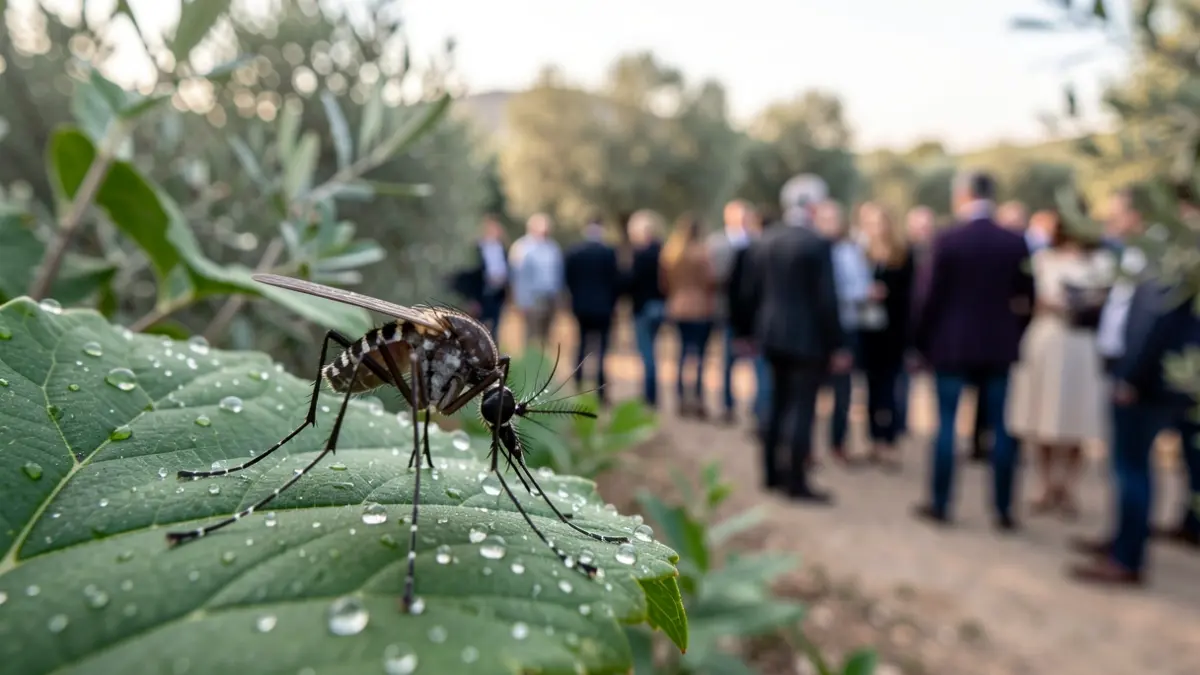
The Ministry of the Presidency, Health, and Emergencies, through 120 of its own traps and data from other administrations, monitors the circulation of the virus in mosquitoes of the genus Culex. Information gathered from nearly 215 traps allows for decision-making regarding risk levels and the declaration of alert areas.
The WNF Program communicated the initial risk levels to 130 Andalusian municipalities in March, with varying percentages by province. Public Health agents have carried out 1,415 verifications in 644 municipalities, inspecting drains and other control points. Local Project teams have conducted 2,695 community, school, and professional actions.
The Ministry recommends that administrations and citizens adopt protection measures, especially for vulnerable individuals, focusing on avoiding mosquito bites. The use of registered topical repellents, light-colored clothing covering the body, and avoiding intense odors are advised. Reinforcing domestic measures such as installing mosquito nets, using insecticides, and turning off unnecessary lights is also recommended.
Furthermore, it is urged to avoid stagnant water areas where mosquitoes breed, properly maintaining swimming pools, cisterns, and washbasins, and emptying accumulated water in gardens or pots. In livestock farms, it is advised to frequently renew animal drinkers and avoid puddles or water leaks.