The Provincial Council of Almería has given the green light for the construction of the future Vícar Music School. This new and significant cultural infrastructure aims to meet the demand for musical training in the municipality, the region, and other towns in the province. It represents one of the institution's most important investments in its over two centuries of history.
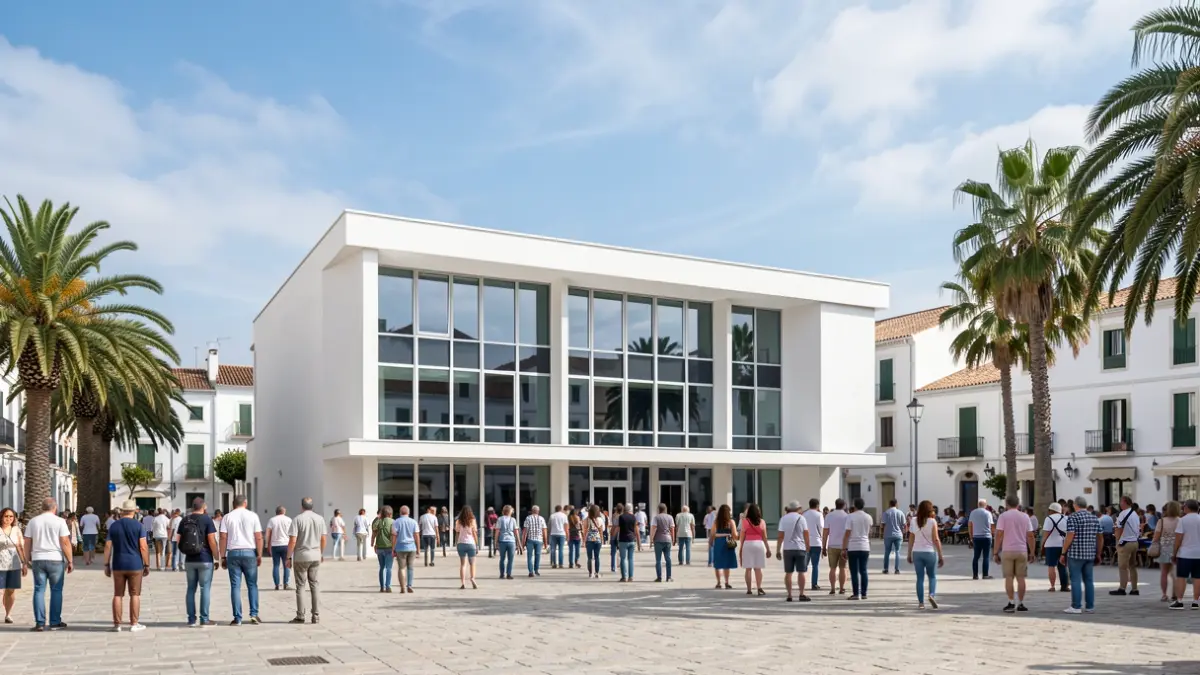
The project, with a total investment of over 4 million euros, is financed 70% by the Provincial Council and 30% by the Vícar City Council. The future facility, which will house the Vícar Cultural and Musical Training Center, will be located on a municipal plot at the intersection of Bulevar Ciudad de Vícar and Calle Platón, next to the IES Puebla de Vícar.
The building will feature four floors and a constructed area of 2,256.03 m³. Its rooms will be dedicated to teaching wind, string, piano, and percussion instruments, with capacity for over 500 students. The president of the Provincial Council, José Antonio García Alcaina, highlighted the project's historic significance, conceived with a regional scope and as a provincial educational benchmark.
The mayor of Vícar, Antonio Bonilla, welcomed the news, emphasizing the strong institutional relationship and calling it a great day that will make history for the municipality. The school will be built to conservatory standards, promoting the knowledge and artistic experience of music.
The building's structure will include a basement for technical installations, a ground floor with a reception, administration office, library-phonotheque, dressing room, and an indoor stage area of 94.50 m², as well as an outdoor patio-auditorium of 466.73 m². The first and second floors will be dedicated to wind, percussion, string, and piano specialties, respectively, with a total of 25 classrooms.
The design prioritizes acoustic insulation, universal accessibility, LED lighting, and efficient climate control. Special attention has been paid to engineering to ensure an optimal learning environment without interference between different musical specialties. The facilities will be 100% accessible and inclusive.
The School will offer training programs for all ages and levels, aimed at the local, regional, and provincial population, covering subjects such as music theory and various instrument families.