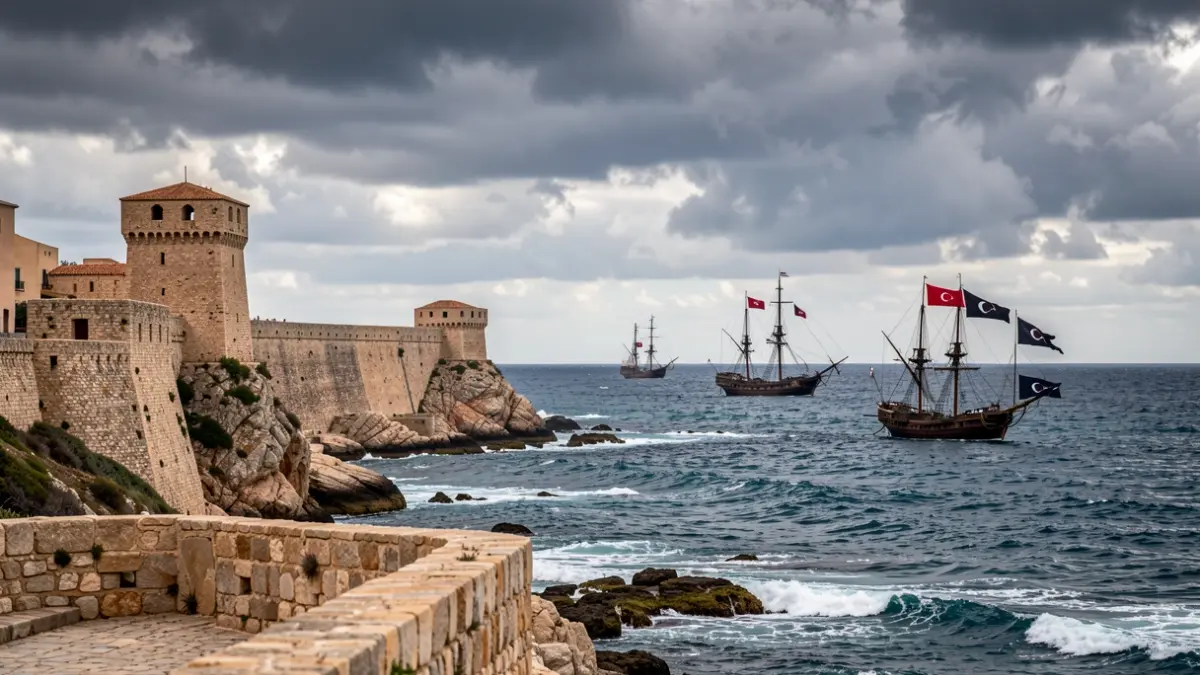
Since its reconquest in 1292, Tarifa found itself in a vulnerable strategic position, marked by a dual front: landward, with the Nasrid sultanate, and coastal, with neighbors from North Africa. By the late 15th and early 16th centuries, the threat intensified with the arrival of Turkish ships from their bases on the Barbary coast.
The 17th century was particularly perilous. Attacks by Turkish and Barbary pirates were frequent. A notable example occurred in 1617, when a fleet of thirty-six "Greek ships" appeared in the Gudalmesí area. The city prepared for defense, and on the same day, pirates landed in Bolonia, causing damage to livestock. Tarifa's cavalry responded to the alarm, but the attackers had already returned to their ships with the loot.
Tarifa's defense was often hampered by a lack of resources and weaponry. The corregidor Diego de Céspedes Suárez de Toledo described the scarcity of arms and ammunition in 1614, yet resistance was organized. The city pleaded for royal aid to repair walls and acquire artillery, facing high taxes and the absence of its own port.
Historical records detail numerous incidents, such as the attack by the corsair Solimán in 1617, which kept Tarifa under naval siege for 18 days. Incursions in 1628 and 1639 are also mentioned, where a lack of coordination between local authorities, such as the corregidor and the castle lieutenant, diminished the effectiveness of defense and the capture of enemy vessels.
Despite the decline in Turkish incursions after battles like Lepanto (1571) and the second siege of Vienna (1683), the North African threat persisted. In 1691, the situation in the Strait became critical due to the power of the King of Mequinez. Coastal defense, with watchtowers like those at Guadalmesí and Bolonia, remained essential.
Life in Tarifa was marked by this constant insecurity. Its inhabitants, fishermen and farmers, lived under the risk of capture and enslavement. The local resistance, often improvised and with limited resources, was fundamental to the city's survival throughout the centuries.