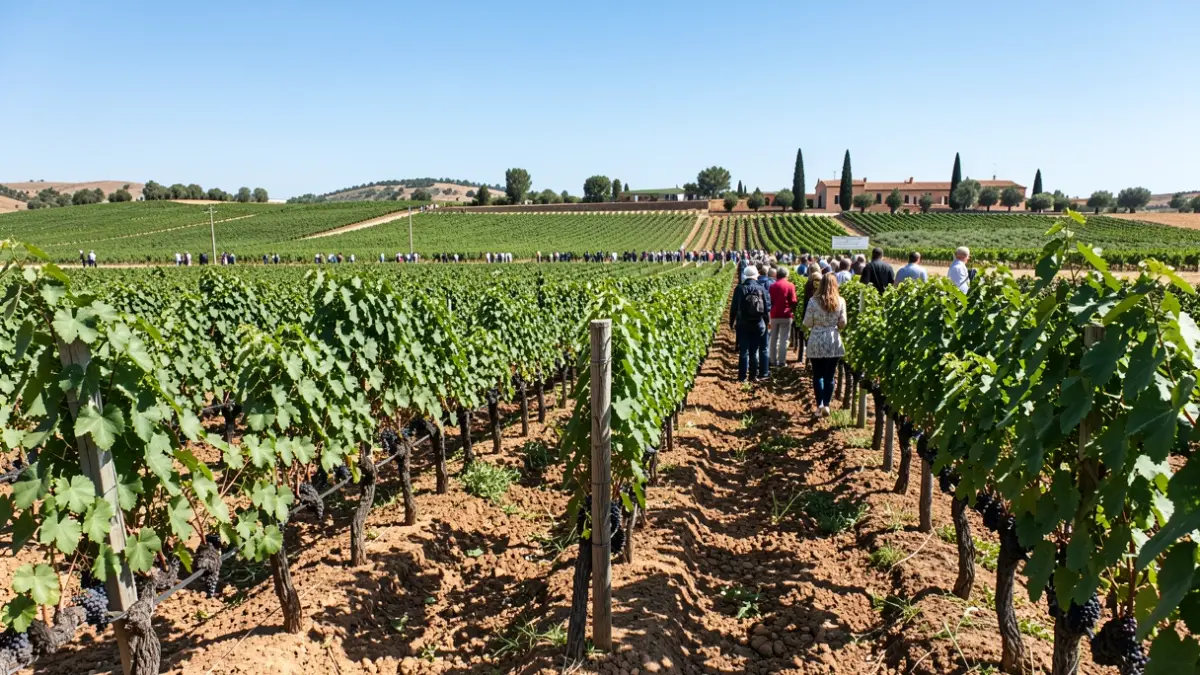
The grape harvest in the Montilla-Moriles Protected Designation of Origin (DOP), set to begin its collection work at the end of July, shows significant improvement forecasts compared to the previous season. Current production is expected to be between 60% and 85% higher than last year, which saw the lowest harvest in the zone's history.
The 2025 season was severely affected by mildew, a fungus that negatively impacted the vines, resulting in a minimal production of just over 19 kilos of grapes harvested. Initial estimates for the current harvest, to be released in late September, suggest production could range between 30 and 35 million euros, although these figures remain below the region's historical average of 40 to 45 million kilos.
The first varieties to be harvested will be early white grapes such as Chardonnay, Verdejo, and Moscatel, while the collection of Pedro Ximénez (PX), the region's flagship grape, is expected in mid-August. Meteorological forecasts and the early application of phytosanitary treatments have helped curb the spread of mildew this year.
Representatives from the Regulatory Council and Asaja agree on an improvement compared to the previous year. However, Juan Manuel Centella, president of Asaja's Vine Sector in Córdoba, remains more cautious, expecting "decent" production given the age of some vineyards and the current area, which remains below 4,000 hectares.
The vineyard area in Montilla-Moriles has significantly decreased from the 20,000 hectares of the 70s and 80s, due to lower profitability compared to other crops like olives and almonds. Last season, many farmers chose to uproot vineyards affected by mildew, although the rate of hectare reduction is slower than in previous years.
The current market presents challenges, both nationally and internationally, with a general decline in wine consumption and a turbulent geopolitical environment, warned Enrique Garrido, secretary-general of the Regulatory Council.