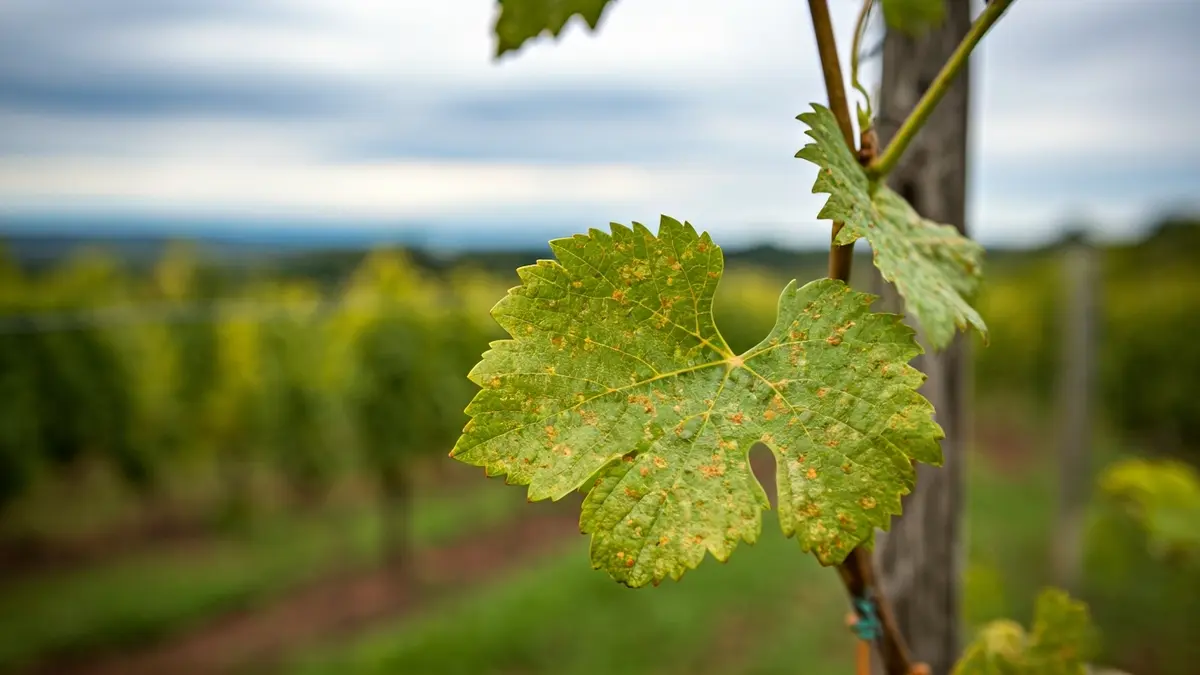
This warning comes from the Viticulture Classroom of the Regulatory Council, which has calculated the imminent appearance of this fungus. Mildew was responsible for a 50% reduction in last year's harvest, highlighting the severity of the current situation. Recent rainfall, with up to 55 liters per square meter in some areas on April 8, is a key factor for the spread of the plague, according to the latest technical bulletin.
Given the devastation caused in the 2025 harvest, the Regulatory Council urges winegrowers to closely follow instructions for treating the vines. Mildew survives the winter in fallen leaves, so the key strategy is to maximize treatment effectiveness to minimize the number of necessary applications.
To anticipate the aggressiveness of the fungus, researchers use mathematical models such as EPI (Potential Infection State), which predicts the maturation of winter spores. Thanks to collaboration with the School of Agricultural and Forestry Engineering (Etsiam) of the University of Córdoba, a model has been developed that analyzes meteorological conditions between October and March. Currently, the calculated EPI is 18.76, indicating a "very high" risk, similar to the 18.85 recorded last year at this time of spring.
We cannot let our guard down against mildew. Let's remember what happened in 2025, when after a latent presence in the last two weeks of April, the rains of May 2 and 4 and successive and abundant dew days caused a devastating attack that led to the loss of half the harvest.
The forecast is that the first spots will be visible on April 21. Given their difficulty in being located, the Mildiu Pedro Cabezuelo award is given to the first farmer who detects them. Furthermore, it is crucial that winegrowers who identify symptoms notify Plant Health so that technicians can confirm the infection in the laboratory and a general alert can be issued in the area.
Mildew, caused by the fungus Plasmopara viticola in grapevines, manifests as oily spots on leaves and a white fuzz on the underside. It can lead to premature leaf drop, cluster deformation, and berry loss. Its control requires preventive measures such as pruning, removing affected leaves, and specific treatments, especially in spring, when humidity and temperature conditions are optimal for its development.