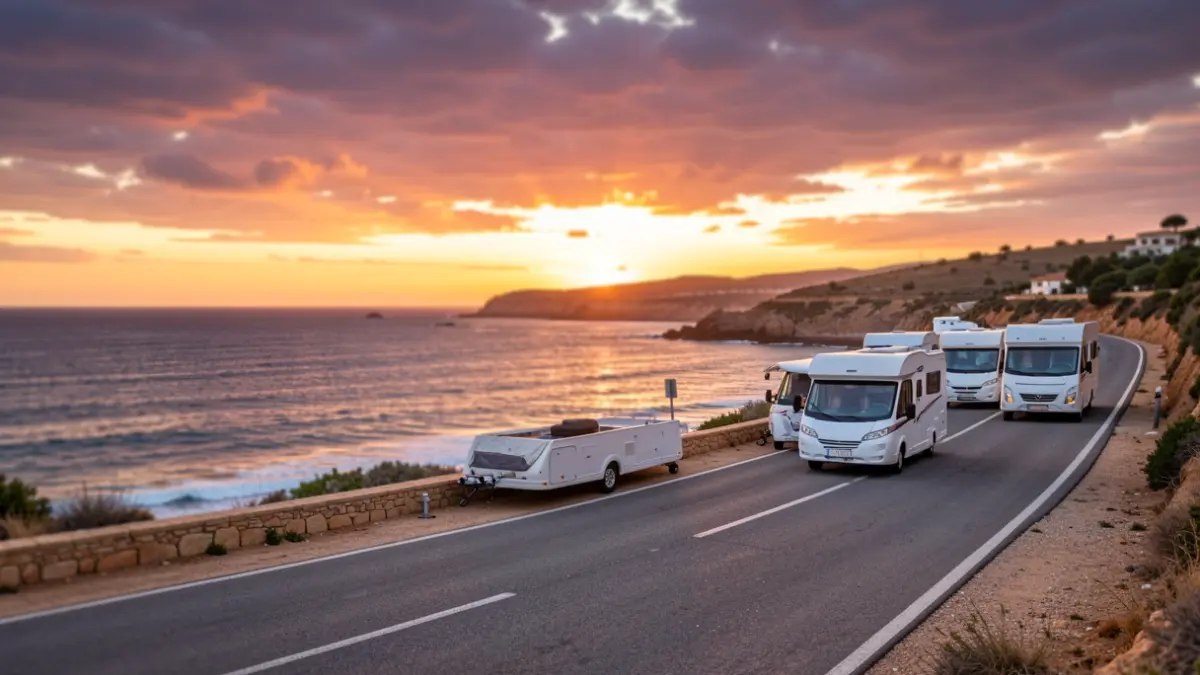
What was once a niche tourist activity has solidified into one of the fastest-growing travel methods in Spain and Europe. The province of Cádiz, with its favorable climate, extensive coastline, and natural and gastronomic attractions, has become a prime destination for thousands of campervan and motorhome travelers. However, this expansion has ignited a heated discussion regarding public space occupation, coexistence, environmental protection, and the need to adapt municipal regulations.
Campervanning is no longer confined to the summer months. Long-term travelers, primarily from countries like France, Germany, Belgium, and the Netherlands, choose Cádiz during autumn and winter seeking milder climates. This continuous presence helps to de-seasonalize tourism and sustain economic activity for much of the year, benefiting local businesses, restaurants, and service providers. Sector associations argue that this model promotes a more equitable distribution of visitors.
The primary focus of conflict lies in regulating the activity. While parking like any other vehicle is permitted as long as no camping elements are deployed, the appearance of awnings, tables, or barbecues changes the situation. Municipalities have the authority to impose restrictions, leading to diverse regulations across different towns, causing confusion among users.
The economic impact is defended by campervan associations, who highlight that travelers generate wealth through local purchases and patronage of establishments. Nevertheless, some in the hotel sector express concern over unfair competition with regulated accommodations that incur higher costs. The discussion is particularly relevant in a province where tourism is a key economic driver and territorial pressure is mounting.
Coexistence between residents and visitors is a major concern. Neighbor complaints often center on prolonged occupation of parking spaces and a sense of saturation in public areas, especially in high-tourism zones. While the majority of users are responsible, the uncivil actions of a minority tarnish the group's image. Uncontrolled waste disposal and setting up camping equipment in unauthorized areas are common issues.
In El Puerto, areas like La Puntilla or Valdelagrana frequently host vehicles, yet the town lacks a specific ordinance. In Tarifa, the controversy is particularly pronounced, with evictions and fines for irregular parking in natural sites like Los Lances. The Guardia Civil intervenes to preserve the environment, especially after a severe fire in La Peña in August 2025, potentially originating from a vehicle, reigniting safety debates in natural areas.
Management models vary. Cádiz capital enforces its Traffic and Circulation Municipal Ordinance with fines up to 200 euros but lacks a dedicated area due to urban space limitations. Rota, conversely, has a specific ordinance and a reserved area in Punta Candor, although resident complaints persist.
The environmental challenge is critical. Administrations and environmental groups warn about vehicles in protected areas and sensitive habitats. Waste disposal and accumulation fuel demands for increased surveillance, given the fragility of these ecosystems.
The campervan phenomenon is here to stay. The current challenge is to find solutions that balance its growth with coexistence, economic activity, and conservation. Establishing dedicated areas, clear ordinances, and better inter-administrative coordination are key tools for managing this expanding reality.