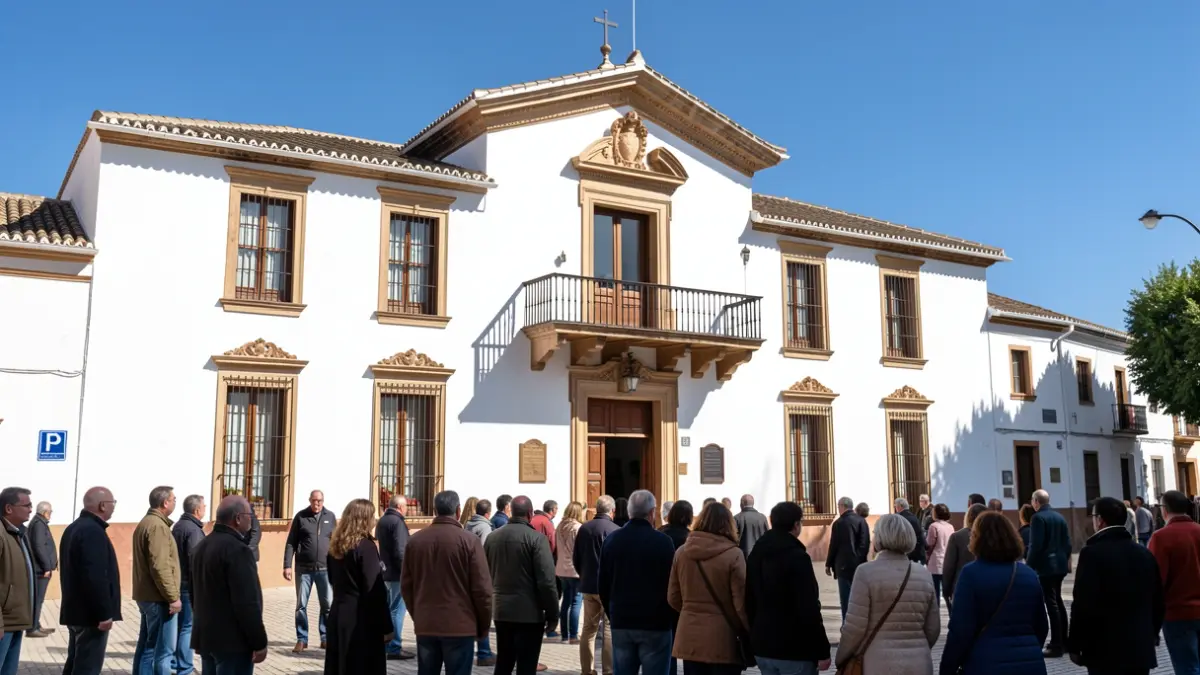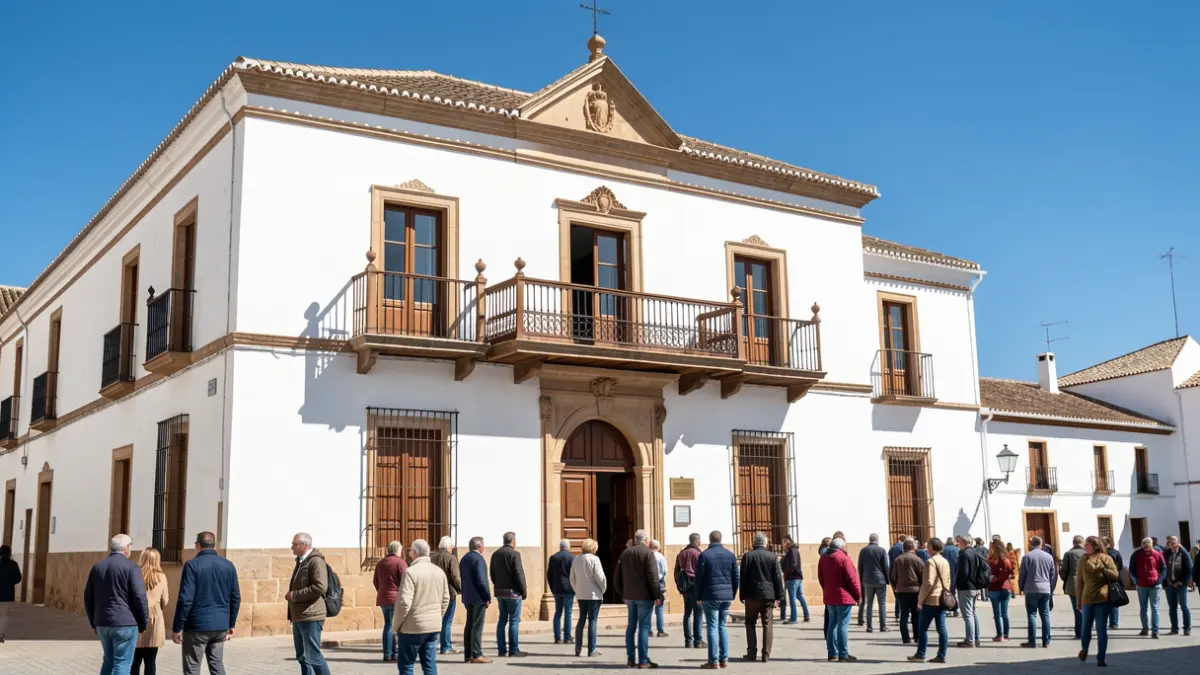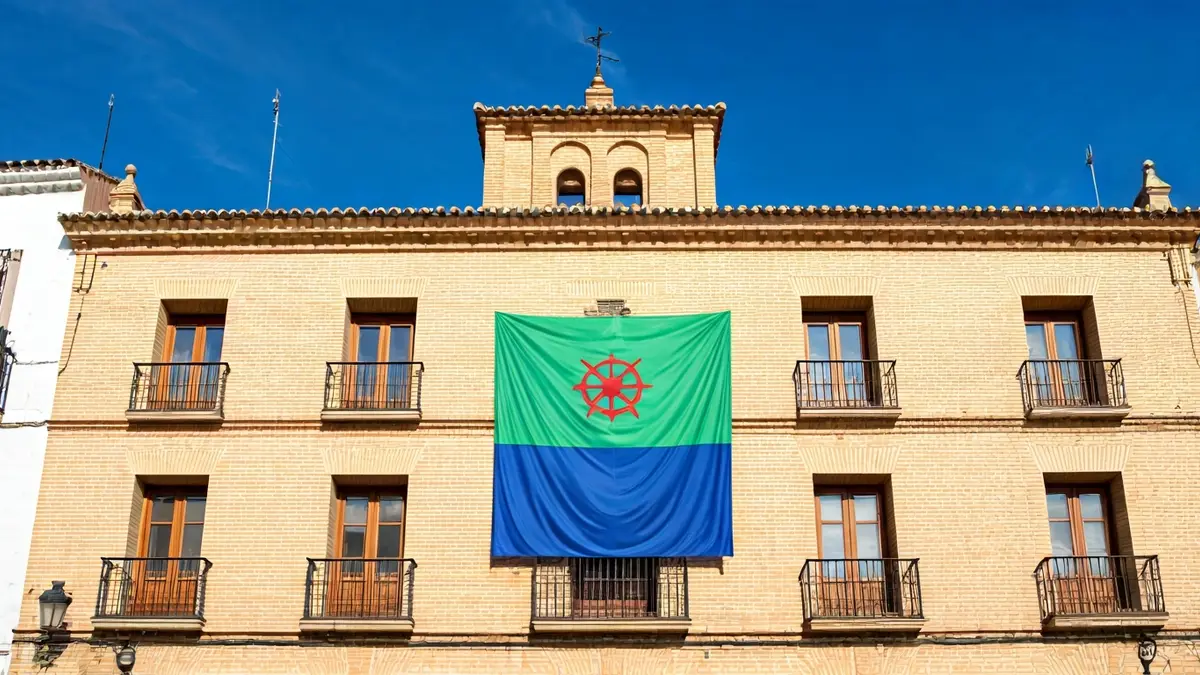
The commemoration, which took place on April 8, was attended by Agustín Muñoz, first deputy mayor, along with other members of the local government and the Corporation. The event was held in collaboration with the Romani Secretariat Foundation, which read its manifesto in the Noble Hall before the flag was placed on the municipal building.
Among those present were Francisco Agarrado, director of the Romani Secretariat Foundation, and Antonio Soto, first vice-president of its board, as well as employees and users of the foundation. This year, coinciding with the Gastronomy Capital, representatives from the hospitality sector were invited, especially those establishments that preserve traditional Romani cuisine recipes.
“"It is a time for recognition, equality, and promotion for the Romani people."
The reading of the manifesto, by Nerea García Núñez, emphasized the urgency of a Comprehensive Law to guarantee the principles of equality and ensure the rights of the Romani people. Agustín Muñoz, for his part, highlighted the importance of Romani memory and contribution, as well as the need to work on the proposed legislation.
“"Today we not only speak of memory and the contribution of the Romani people, we also speak of demands. We agree with this manifesto that we must work for a law that guarantees the rights of the Romani people."
Muñoz stressed that the Romani people are an essential part of local culture and identity, citing their influence on gastronomy, which will play a prominent role during the Gastronomy Capital year. He also called for the fight for a more just, inclusive, and diverse future, where equal opportunities and respect are a reality for everyone.
International Romani Day is celebrated every April 8 in remembrance of the First World Romani/Gypsy Congress, held in London in 1971. At this congress, the Romani flag and anthem were adopted. The flag, with its green and blue stripes, symbolizes the land and the sky, while the central red cartwheel represents the journey from India and freedom. The anthem, Gelem, gelem (I walked, I walked), composed by Jarko Jovanovic, pays tribute to the Romani victims of Nazism.