The initiative, presented in Cádiz, aims to transform social concern about the effects of these invasive species into concrete, data-driven action. The project, titled '¡Invasoras en la costa! Andalucía', involves diving centers, educational institutions, associations, the fishing sector, and the general public.
Project coordinator, Maibe Hermoso, along with scientific advisors Mar Roca Mora from the Institute of Marine Sciences of Andalusia (Icman-CSIC), and Isabel Muñoz de los Reyes from the Oceanographic Center of Cádiz, highlighted the importance of citizen collaboration. The goal is to design a map built with data provided by the public, increasing observations of these species in the region.
“"If we generate a large amount of data in the southern Iberian Peninsula, intra-regional analyses can be established, supporting monitoring and response strategies against invasive species on the Andalusian coast."
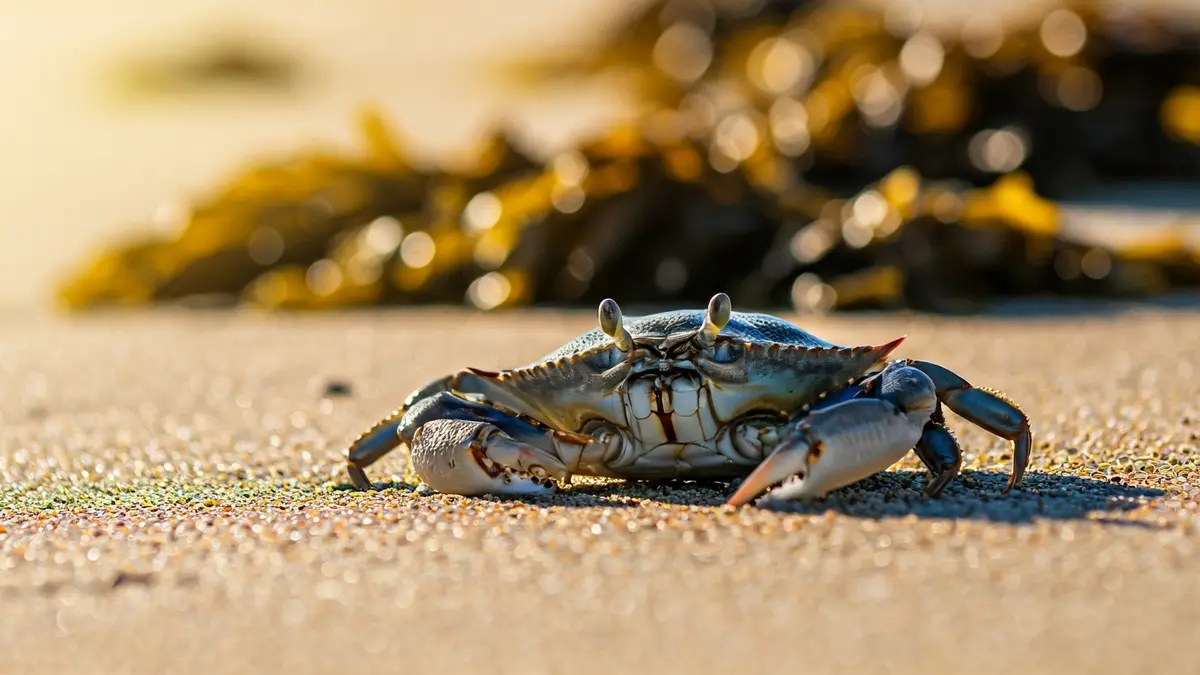
Asian seaweed (Rugulopteryx okamurae) causes massive accumulations that overwhelm beaches and municipal services, affecting rocky habitats, fishing, and tourism. Its rapid expansion since its initial detection in the Strait of Gibraltar underscores the need for continuous monitoring. Meanwhile, the blue crab (Callinectes sapidus) is an invasive species with a high capacity for adaptation and expansion in wetlands and estuaries, with potential impacts on invertebrate communities and fishing resources.
The spatial and temporal variability of both species makes the required observation density difficult to cover solely with scientific teams, emphasizing the value of data that citizens will contribute to the Observadores del Mar digital platform. This platform already has a consolidated database spanning over a decade.
The project is building a network of local agents and will hold a citizen science day in May, which will include a talk on the problem of invasive species and a practical observation and monitoring activity on Los Lances beach in Tarifa. The collected data will also serve the scientific community, as in the RugOBSS project, which will quantify the impact of Asian seaweed accumulations by combining satellite images with beach observations.
'¡Invasoras en la costa! Andalucía activa frente al alga asiática y el cangrejo azul' is one of eight projects supported by the Andalusian Citizen Science Office, funded by the Ministry of University, Research and Innovation, with the collaboration of the Spanish Foundation for Science and Technology of the Ministry of Science, Innovation and Universities.