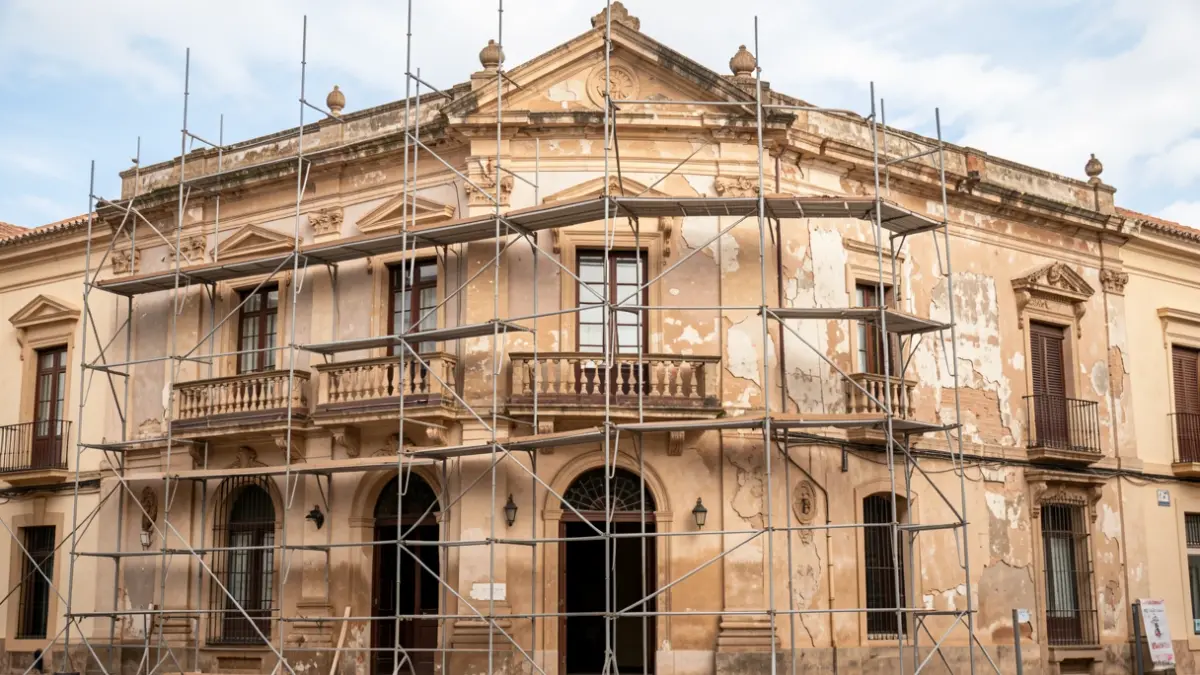
The Teatro Español of Bujalance, the cultural hub of the Cordoban municipality, will regain its splendor through a comprehensive rehabilitation. The project, with an investment of €450,000 funded by the Provincial Council of Córdoba's Provincial Plans program, aims to eradicate the damp and termite problems affecting the building. The intervention is currently in the public tender phase and will be executed over six months.
The construction of the theater, designed by architect César Utrilla Carrasco, took place between 1942 and 1944. Despite its typological value and structural protection, the building had not undergone a major reform since 1986, four decades ago. The passage of time and adverse weather conditions have caused significant deterioration.
A diagnostic study by the specialized company Cemosa has identified concerning pathologies. The basement walls show critical levels of infiltration and capillary dampness, exacerbated by a nearby cistern. Additionally, subterranean termites have been detected in the left wing, affecting the skirting boards. The technical report also notes the detachment of old plasterwork, bulging and peeling on ceilings and walls, and the oxidation of exposed concrete due to carbonation. The dressing rooms on the first floor show blackening caused by accumulated moisture.
The renovation project prioritizes the complete renewal of the roofs to prevent water ingress, including new slopes, waterproofing membranes, and thermal insulation. Chemical injections will be applied to the basement walls to create a damp-proof barrier, and special microporous mortars will be used to contain salt efflorescence. Exposed concrete areas will receive protective paints to halt oxidation.
Fire safety is another key pillar. A state-of-the-art textile fire curtain will be installed in the main stage area, acting as an impenetrable barrier between the stage and the auditorium. Smoke vents will also be placed at the top for automatic smoke evacuation, adapting the old theater to current regulations. Evacuation routes for the public and technical staff will be substantially improved, with protection for the two side staircases, clear exit signage, and fire-resistant doors. The dressing rooms and technical control areas will also be refurbished, with mold removal and the application of smooth plastic paints to dignify the workspace for artists and staff.