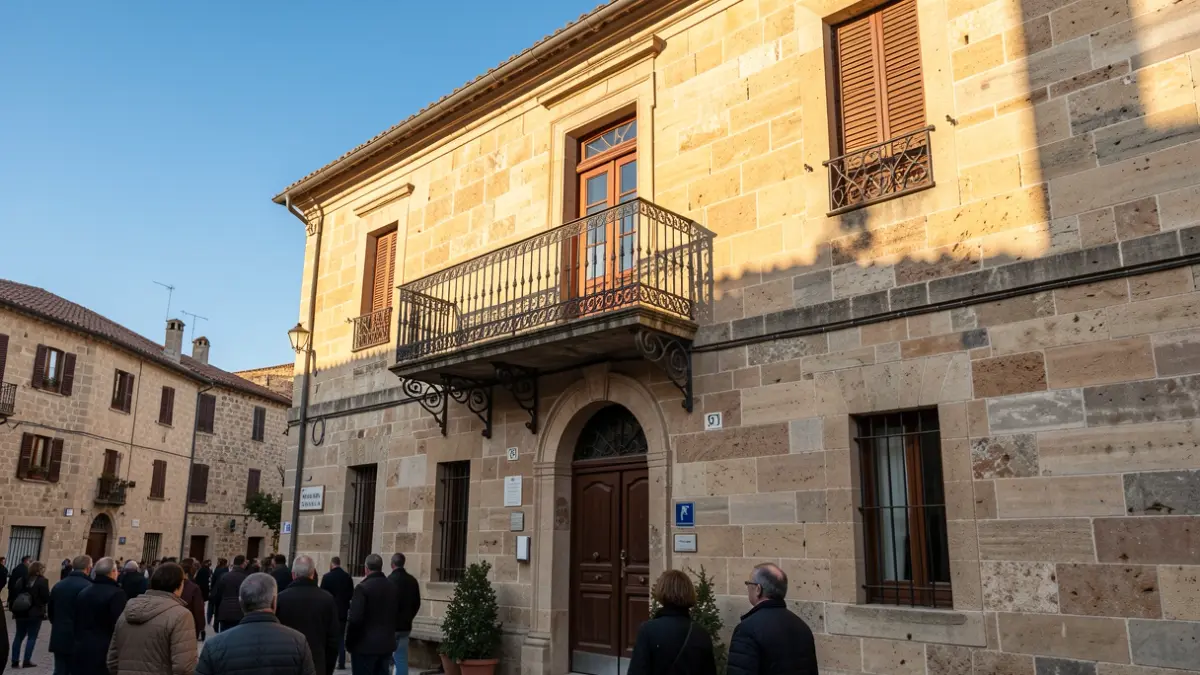
Dozens of people are currently queuing at social services, municipal offices, and NGO headquarters in the province of Almería, seeking to obtain the vulnerability certificate. This document is crucial for the extraordinary regularization process launched by the Government, which has a deadline of June 30.
According to third-sector estimates, Almería is home to around 30,000 undocumented migrants, the highest figure in Andalucía. This situation has pushed already overburdened structures to their limit, with each migrant needing this certificate and other documents within a tight 70-day timeframe.
“"There has been a huge influx at municipal offices. Very long queues have been seen, but all within normality."
The Níjar City Council, one of the municipalities with the largest migrant population, has confirmed the high turnout, a situation replicated in other locations such as El Ejido, Roquetas de Mar, and the capital. The introduction of this certificate, at the request of the Council of State, was not initially foreseen by the Regularización Ya! platform, which argued that lacking papers already implied a vulnerable situation.
The management of one of the organizations processing these certificates in the province has described the requirement as “the great bottleneck,” admitting that the flood of applications has overwhelmed them. The minimum professional intervention required for each application, including interviews and file opening, takes between five and ten minutes per person, making it unfeasible to handle the potential volume of tens of thousands of individuals.
“"We are not able to provide the response we should. We have created a need for which they are not finding a solution."
The concentration of processing capacity in a few entities, such as Almería Acoge and Cepaim, exacerbates the problem. This situation not only causes discomfort among residents due to the concentration of people but has also led to irregular practices and a “market” around a certificate that should be free, as reported by a migrant with over 30 years of residence in Spain.
The General Council of Social Work (CGTS) had already warned about the impact of this process on social services, especially in areas with a high concentration of migrant population like Almería. Professionals in the sector warn of the risk that their intervention will be reduced to merely issuing certificates, and they demand staff reinforcements and homogeneous criteria to avoid territorial inequalities.