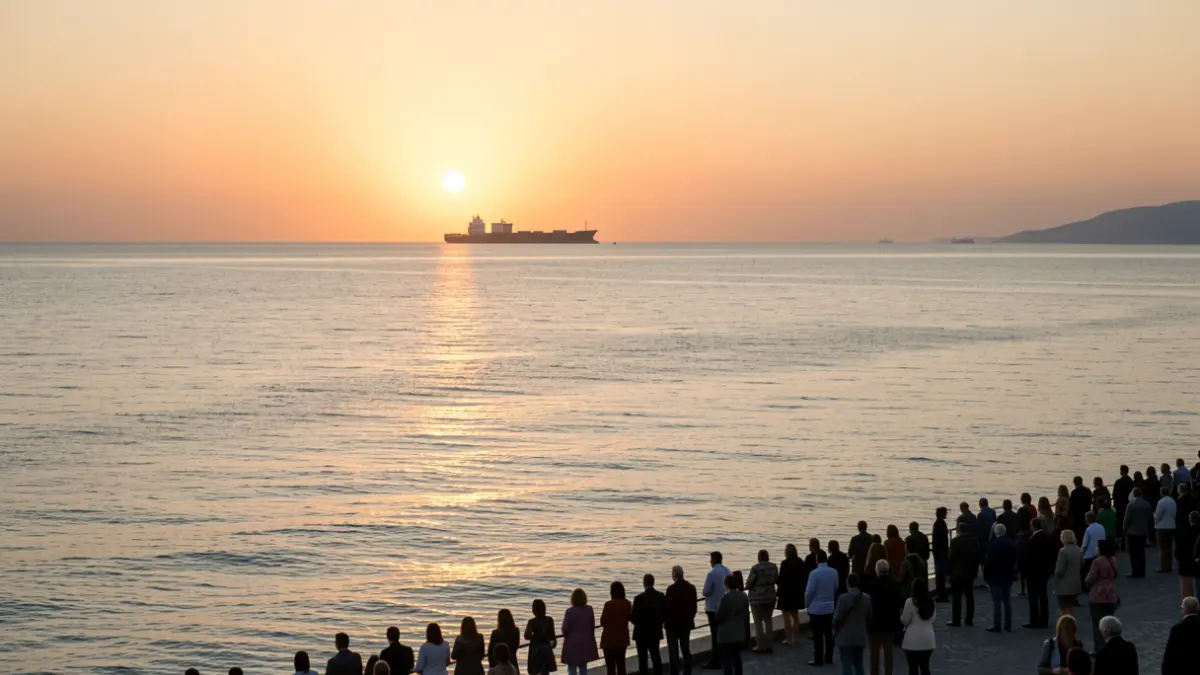
The Spanish Navy, through the Maritime Action Surveillance and Operations Center (COVAM), has identified that these vessels use the waters near the province of Almeria and the Strait of Gibraltar to transfer hydrocarbons. This operation aims to bypass international restrictions imposed on Russia following the start of the conflict in Ukraine.
The official document highlights that the presence of these tankers, which transport crude oil and refined products from Russia, Venezuela, and Iran, poses a challenge to maritime security. Authorities warn of increased risks, such as potential accidents, marine pollution, and damage to underwater infrastructure in the Mediterranean region.
The growing action of the Russian ghost fleet of oil tankers in the Mediterranean, which evade sanctions and operate near the Spanish coast, adds risks of accidents, pollution, and damage to infrastructure.
Surveillance of this traffic is constant, with an average of 50 vessels per week monitored by COVAM based on European Union criteria. However, the Department of National Security acknowledges that the legal capacity to intervene directly against these ships on the high seas is a complex issue requiring reinforced international coordination.