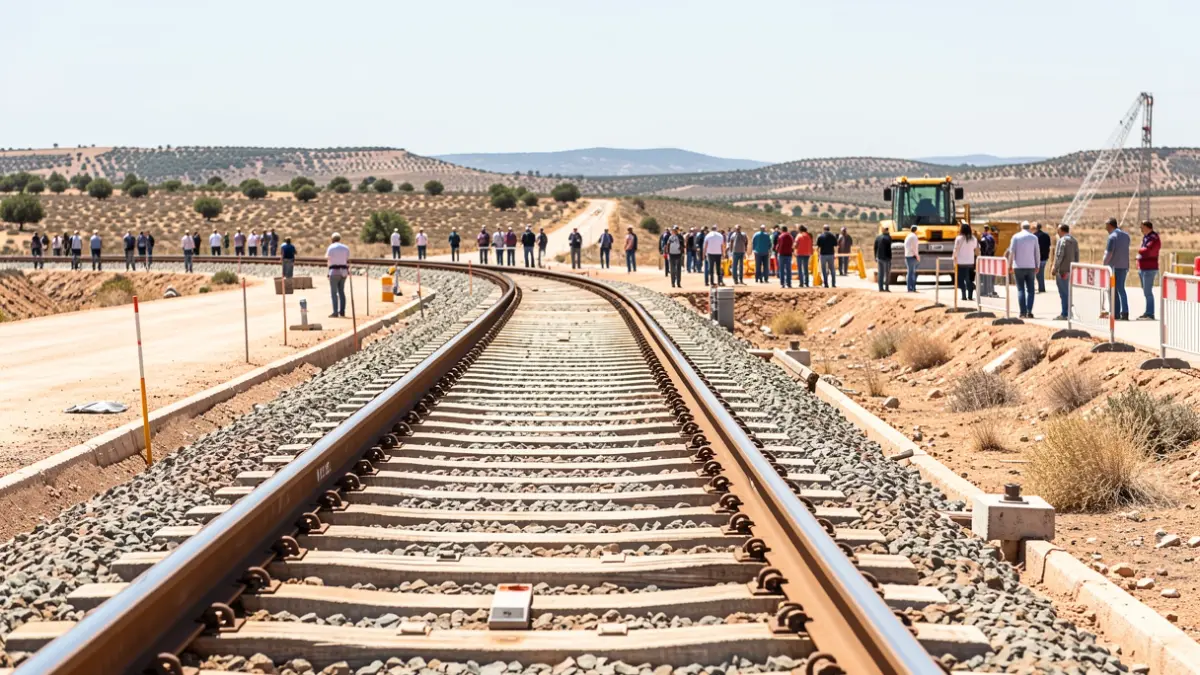
The citizens' platform, the Railway Association of the Province of Almería, has convened to assess the progress of high-speed rail works. Its coordinator, José Carlos Tejada, stated that while high-speed rail will be a "historic milestone," the province has endured continuous delays and broken promises since 2015. Current forecasts suggest the connection will not be operational until late 2029 or early 2030.
Tejada based these estimates on consultations of the Official State Gazette (BOE), indicating that the Government's projections for 2028-2029 are unfeasible due to bottlenecks in the Lorca tunnel works and electrical installations. Regarding the second phase of tunneling in Almería capital, the works, funded by Next Generation grants, will also miss their planned completion date of July.
The intermodal station will also not be ready by October 31st, necessitating continued use of buses to connect with the station in Huércal de Almería. In contrast, work between Almería and Pulpí is progressing well, with 80% completion. However, concern remains over the delayed start of construction for the future Vera station, which has an 18-month execution period.
Tejada also criticized Renfe's current service in the province, describing it as "lamentable" and "deficient." He highlighted the limited frequencies to Madrid (2), Granada (4), and Seville (3 with transfers), as well as the need to improve rolling stock, citing continuous breakdowns in the Talgo-6 trains and "unacceptable" travel times to Madrid of up to 7 hours.
Antonio Fernández, representative of the Mediterranean Ecologist Group, added that Almería does not want to be "the corner of Spain" and demands rail services commensurate with the taxes paid by citizens, aligning with Spain and Europe's commitment to rail transport.