The situation around Cerro de San Cristóbal, one of Almería's main tourist attractions, has become a growing concern. In recent weeks, there has been an increase in people using the steps leading to the summit to consume narcotics, leaving behind dirt, including feces and urine, in various corners of the monumental staircase.
Local residents confirm that this issue is not an isolated incident but a frequent occurrence. Tourists visiting Cerro de San Cristóbal are forced to navigate through drug users and avoid the generated waste, creating a sense of insecurity during their ascent to the monument.
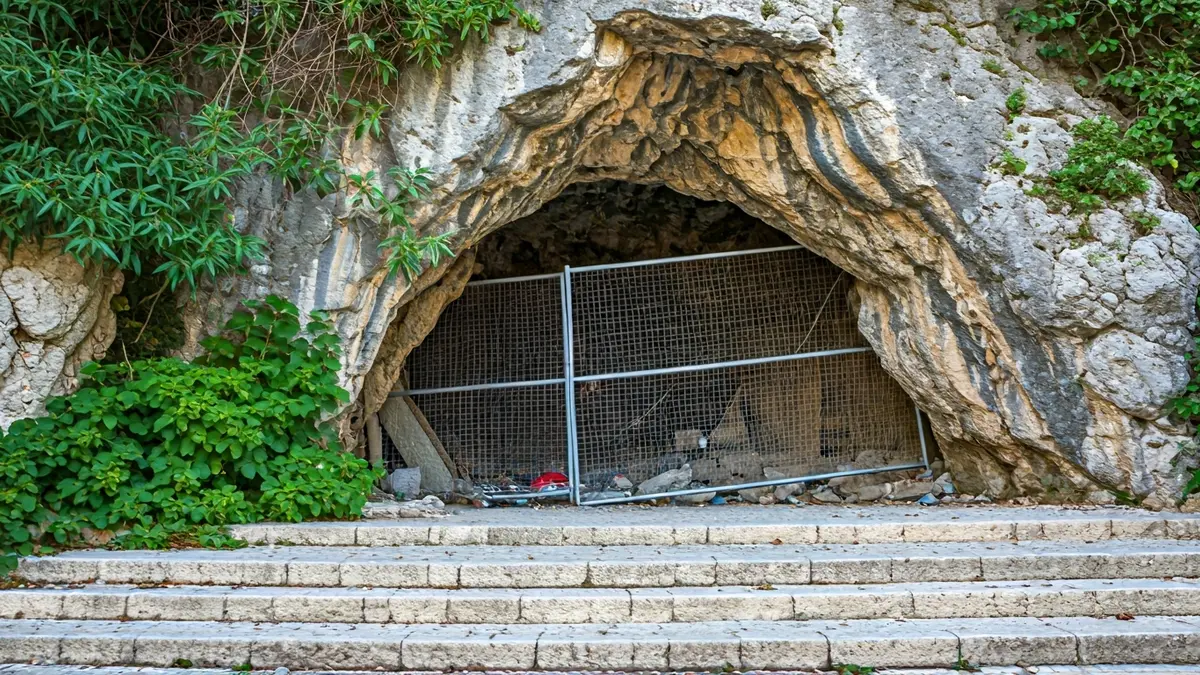
The concern has intensified with the recent discovery that a man has occupied a large cave located on the staircase, which historically housed a cave-dwelling. This cave, previously blocked by a mesh fence, was found forced open a few weeks ago, now serving as an access point for this new resident. From the outside, waste is visible, while inside, basic belongings, such as a mattress, suggest permanent occupancy beneath the image of the Sacred Heart of Jesus that crowns the hill.
Concern for security in the vicinity of one of the city's main monuments. The Cerro de San Cristóbal has been frequented in recent weeks by people sitting on the steps leading to the top of the Cerro to consume narcotics, leaving dirt and even feces and urine in some corners of the monumental staircase.
Residents are demanding increased security measures for this area, which was rehabilitated with an investment of 4.1 million euros, partly funded by Next Generation Funds (2.4 million from Europe and 1.7 million from the City Council), with the aim of making it a tourist hotspot. The Junta de Andalucía, for its part, invested in installing three video surveillance cameras on the rehabilitated walls to enhance security in the area.
Just over a year ago, the Almería City Council, through the Municipal Urban Planning Management, attempted to contract a private security service to prevent nighttime vandalism at the Cerro de San Cristóbal viewpoint, after damage was reported a month after its inauguration. However, the public tender failed as no companies expressed interest.