This inclusion underscores the critical condition of an old mineral loading dock, often referred to as the “little brother” of the English Cable. The structure, which ceased operations in 1995, has suffered progressive wear and tear, evident in the erosion of its concrete and the disappearance of metal components.
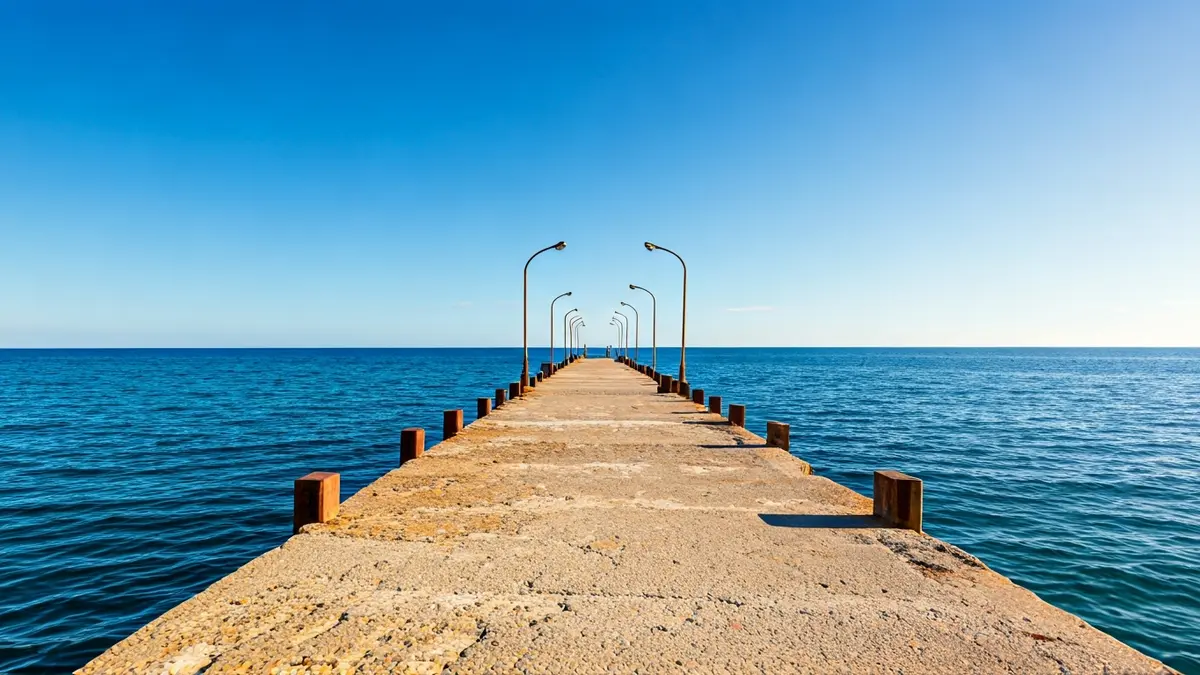
Built between 1914 and 1918 by Baird's Mining, the French Cable was crucial for exporting minerals from the mines of Jérez del Marquesado and La Calahorra, in the neighboring province of Granada. While the imposing arm and original crane that once defined Almería's skyline in the 90s are gone, what remains is a concrete walkway extending over 300 meters into the sea.
These three decades of inactivity have led it to a static decline.
Hispania Nostra's report emphasizes how the iron railings and substructures were removed for other uses, while the reinforced concrete base has been relentlessly eroded by the sea and wind. This combination of factors led to its inclusion on the red list, which aims to raise awareness about heritage at risk.
Over the years, various proposals have emerged to revitalize the French Cable. The Almería City Council considered transforming it into a scenic viewpoint, given its length and resemblance to recreational piers worldwide. However, structural integrity tests were unfavorable, shelving the initiative. There were also plans to install hospitality businesses to attract tourism to this part of the Paseo Marítimo, which, despite its prominence, often goes unnoticed.
Its inclusion on the heritage red list brings the French Cable back into focus, reigniting discussions about its future and the potential to restore this significant remnant of Almería's industrial past along its coastline.