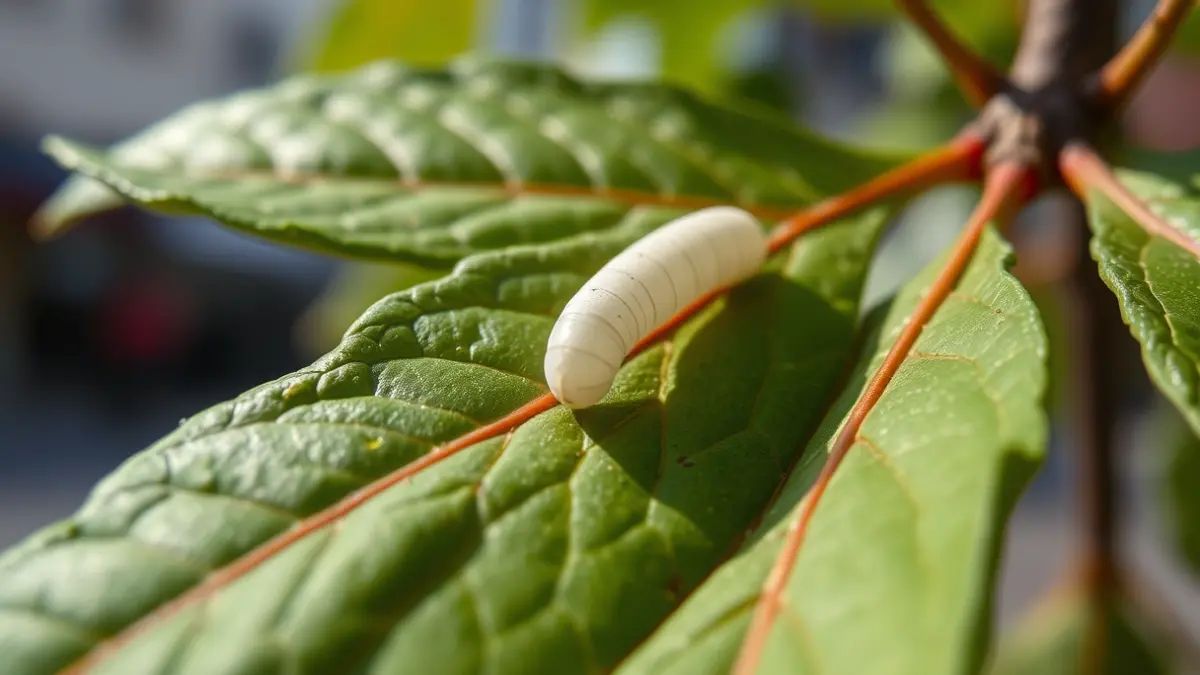
The city of Almería is adopting a modern approach to maintain one of its deepest-rooted traditions: silkworm breeding. The City Council, through the Water, Green Areas, and Agriculture department, has begun planting a fruitless mulberry variety, known as Morus alba ‘Fruitless’. This initiative seeks to reconcile the popular custom of filling cardboard boxes with mulberry leaves each spring with more efficient and cleaner urban management.
This strategic decision, which began to be implemented last year, responds to the need to renew urban trees, especially in neighborhoods like Ciudad Jardín. In this area, 17 mulberry trees that had provided shade for half a century had to be removed due to their critical health condition, showing cavities and internal rot, which posed a risk to public safety.
The new mulberry variety offers multiple benefits for the urban environment. By not producing fruit, street litter is eliminated, and slips and falls by pedestrians are prevented. Furthermore, its roots have controlled growth that prevents pavement and sidewalk uplift, a common problem with other tree species. Its rapid growth and wide canopy ensure a quick recovery of shade, essential during Almería's hot months, improving air quality and reducing ambient temperature.
For sericulture enthusiasts, this fruitless mulberry is equally nutritious and palatable for silkworms. With this planting plan, the City Council ensures that schoolchildren in Almería can continue this cultural tradition, collecting leaves from neighborhood trees to feed their “silk pets”.