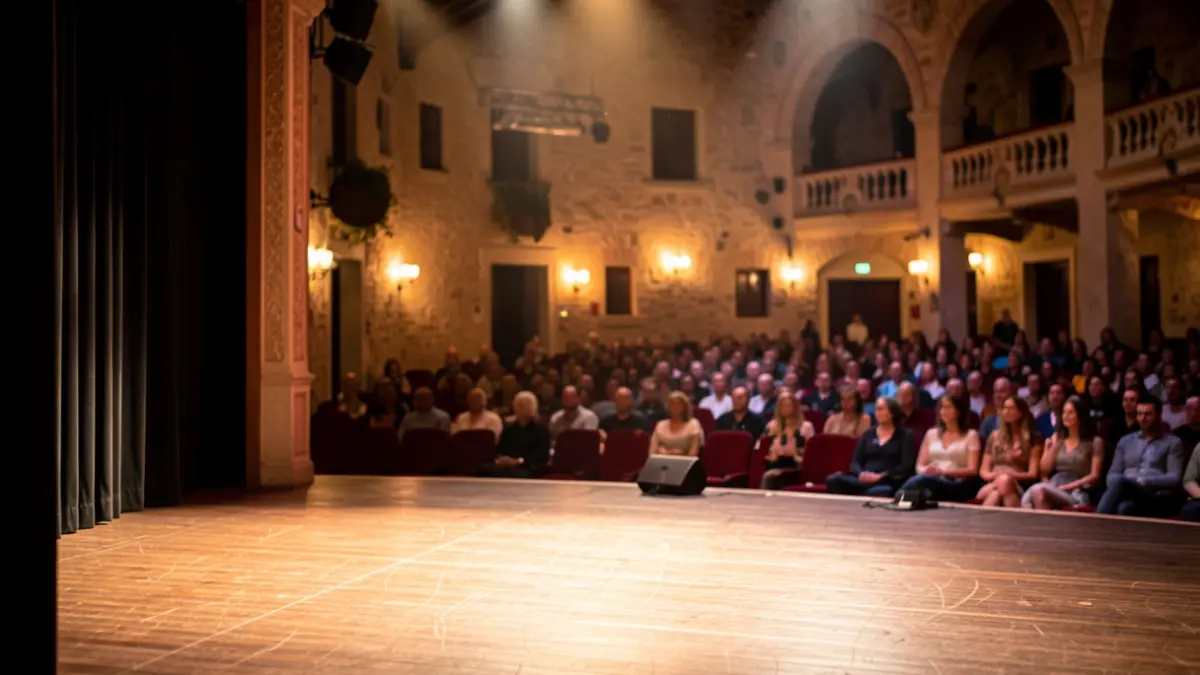
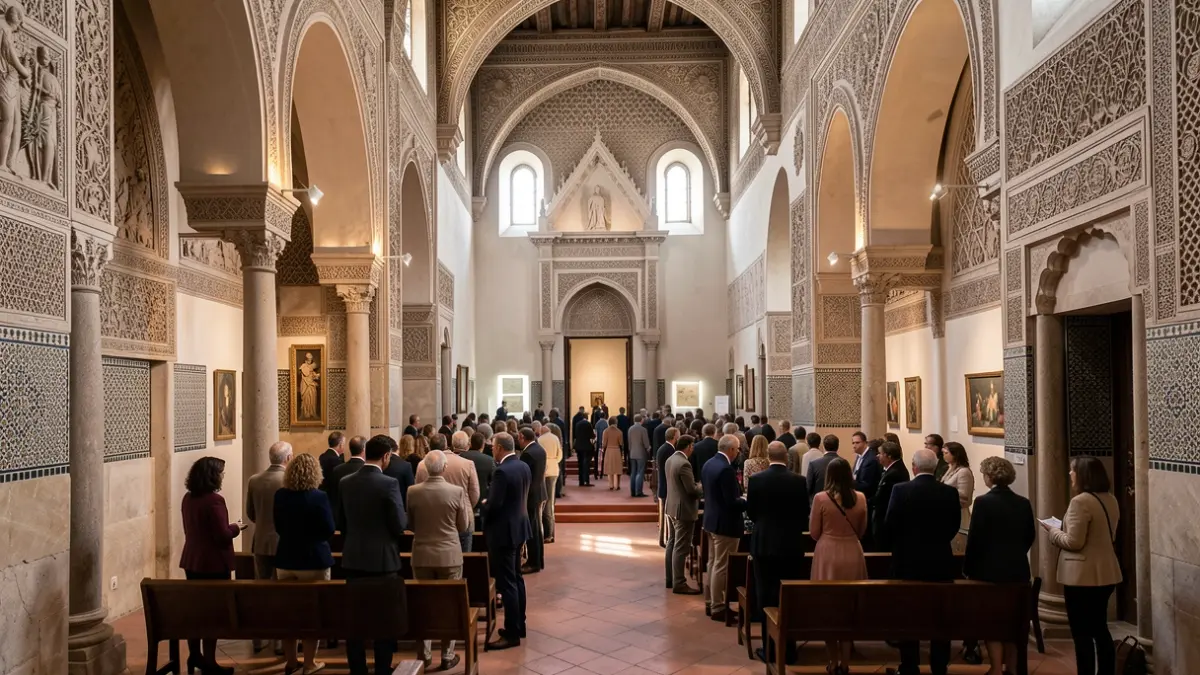
The former chapel of the Provincial Hospital of Almería, now housing the Auditorium of the Museum of Contemporary Spanish Realism (MUREC), has hosted the opening of the International Congress on the figure of Joseph Ratzinger, titled ‘A Pope for the History of the Church and the World’. More than 140 people from different parts of the world are participating in this event to reflect and debate on the legacy of Pope Benedict XVI.
The International Congress, taking place until October 29, is organized by the Private Association of Faithful Providentia. Its objective is for the province of Almería to be a space for encounter and study on Benedict XVI, aiming to honor, analyze, and delve into the vast theological, philosophical, and human legacy of Joseph Ratzinger. The event has convened prominent specialists, researchers, clergy, and students.
During the initial session, interventions were made by the president of the Provincial Council, José Antonio García Alcaina; the councilor for Presidency, Innovation, and European Funds of the Almería City Council, Amalia Martín; the Bishop of Syria, Monsignor Arbach; the emeritus Archbishop of Santiago, Monsignor Julián Barrio, and the president of Providentia, Carmen Navarro.
José Antonio García Alcaina explained that Ratzinger's legacy, focused on defending the inalienable dignity of the person and constant dialogue between faith and reason, will be explored with the utmost academic and religious rigor over the coming days in Almería through this International Congress. He highlighted the honor of hosting over 140 international participants and speakers, including some of the world's most prestigious scholars on Benedict XVI. Venues such as MUREC in the capital, along with the municipalities of El Ejido and Benahadux, will host conferences of high academic rigor, cultural encounters, and liturgical celebrations.
Councilor for Presidency, Innovation, and European Funds, Amalia Martín, emphasized that the figure of Benedict XVI retains extraordinary relevance today, as his teachings invited a deep reflection on fundamental human questions: truth, freedom, reason, faith, and the meaning of existence. She added that he did so from a firm defense of dialogue between faith and culture, tradition and modernity, intelligence and hope.
Monsignor Arbach, Bishop of Syria, described the pontiff as characterized by remarkable intelligence accompanied by profound humility, noting his patience in listening and thoughtfulness before responding. He also recalled the visual testimony of his contemplation while praying the rosary in the Vatican gardens. Monsignor Julián Barrio, emeritus Archbishop of Santiago, detailed that the inauguration of the event highlights the importance of moving forward with a clear direction to reach the common goal to which participants are called, considering the start of the sessions 'by the grace of God' and in good spirits as the best way to pay homage to Benedict XVI.
For her part, the president of Providentia, Carmen Navarro, stated, 'With that same spirit, we begin today. May Almería be a welcoming home, a place of thought, and a space for encounter during these days. May we know how to dialogue with freedom and depth. May intellectual height never make us lose humility. And may the study of Joseph Ratzinger always lead us to that to which he wished to lead all his life and ministry: to Jesus Christ.'