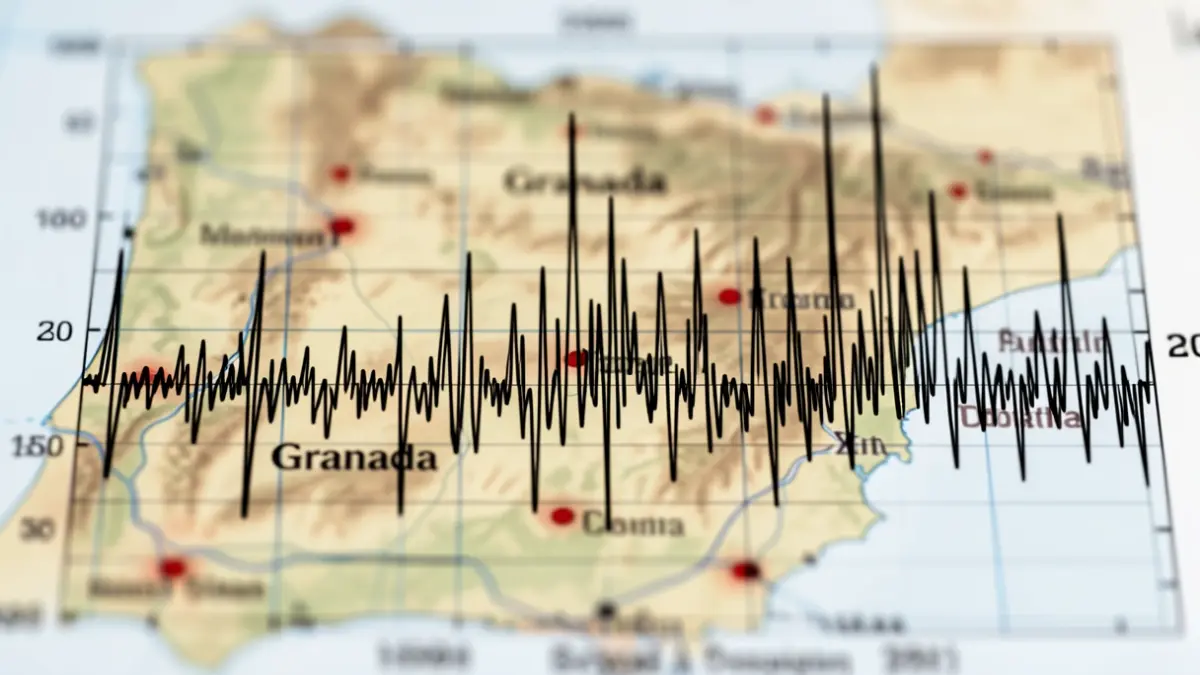
A seismic series initiated on August 14 has kept the province of Granada on edge, registering a total of 493 earthquakes in just five days, according to data from the National Geographic Institute (IGN). The activity has been concentrated in the metropolitan area, particularly affecting municipalities such as Alhendín, Gójar, La Zubia, Ogíjares, and Armilla.
Two tremors of magnitude 4.8, occurring in the early morning of August 15 and the morning of August 18, have been the most significant and widely felt by the population. These shallow aftershocks, with foci located between zero and 19 kilometers deep, have generated considerable concern.
The IGN detailed that the activity began on August 14 with a magnitude 3.7 earthquake. The first major 4.8 tremor was recorded northeast of Alhendín at 01:04 on the 15th, followed by a significant increase in events. On the 18th, another 4.8 tremor northwest of Gójar caused several important aftershocks in a short interval.
In total, nine earthquakes of magnitude 3 or greater and six that reached or exceeded 3.5 have been cataloged. Only four reached a magnitude of 4 or more. The intensity of the two main earthquakes was rated V-VI on the EMS-98 scale, indicating a clearly perceived tremor capable of causing minor damage.
The concern generated by these seismic movements was reflected in the emergency services. The Andalusian Emergency Agency (EMA 112) managed over 700 calls, assisting twelve people for episodes of anxiety, dizziness, and syncope. Damages such as cracks, falling cornices, and damage to buildings were reported, leading to the activation of the Seismic Risk Plan.
The collected data offers a detailed but provisional snapshot of the seismic series. The IGN continues to review earthquake parameters, and the proximity of epicenters to cataloged faults provides geological context without automatically attributing each event to a specific structure.