AlmeríaCádizCórdobaGranadaHuelvaJaénMálagaSevillaAlpujarra AlmerienseLos VélezComarca Metropolitana de AlmeríaFilabres-TabernasLevante AlmeriensePoniente AlmerienseValle del AlmanzoraBahía de CádizCampiña de JerezCampo de GibraltarCosta NoroesteLa JandaSierra de CádizAlto GuadalquivirCampiña de BaenaCampiña Sur CordobesaLos PedrochesCórdoba (comarca)SubbéticaValle del GuadiatoValle Medio del GuadalquivirAlpujarra GranadinaComarca de AlhamaComarca de BazaComarca de GuadixComarca de HuéscarComarca de LojaCosta GranadinaLos MontesValle de LecrínVega de GranadaEl AndévaloEl Condado de HuelvaCosta OccidentalCuenca MineraComarca Metropolitana de HuelvaSierra de HuelvaÁrea Metropolitana de JaénCampiña de JaénEl Condado (Jaén)La LomaSierra de CazorlaSierra MáginaSierra MorenaSierra de SeguraSierra Sur de JaénLas VillasComarca de AntequeraLa AxarquíaGuadaltebaCosta del Sol OccidentalMálaga Costa del SolNorormaValle del GuadalhorceSerranía de RondaSierra de las NievesAljarafeBajo GuadalquivirCampiña de CarmonaCampiña de Morón y MarchenaComarca de ÉcijaComarca Metropolitana de SevillaSierra Norte de SevillaSierra Sur de SevillaVega del GuadalquivirAlmeríaCádizCórdobaGranadaHuelvaJaénMálagaSevillaAlpujarra AlmerienseLos VélezComarca Metropolitana de AlmeríaFilabres-TabernasLevante AlmeriensePoniente AlmerienseValle del AlmanzoraBahía de CádizCampiña de JerezCampo de GibraltarCosta NoroesteLa JandaSierra de CádizAlto GuadalquivirCampiña de BaenaCampiña Sur CordobesaLos PedrochesCórdoba (comarca)SubbéticaValle del GuadiatoValle Medio del GuadalquivirAlpujarra GranadinaComarca de AlhamaComarca de BazaComarca de GuadixComarca de HuéscarComarca de LojaCosta GranadinaLos MontesValle de LecrínVega de GranadaEl AndévaloEl Condado de HuelvaCosta OccidentalCuenca MineraComarca Metropolitana de HuelvaSierra de HuelvaÁrea Metropolitana de JaénCampiña de JaénEl Condado (Jaén)La LomaSierra de CazorlaSierra MáginaSierra MorenaSierra de SeguraSierra Sur de JaénLas VillasComarca de AntequeraLa AxarquíaGuadaltebaCosta del Sol OccidentalMálaga Costa del SolNorormaValle del GuadalhorceSerranía de RondaSierra de las NievesAljarafeBajo GuadalquivirCampiña de CarmonaCampiña de Morón y MarchenaComarca de ÉcijaComarca Metropolitana de SevillaSierra Norte de SevillaSierra Sur de SevillaVega del Guadalquivir

Secrets of Protostellar Jets in Star Formation Unveiled

IAA-CSIC research reveals the dynamics of material jets ejected during star birth, using data from the ALMA telescope and analytical models.

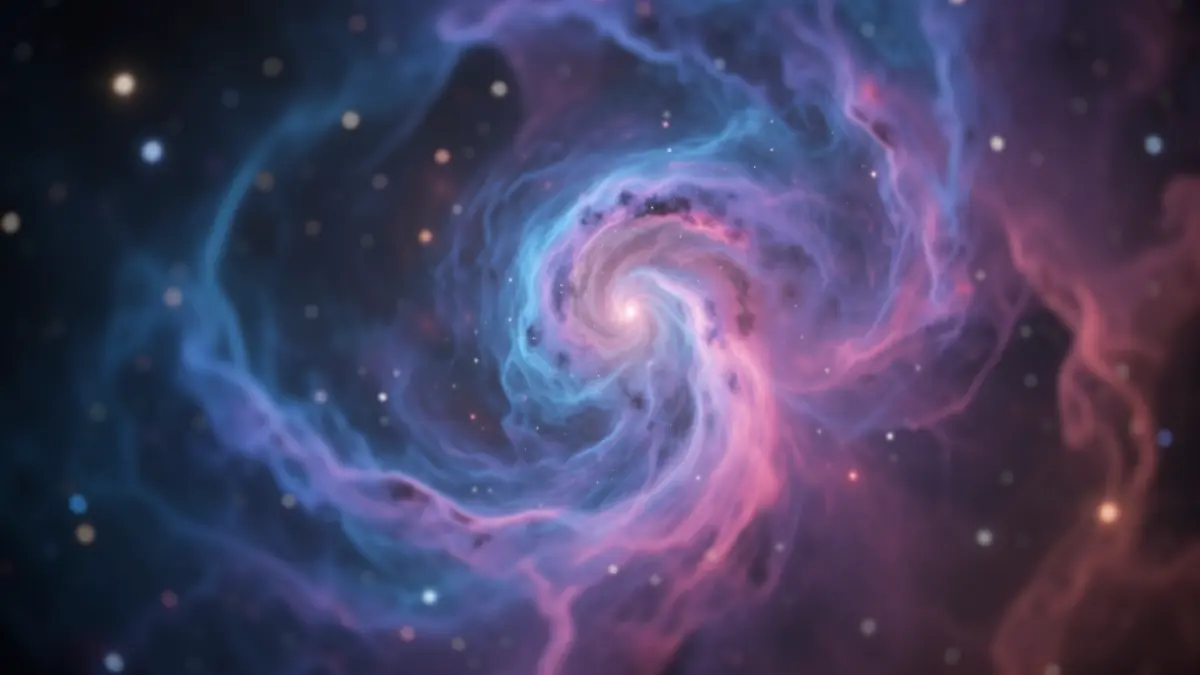
Generic image of a cosmic nebula with vibrant colors.
IA

Generic image of a cosmic nebula with vibrant colors.

Scientists from the Institute of Astrophysics of Andalusia (IAA-CSIC) have revealed new details about protostellar jets, streams of material ejected during star formation, thanks to ALMA telescope observations and analytical models.

A passion for astrophysics led a researcher at the Institute of Astrophysics of Andalusia (IAA-CSIC) to specialize in the study of protostellar jets, powerful streams of material ejected from the disk/star system at speeds of hundreds of kilometers per second. These phenomena, whose link to star formation was demonstrated in the 1980s, remain a subject of research to understand their origin and role in the formation of stars and planets.
The doctoral thesis focused on the young stellar object SVS 13, located in the star-forming region NGC 1333. This binary system, discovered in the 2000s, is powered by the protostar SVS 13, known for generating the 'Herbig-Haro' objects 7-11. In 1990, SVS 13 experienced an outburst that increased its luminosity, making it an ideal case for studying the dynamics of protostellar ejections and their relationship with these outbursts.
Observations from the ALMA telescope, noted for their high resolution and sensitivity, revealed a series of rings in the velocity channels of SVS 13, structures unprecedented in this type of object. These images, comparable to a medical tomography, showed sequences of rings whose shape and position changed smoothly, tracing elongated shells with increased brightness 'knots', typical of jets.
The physical interpretation of these observations was achieved through an analytical bow shock model, developed by collaborators at IAA-CSIC. This model explains the formation of 'internal working surfaces' and 'bow shocks' from the interaction between a supersonic jet of variable velocity and its environment. The jet's 'knots' manifest as compressed material, and the bow shock resembles a ship's wake.
The modeling has helped understand how jets inject mass and momentum into the environment, crucial for comprehending star formation. Furthermore, a birth date has been assigned to each 'knot', with one coinciding with the outburst of SVS 13 in 1990. This suggests that outbursts are linked to changes in the jet's ejection velocity, preserving a history of stellar formation.
These results, published in Nature Astronomy, form the core of the doctoral thesis. Future research will focus on monitoring the brightness of SVS 13, predicting a possible increase in the coming years based on knot formation approximately every 35 years, which would significantly strengthen the current interpretation.
The researcher, a Physics graduate from the University of Córdoba, is completing his doctorate at IAA-CSIC, focusing on the study of jets during stellar birth using ALMA observations and supersonic shock models.

Based on information from the official source: Instituto de Astrofísica de Andalucía (IAA-CSIC) (18/08/2026)