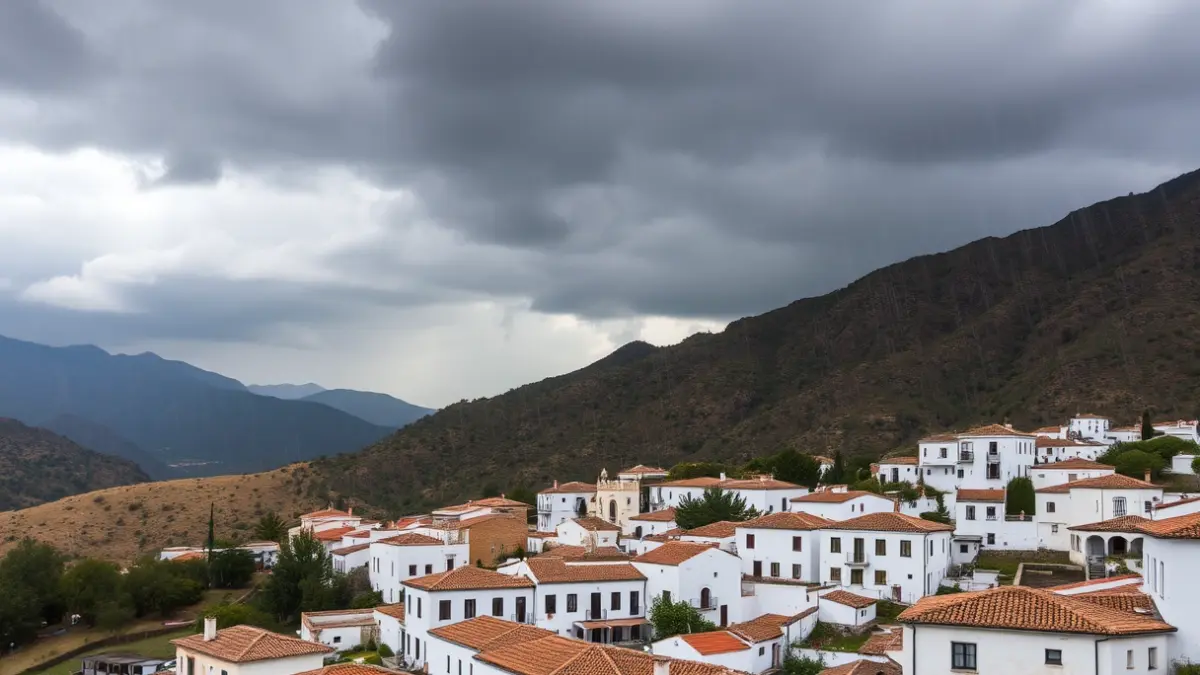
According to a report by the State Meteorological Agency (Aemet), the series of seven Atlantic storms that affected Spain between January 22 and February 14, 2026, named Ingrid, Joseph, Kristin, Leonardo, Marta, Nils, and Oriana, constituted an exceptional phenomenon. This event tripled the usual climatic records in large areas of Andalusia, with Grazalema being the most affected point on the peninsula.
During the most intense days of storm Leonardo, between February 3 and 7, the municipality in Cádiz registered 577 liters per square meter in just 24 hours, a figure that represents an absolute historical record for the locality. Over those three weeks, the accumulation exceeded 2,500 liters per square meter, a quantity that contrasts significantly with Madrid's annual average, which is around 400 liters.
The particularity of this episode was not only the intensity of each storm but also the absence of recovery periods between them. Aemet highlighted that this concatenation led to a progressive saturation of the ground, resulting in increased floods and inundations, as the soil could no longer absorb more water.
In historical terms, this event ranks among the three most significant accumulated rainfall episodes of the 21st century in Andalusia and Extremadura. The most affected areas of Spain were Galicia, Extremadura, and Andalusia, with the latter two suffering the most severe impacts on infrastructure, population, and economic activity.
“"This sequence of episodes generated significant impacts on the population, infrastructure, and economic activity, creating a situation of serious impact that transcends the consideration of isolated meteorological phenomena."