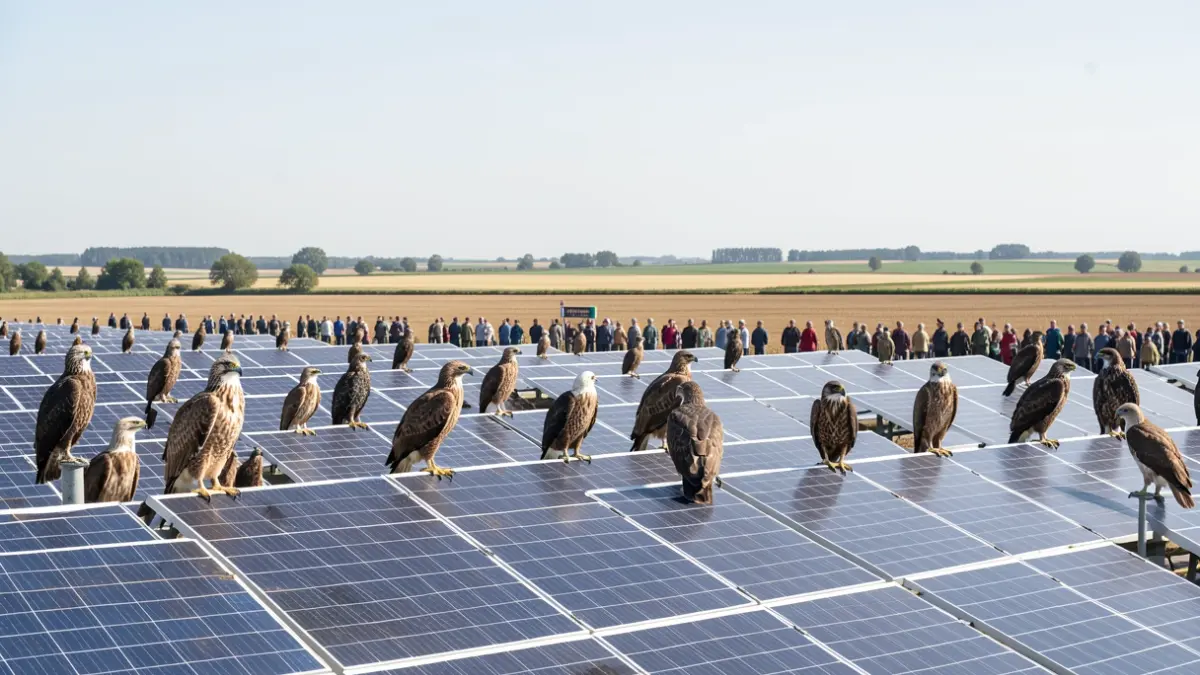
A study led by the University of Malaga (UMA) has documented that six raptor species consistently utilize a photovoltaic solar plant. The findings, gathered over two and a half years of monitoring since the facility's launch, suggest these infrastructures can be compatible with certain animal communities, offering valuable information for future energy project planning.
The expansion of photovoltaic solar farms, crucial for the energy transition, has sparked debate about their impact on biodiversity. While some large-scale studies point to habitat loss, scientific literature on specific cases with field-based evidence is limited. This work, published in the Journal of Raptor Research, aimed to address this gap.
In collaboration with BioGea Consultores, the University of Extremadura, and Ofitecma Marbella, the team analyzed a facility spanning nearly 300 hectares in the Guadalquivir valley. UMA researcher Miguel A. Farfán, a co-author of the study, notes that these novel infrastructures transform large areas, and their impact is not always negative.
Through periodic observations and foot surveys at a solar plant in the province of Sevilla, six species were recorded. The common buzzard and the common kestrel were the most frequent, with the black kite being the most abundant. Raptors used panels, poles, and fences as perches to spot prey or rest, particularly in a cereal cultivation area where other perching sites are scarce.
The restriction of hunting activities in these areas protects prey such as rabbits, hares, and partridges, indirectly benefiting the presence of raptors. The study documented hunting among the photovoltaic modules. Additionally, some soaring species utilized the warm updrafts generated by the panels to gain altitude, conserving energy. No fatal collisions or injuries with the infrastructure were detected.
Scientists caution that these results are from a single installation and cannot be directly extrapolated. "We don't know what the community was like before construction or the medium-to-long-term effect," explains Farfán. They emphasize the need to replicate these studies in other areas and maintain long-term monitoring, similar to wind farms.
The research will expand to the entire region of Andalucía to analyze the impact of solar plants on steppe birds. The project is part of the Complementary R&D+i Plan in Biodiversity, funded by the Consejería de Universidad, Industria, Energía e Innovación of the Junta de Andalucía, the Ministry of Science, Innovation and Universities, and the Next Generation EU funds.