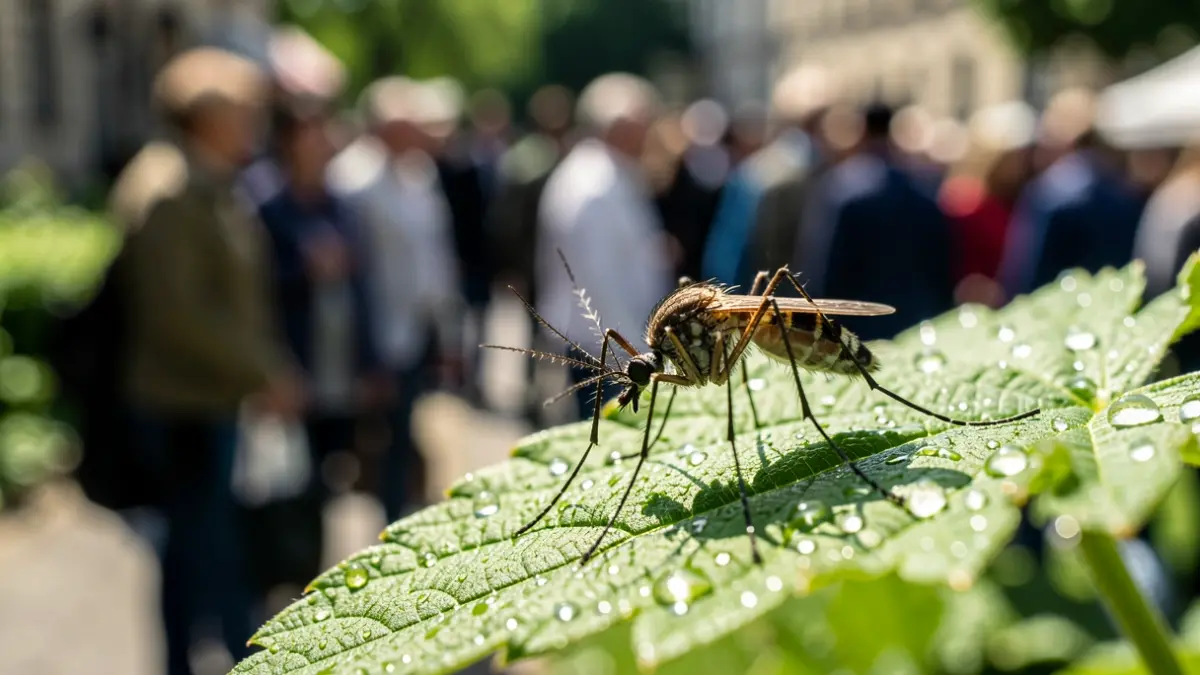
Four new cases of West Nile Virus fever bring the total human infections in Andalusia to 38, with eleven developing into neuroinvasive diseases. The latest cases were detected in Seville capital, Bollullos de la Mitación, Olivares, and Villamanrique de la Condesa, bringing the provincial total to 38, including eleven severe cases.
The virus's presence, detected through mosquito surveillance, has expanded the alert to 24 municipalities across Seville, Granada, Jaén, Málaga, and Cádiz. The most recent localities to join or extend their alert period are Algodonales (Cádiz), Las Cabezas de San Juan (Seville), Pulpí (Almería), and Olivares (Seville).
The regional government has intensified surveillance for mild cases, conducting laboratory studies on 457 individuals to rule out infection. Additionally, arbovirus screening tests have been performed on 119 cases of viral meningitis, and 3,039 determinations have been made from blood donors.
The declaration of an 'alert area' involves intensifying entomological, animal, and human surveillance, alongside community promotion actions and public communication. Local administrations are required to enhance mosquito control measures in populated areas and in zones near identified breeding grounds.
The Ministry of Health and Families recommends protective measures to avoid mosquito bites, particularly for vulnerable individuals. These include using repellents, wearing light-colored clothing that covers the body, avoiding strong odors, and reinforcing domestic measures like mosquito nets and insecticides.
Furthermore, it is advised to prevent stagnant water in pools, tanks, gardens, and pots, and to frequently refresh animal water troughs in livestock farms to curb larval breeding.