The Seville Fair, particularly the one in El Prado, proved to be a very attractive backdrop for the film industry, appearing in various productions from the 1920s to the 1960s. The first notable foray into fiction cinema was Rosario la Cortijera (1923), directed by José Buchs, where the famous La Argentinita played a prominent role, even performing some alegrías.
In Rosario la Cortijera, distinctive elements of the fair can be seen, such as the main entrance, the lanterns, the decorated casetas with pennants, and the parade of horse-drawn carriages, alongside early automobiles. The film's protagonists arrive at a caseta by horse-drawn carriage to enjoy a glass of manzanilla. In addition to the aforementioned alegrías, the film also includes a sevillanas dance, although this takes place in the context of the Cruz de Mayo and not at the fair.
The bullfighting theme also found its place in cinematic fairs with Currito de la Cruz (1925) by Alejandro Pérez Lujín. In this production, the carriage and horse parade featured the presence of Queen Victoria Eugenia herself as an amazona, marking the beginning of a long list of celebrities who would visit the Seville Fair in later years. The film also shows the bullfighting fair, where the protagonist makes his debut. For its part, El patio de los naranjos (1926) by Guillermo Hernández Mir, offers loose frames with similar scenes, including the carriage ride, the presence of buñoleras, a gypsy woman telling fortunes, and the cattle fair, where two characters acquire a donkey.
In La reina mora (1955), directed by Raúl Alfonso, the fair appears both outdoors and inside a caseta recreated in the studio. This film marked the last appearance on the big screen of the iconic Pepe Marchena. The music in the caseta includes sevillanas, granaínas performed by Antoñita Moreno, and bulerías by Canalejas de Puerto Real, with Vicente el Granaíno on guitar. The sevillanas are sung by Conchita Bautista and danced by four pairs of women, among whom was a young Concha Velasco. That same year, Velasco toured as a dancer with Caracol in the Ballet Pericet. The film also features fandangos from Huelva at the Cruz de Mayo.
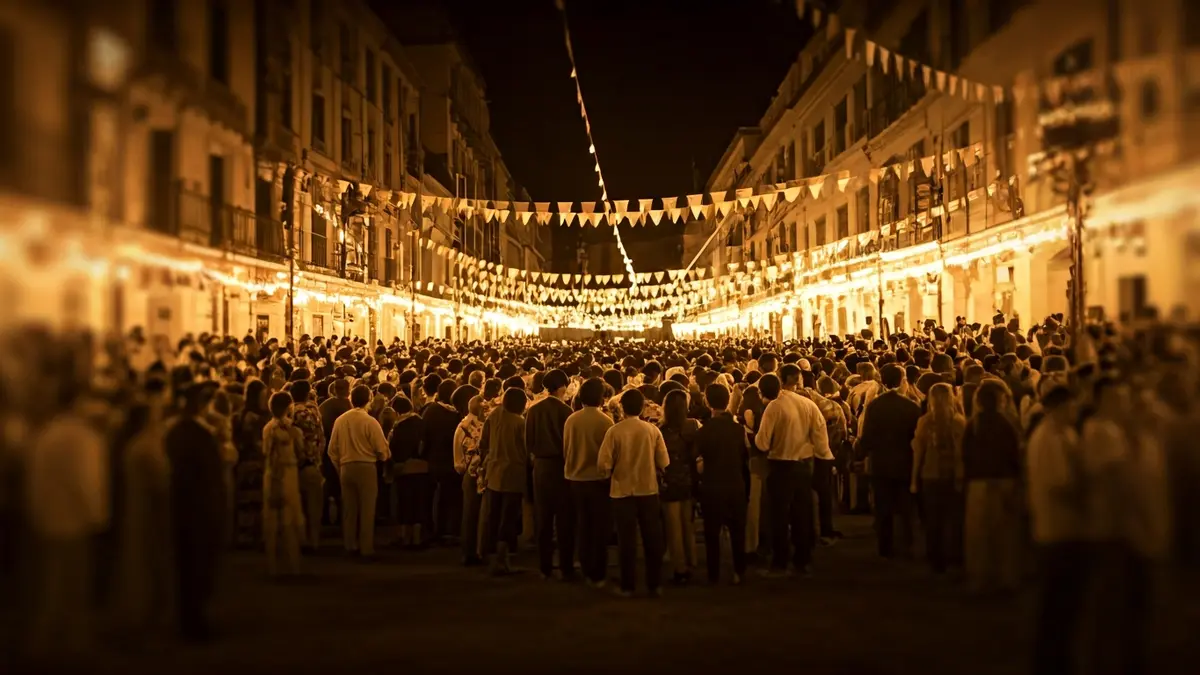
The Seville Fair once again takes center stage in Feria en Sevilla (1962), by Ana Mariscal, who also reserved a small role for herself. The fair is shown in all its splendor, with sevillanas dances filmed live, where up to eight pairs of women dance before a large audience. The caseta appears to be a real shot. A barrel organ in an albero street encourages children to dance, a scene that was not unprecedented in cinema. The film also captures the fair at night, with the main entrance and illuminated lanterns, attractions, and cars driving through the albero streets. In the Círculo Mercantil caseta, professional dancers perform flamenco sevillanas with heel-tapping, fandangos from Huelva, and seguiriyas with castanets. Additionally, the film includes a flamenco performance at the Cortijo del Guajiro, with Pedrito Infante singing one of his coplas.