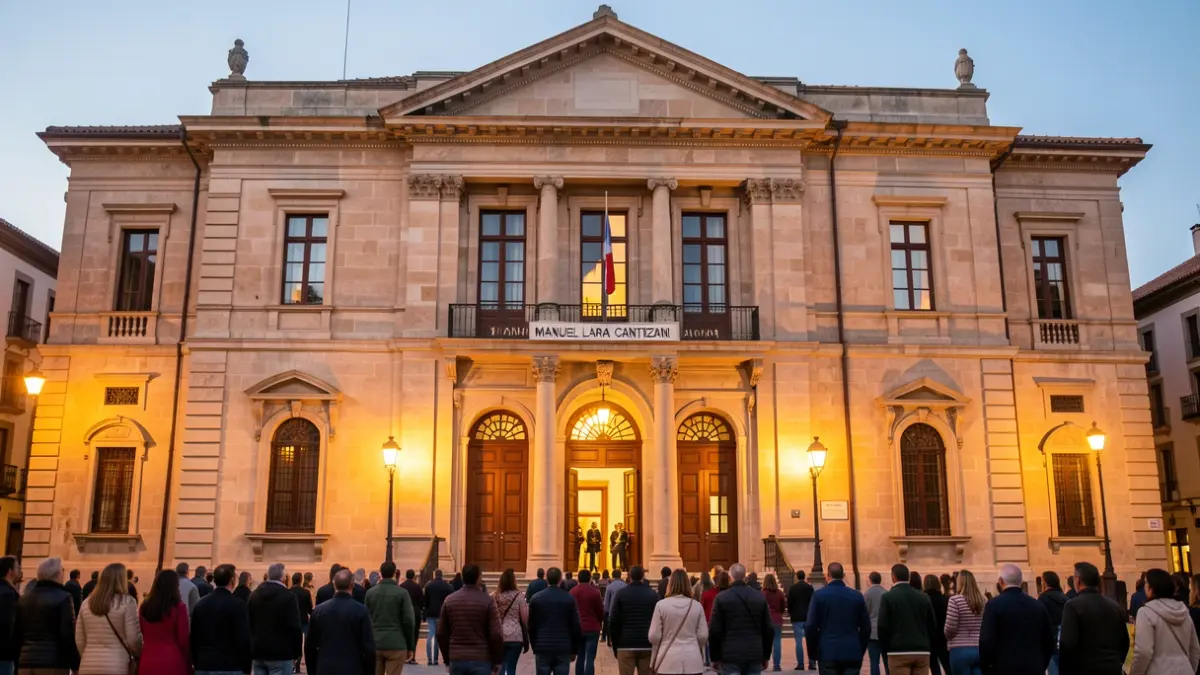
The presentation, held at the Círculo de la calle Sierpes, featured experts in Sevillian tradition who served as hosts for the event. The publication is a project spearheaded by a historian and his collaborators, aiming to preserve and disseminate knowledge about this emblematic festivity.
“"The Fair is the most important event of oral tradition culture, about to reach its two hundredth anniversary."
The speakers highlighted the Fair's character as a space of "magical realism," where the fairgrounds transform into an "ephemeral city" that, despite its short duration, leaves an "eternal" mark. It was emphasized that the Fair is much more than a social event, serving as a fundamental pillar of Andalusian culture.
Among the key aspects mentioned were the three essential pillars of the Fair: the casetas (private marquees), sevillanas (traditional dances), and the flamenco dress, elements that reflect its transversality and its ability to integrate people from diverse social backgrounds. It was stressed that the Fair represents the "empowerment of the popular," where diversity is celebrated in an atmosphere of coexistence.
The Cuaderno de Primavera also explores the historical evolution of the Fair, from its origins as a livestock and agricultural machinery fair to its current configuration as a space for entertainment. The publication includes intriguing contributions, such as images from the Municipal Photo Library and the Vitoria Municipal Archive, as well as an aerial view of the Prado Fair from the Cartographic Institute of Catalonia.
The issue addresses the presence of historical figures linked to the Fair, such as Queen Isabel II and Queen Victoria Eugenia, as well as the "Radical Republic Miss" of the April Fair of 1933. It also criticizes certain modern practices that distort the traditional spirit of the celebration, such as the promotion of cheap vouchers to attract youth, in contrast to the custom of drinking from short glasses while standing, fostering conversation.