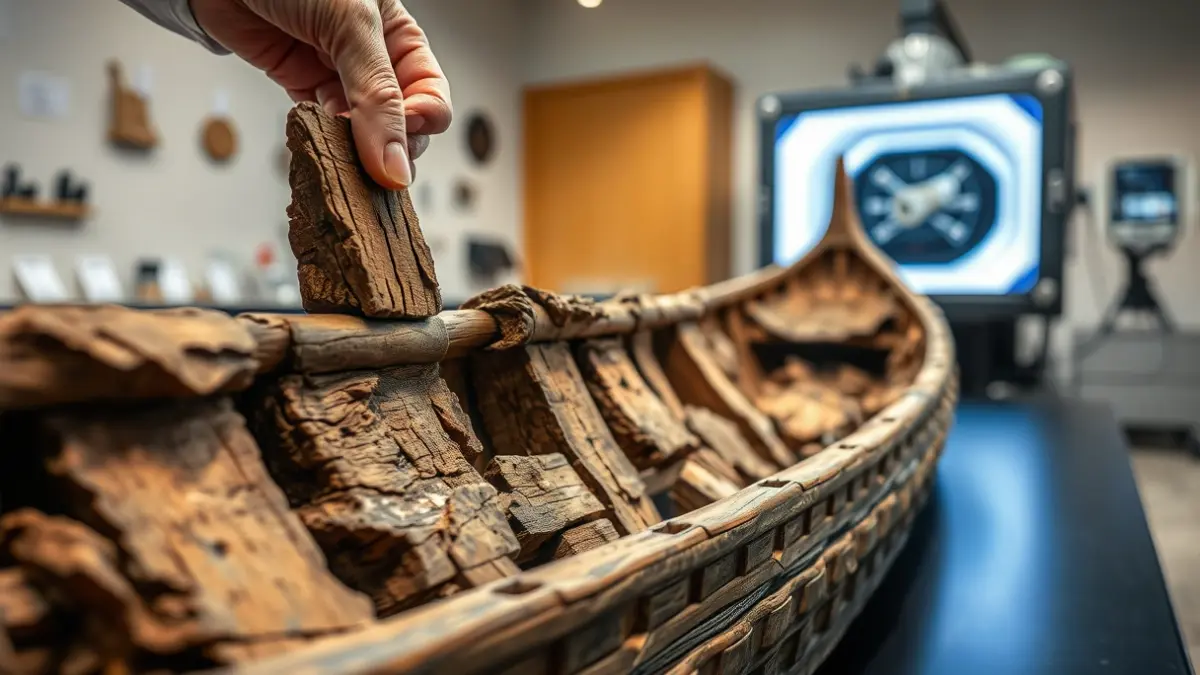
The subsoil of Plaza Nueva in Seville continues to reveal archaeological secrets. A discovery from June 1981, which began as a "miraculous rescue" eleven meters deep during the construction of the Seville Metro, is now the focus of cutting-edge research. This multidisciplinary team is employing photogrammetry and 3D modeling to digitally recreate the more than 400 pieces of the Plaza Nueva shipwreck, the only Andalusian-era (11th century) vessel found in the entire European archaeological record.
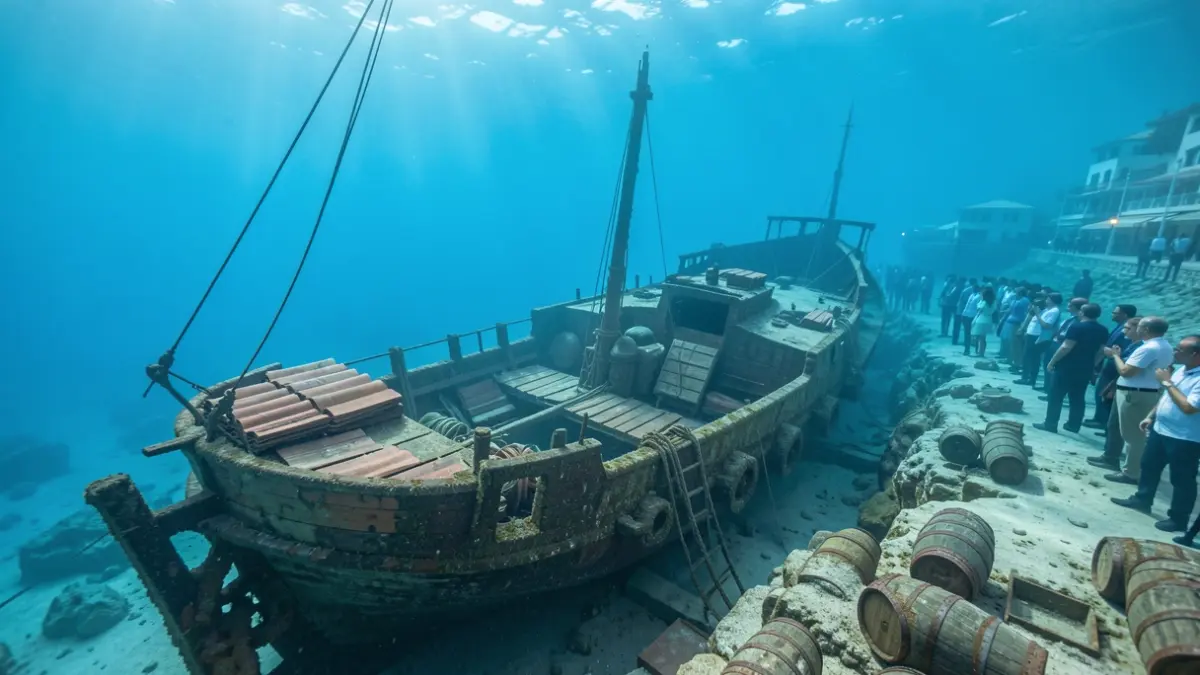
The story of this discovery is remarkable. In 1981, with less developed heritage legislation and the Metro works underway, technicians from the Archaeological Museum of Seville had only a few hours to extract the remains. Submerged in the mud of the water table, archaeologists managed to recover 30% of a wooden vessel about seven meters long. The silt was crucial for the preservation of the wood for centuries.
The current project, funded by the Institute of Nautical Archaeology (INA) at the University of Texas (Texas A&M), is led by researcher Marta del Mastro Ochoa, alongside archaeologist Carlos Cabrera Tejedor and professor John P. Cooper. The goal is to digitally process each component of the vessel. This study has confirmed that it was a service barge, built by local shipwrights, intended for transporting goods from larger ships anchored in the Guadalquivir.
“"This research is key to designing innovative protection and dissemination strategies. This shipwreck is not just a relic, but a gift that will continue to offer unprecedented data on river navigation in medieval Seville as analysis techniques advance."
Currently, the pieces are stored at the Cultural Heritage Logistics Center of Andalusia in La Rinconada, due to rehabilitation works at the Archaeological Museum. The regional Minister of Culture and Sport has highlighted the importance of this research for designing new heritage protection and dissemination strategies.