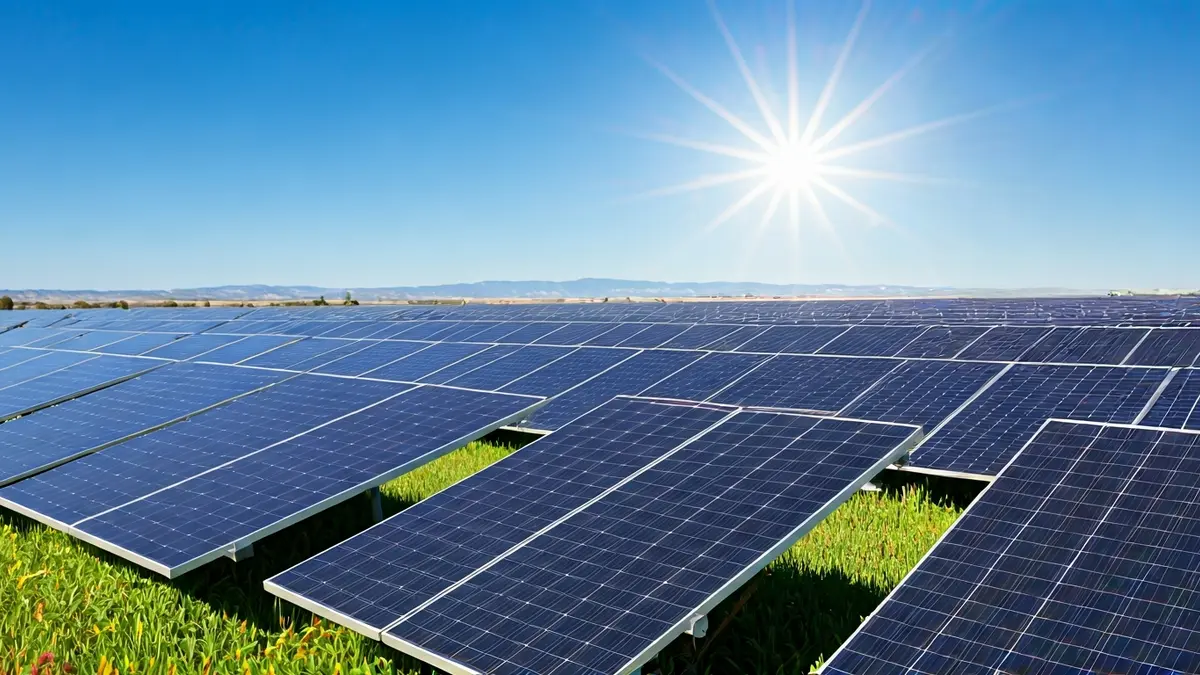
The project, known as the Marisol cluster, spans the municipalities of Carmona and Alcalá de Guadaíra. It includes the Encarnaciones and Sol Morón facilities in Carmona, and La Romera and Los Mangos in Alcalá de Guadaíra. Each plant contributes 50 MW, bringing the combined capacity to approximately 200 MW, with a peak power close to 205 MW.
The total investment of 175 million euros for these four Sevillian plants and the associated Torreluenga substation is part of a global outlay exceeding 260 million for photovoltaic projects developed in Seville and Andújar. Of this amount, eight million were specifically allocated to the construction of the substation.
“"The project consolidates the group's presence in the community and is part of a strategy aimed at turning Andalusia into a green energy hub."
The estimated annual production of the Marisol cluster is over 430 GWh, equivalent to the electricity consumption of approximately 130,000 households. This clean energy generation will prevent the emission of more than 210,000 tons of CO2 per year, according to company data.
From a technical perspective, the plants use DC to AC conversion systems and concentrate energy at the Torreluenga substation, which raises the voltage from 30 kV to 220 kV for grid evacuation. A key challenge was the construction of a 22-kilometer evacuation line to the Dos Hermanas substation, operated by Red Eléctrica, which crosses complex areas of the Seville metropolitan area.
The design of the Torreluenga substation already anticipates future expansions, including hybridization with batteries and the connection of new renewable generation. Jesús San Emeterio, Director of Renewable Generation Spain at Naturgy, confirmed that the goal is to hybridize these photovoltaic plants with battery storage systems to optimize energy utilization. Additionally, six wind farms currently under construction in the Sierra Sur de Sevilla will connect to this substation, adding an extra 159 MW.