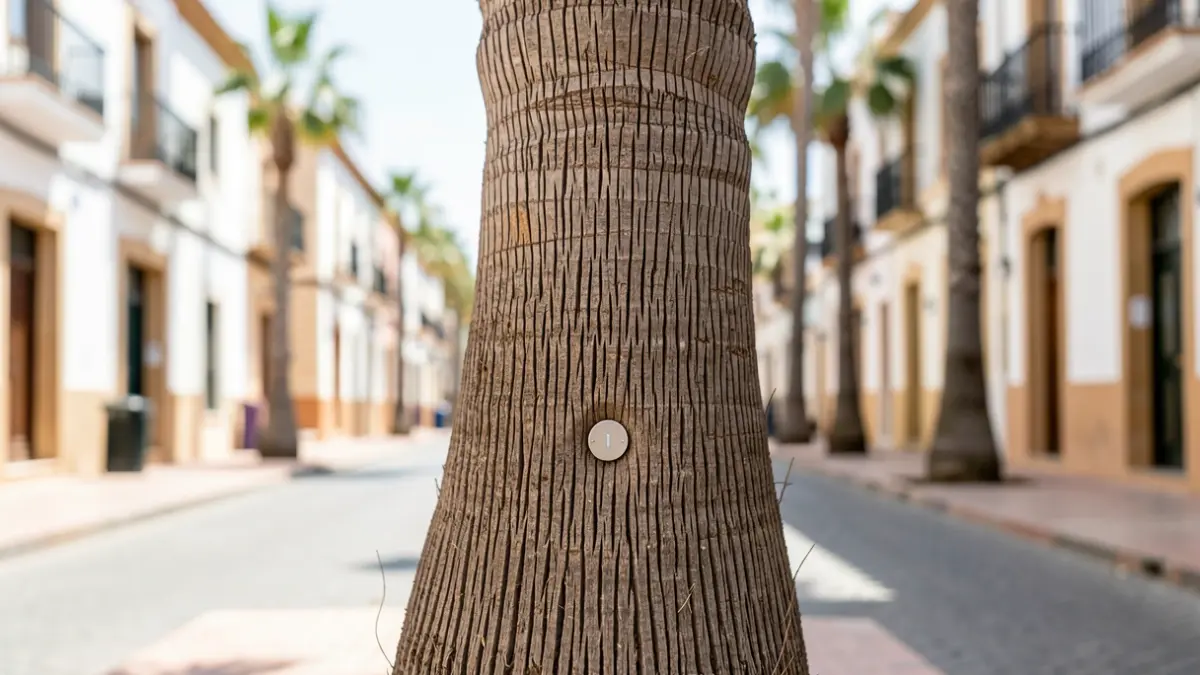
About ten Cuban royal palm trees have disappeared from Aeronáutica Avenue in the past two weeks, forcing authorities to resort to tracking technology. These specimens, valued at approximately 500 euros each, were planted as part of an urban beautification project.
The direct economic damage from these thefts exceeds 5,000 euros. To combat this 'green vandalism,' the municipal service has decided to implant tracking chips in the remaining trees, a strategy aimed at identifying those responsible and potential buyers.
The investigation has been aided by public collaboration and security camera footage. A witness reported the thefts and provided photographs, while Tussam's cameras have been crucial. A recent attempted theft was thwarted thanks to a swift police intervention.
Municipal technicians have identified a pattern of operation suggesting specific knowledge in gardening and palm tree handling. The extraction of these considerable-sized and heavy specimens requires specialized tools and experience.
This incident follows the theft of around 100 ornamental plants from San Jerónimo Park, indicating a potentially broader trend of vegetation theft in the city and the existence of an irregular market.
The City Council regrets the dual damage: the financial cost to public funds and the degradation of the urban green heritage. Replacing the stolen palm trees will take years due to their relatively slow growth.
The use of tracking chips in urban vegetation represents an innovation in Spain, although similar technologies have been tested in other European cities to protect valuable species. Seville is thus positioning itself as a pioneer in the technological protection of its plant heritage.