The writer José Soto Chica, known for his background as a medievalist and his military experience, has published 'Muerte en Toledo' (Espasa), his most recent work. The novel delves into the court of Alfonso X the Wise, exploring a period of great cultural effervescence and geopolitical power in Castile.
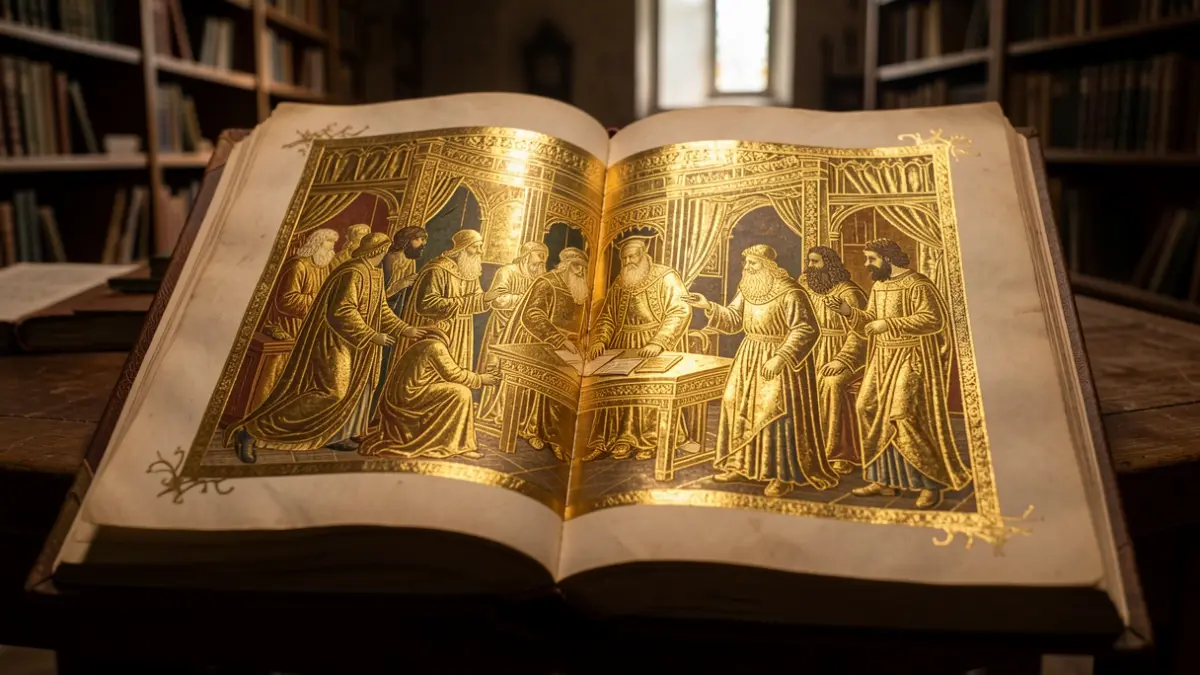
Toledo and 13th-century Castile are described as a melting pot of cultures, where Islamic, Jewish, and Christian religions coexisted. This coexistence fostered a remarkable cultural exchange, personified in the so-called School of Translators, a concept that transcended a physical location to represent the gathering of scholars around the monarch.
Castile, at that time, held a position of great importance in European geopolitics. Kings from England, Norway, and ambassadors from Egypt and Constantinople visited the Castilian court, reflecting the prestige of Alfonso X, who even knighted the future English king Edward I.
Soto Chica reflects on the loss of "self-assurance" in contemporary Europe, contrasting it with the dynamism of the 13th century, when the cultural, economic, and political axis shifted from the East to Europe, with Castile at its epicenter. "We began to be the center of the world," notes the author.
The author describes Alfonso X as a "tremendously ambitious" monarch whose thirst for power, despite his "good ideas" and "necessary knowledge," led him to "squander" his potential. Excessive ambition, according to Soto Chica, leads to "catastrophe" and a loss of "touch with reality," causing leaders to justify everything in the name of "greed."
The novel also delves into the Seville of 1259 and 1260, a city that, according to the writer, retains much of its medieval splendor. He mentions elements such as the "lizard" (crocodile) hanging in the Cathedral nave, a gift from Baybars, Sultan of Egypt, or the harness of a giraffe, as testaments to the city's openness and commercial dynamism, then the richest and most populous on the Iberian Peninsula.
As a medievalist, Soto Chica confesses to feeling more comfortable "knowing the dead better than the living," and finds in the Middle Ages, particularly in the court of Alfonso X, a period of "veneration" for books. History, for him, offers "the keys to what we should not do again."
During his research, the author discovered a paradox concerning Aristotle: while his will only mentions a few talents of silver, he is attributed a gift of 800 talents from Alexander, which served as inspiration for the novel's plot.
Soto Chica recommends "The Road" by Cormac McCarthy and "King Leopold's Ghost" by Enzensberger, books that have "overwhelmed" him and which he considers visual "substitutes," much like his own works, which serve as his "refuge."