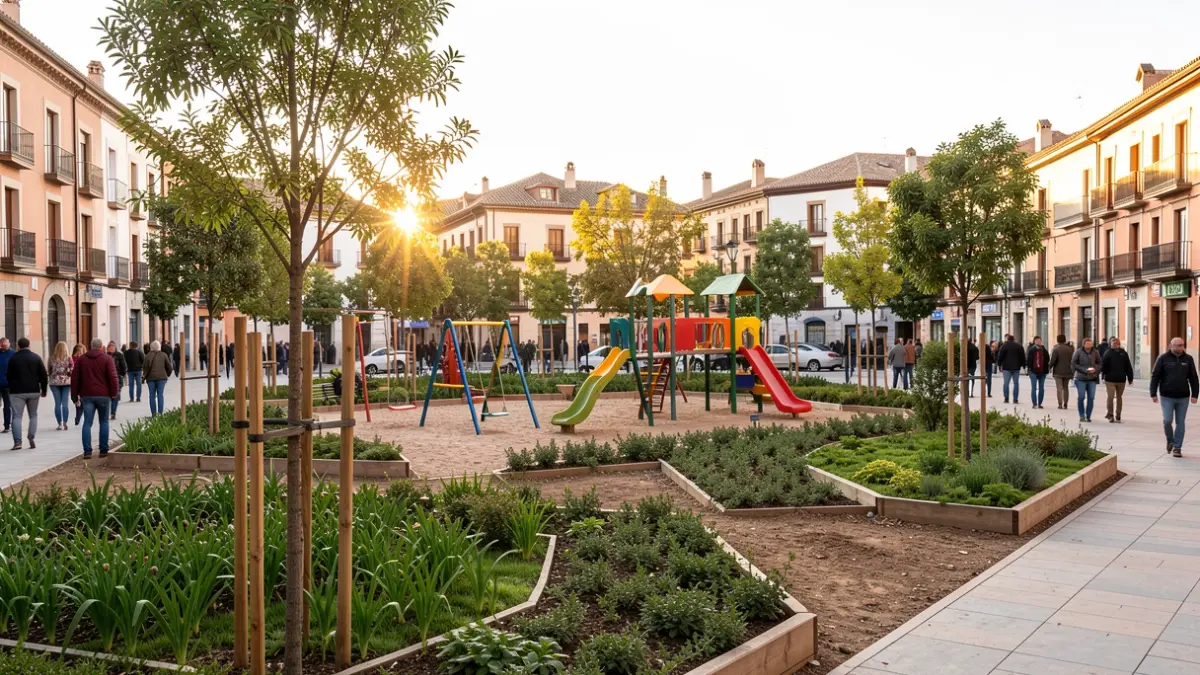
The Granada City Council has given the green light in its Local Government Board to the urbanization project for the area known as ‘Nuevo Puente Camino de Ronda’. This initiative ends an urban planning blockage of over two decades and will transform a currently unused space into a new public square for residents, featuring green areas and children's playgrounds.
The government team's spokesperson, Jorge Saavedra, highlighted that the definitive approval of the project exemplifies the government team's "rigorous and efficient urban management" in unblocking stalled projects and improving citizens' quality of life.
The intervention will take place on a 1,198.68 square meter plot designated for open spaces, part of an area regulated in 2005 that also includes plots for facilities and housing.
The project entails the creation of a square with landscaped areas to promote social gathering and neighborhood coexistence, including a children's play zone and rest areas. It also involves repaving, planting adapted trees and vegetation with an irrigation system, installing urban furniture, and setting up 12 low-consumption LED light points on 5.4-meter columns. The design also ensures accessible pedestrian routes.
In addition to the new square, the sector's urban infrastructure will be completely renovated, including new supply and sanitation networks, electrical and telecommunications conduits, relocation of the existing transformation center, and connections to general networks, in coordination with Emasagra and utility companies.
The project has a base tender budget of 429,343.10 euros, will be financed by the sector's Compensation Board, and has an estimated execution period of four months.
Saavedra stated that a long-pending development space is being recovered to be turned into a meeting and play area for families, transforming a vacant lot into an open, accessible, and vibrant square.
The spokesperson emphasized that the current administration's urban planning policy aims to advance the city by unblocking projects that have been stalled for years, such as those in Villa Pineda or La Azulejera, thereby improving neighborhoods.
The objective is to continue reclaiming spaces for people and generating new places for coexistence that enhance the daily lives of residents, making Granada a more pleasant, accessible, and livable city.