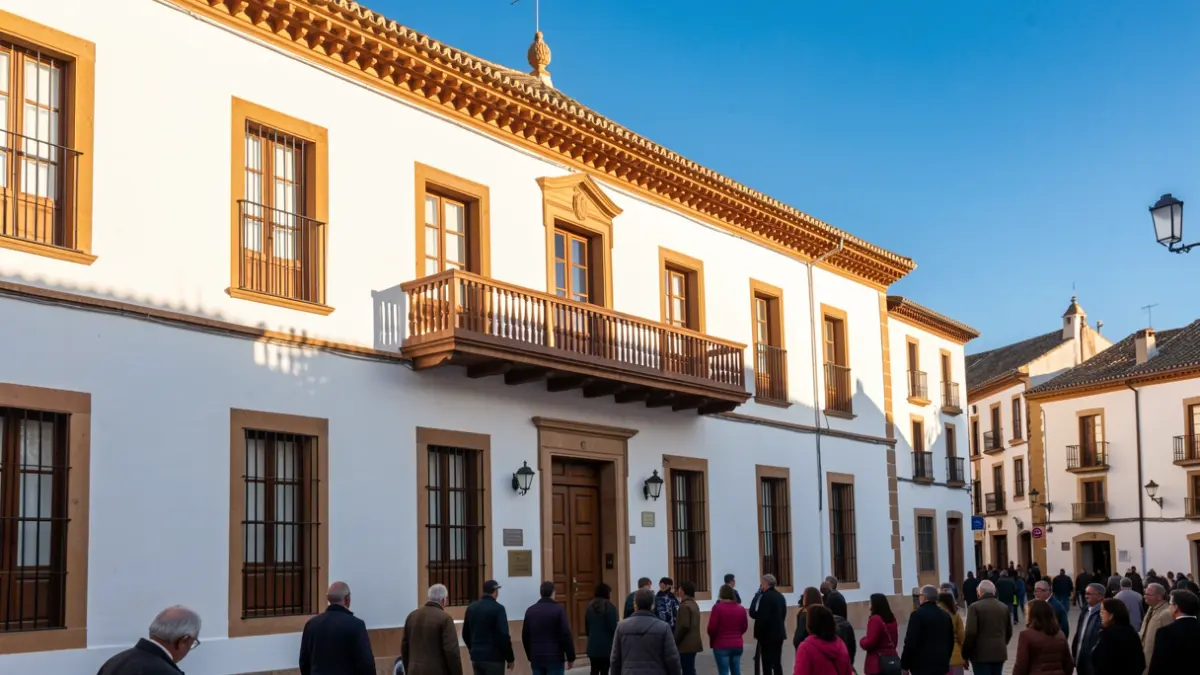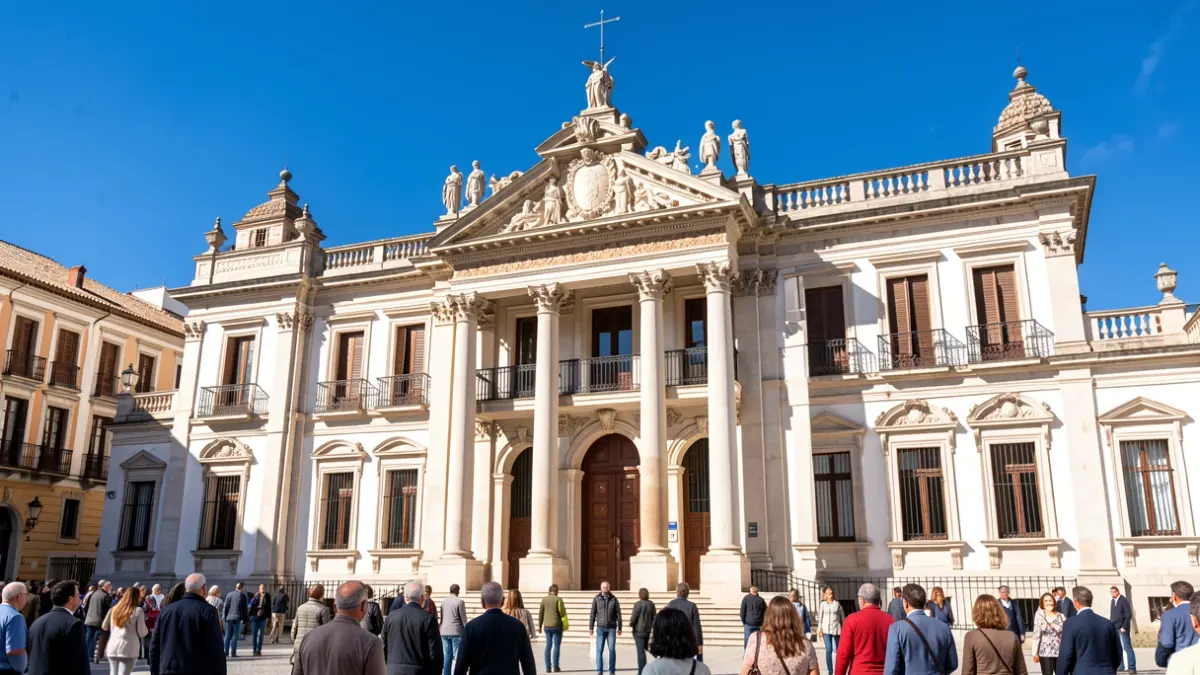
The exhibition, located at the Centro Cívico Hogar San Fernando, offers a contemporary and diverse perspective of the sector. It combines documentary photography with a creative vision to illustrate not only business activity but also the human stories, processes, and social influence of the cooperative model in Andalusia.
“"Andalusian cooperativism has demonstrated its capacity to generate stable employment, social cohesion, and territorial development over the last decades, consolidating itself as a key business model in Andalusia. Furthermore, it is a model that places people at the center of the economy, reinvests in the territory, and better withstands crisis cycles because it is based on cooperation, democratic participation, and collective commitment. This exhibition aims precisely to reflect that: behind every cooperative there are life stories, shared effort, and a future built together."
The inauguration ceremony was attended by various institutional figures and representatives from the social economy sector, including Carmen Durán Barrantes, Director General of Self-Employment and Social Economy; Antonio Agustín Vázquez, Territorial Delegate for Employment, Business, and Self-Employment in Seville; José Antonio Mesa, deputy for Izquierda Unida; and José Luis García Martín, Deputy Mayor for the Area of Priority Attention Neighborhoods, Social Rights, Employment, Family, Equality, and Associations. Also present were Francisco Javier Roldán Toledo, President of FAECTA in Seville, and Ismael Medina Claros, Director General of FAECTA.
A notable aspect of the inauguration was the visit of a delegation of 20 Honduran deputies, who attended the exhibition as part of an institutional trip. Their objective was to learn firsthand about the experiences of the Andalusian cooperative model, highlighting international interest in this model as a benchmark for economic and social development.
The exhibition is the result of the collaboration of eight audiovisual companies and professionals, one from each Andalusian province, who have contributed their vision to build a collective narrative about cooperativism in the region. Participants include María Cariñanos González, La Pinza Producciones, MOWOMO, Intégrate Media, Five o’clock, Ciento Ochenta Grados, Mírame Almería, and Haciendo Banda.
Each displayed work aims to capture not only economic activity but also the human stories behind the cooperatives: workers, communities, and projects that embody a different way of understanding the economy, based on participation, equality, and democratic management. The exhibition will be open to the public with free access from April 13 to April 19 at the Centro Cívico Hogar San Fernando in Seville.