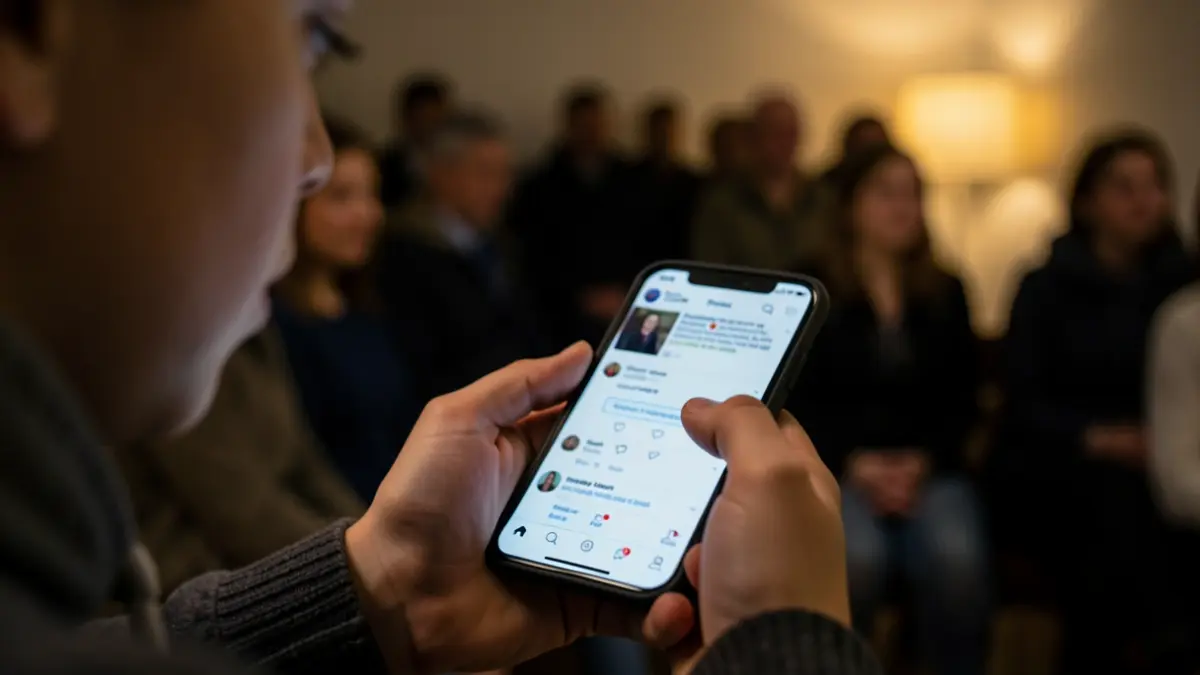
The latest data from the Ministry of the Interior, corresponding to 2024, places Andalucía as the second autonomous community with the highest number of grooming reports, which involves adults deceiving minors online using a fake identity. That year, 85 victims were registered in the region, although only 21 individuals were arrested or investigated.
A study by the Civil Guard and the Safe Online (SOL) Foundation, analyzing 1,500 children and young people from the most affected communities (Catalonia, Andalucía, Madrid, and the Valencian Community), reveals concerning figures. 39% of secondary school students have communicated online with people they did not previously know, meaning almost four out of ten adolescents talk to strangers online. This practice is starting at increasingly younger ages, with half of minors having social media accounts before entering high school. Furthermore, 14% of primary school students have also spoken with strangers via this medium.
Girls account for six out of ten victims, with an average age of 13 when the offense occurs. According to the organization Save the children, in all sentences from 2024, the accused was a man who often posed as someone else to the minor. In 25% of cases, the aggressor was a family member, while in 33.3% of instances, they were someone outside the victim's circle.
Primarily through social media and video games, the adult gains the young person's trust by posing as someone younger. Subsequently, they request private and sexual information or images. Some of these conversations even lead to a physical meeting.
The study by SOL and the Civil Guard indicates that 10% of secondary school students have received intimate photos without requesting them. 8% have been asked to send photos or videos showing parts of their body, and 7% have been asked to discuss sexual practices. In fact, 23% of secondary school students report that sexual interest is present from the beginning of the interaction.
When a minor detects abusive practices online, they rarely inform their family. The reasons are varied: some do not see the need, others feel ashamed to admit contact with strangers or their inability to perceive the danger. However, the majority remain silent for fear of losing their mobile phone and their digital autonomy.
Instead of reporting, young people prefer to end the relationship and share it with friends. 23% admit to "playing along" with the interlocutor. Primary school children do tend to turn to their parents first, but two out of ten also choose to continue the interaction.
The report notes that continuing to respond to the abuser is justified by reasons such as curiosity or a playful component. 21% of secondary school students and 15% of primary school students consider these interactions normal. This normalization of risk is not so much due to ignorance, but rather how these relationships are integrated into everyday codes.
Fortunately, minors are identifying certain abusive practices, as confirmed by other studies, and are aware that artificial intelligence can be a threat for altering photos or impersonating others. Adolescents are already considering self-protection strategies, showing skepticism towards suspicious profiles and making decisions to distance themselves. However, this autonomy means that many cases do not come to the attention of families or are not reported.
Unfortunately, grooming is a growing crime with annual increases. Internet access is occurring at younger ages, and the time spent online is rising, especially during summer when school routines are less defined. Legislation advances slowly; in March 2025, the Government criminalized grooming, and the European Parliament announced an expansion of offenses considered sexual abuse and increased penalties. However, the main obstacle remains that most of these cases go unreported.